

Sudanese Pound Witnesses Slight Improvement Against Foreign Currencies Following SCB Intervention
Sudanhorizon – Nazik Shamam
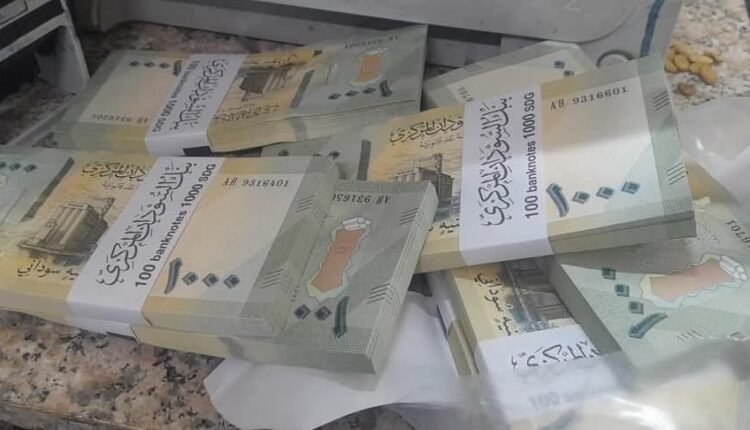
The Sudanese pound has gained strength against US dollar in the unofficial market trading today (Wednesday).
Traders in the parallel market confirmed that the pound’s exchange rate rose to 5,500 pounds per dollar, compared to 5,900 pounds on Tuesday.
Several people who spoke to Sudanhorizon said that currency prices have fallen since Tuesday evening following the announcement that the Central Bank of Sudan (CBS) would inject foreign currency into commercial banks.
They explained that the price of the Emirati dirham fell to 1,510 Sudanese pounds from 1,600, while the Egyptian pound reached 108 pounds compared to 115.
On Tuesday, a source at the CBS announced that the bank had determined the banks’ needs for injecting foreign currency to meet import obligations.
The Sudanese markets witnessed a surge in foreign currency prices last week, which led to the dollar rising from 4,800 to 5,900 Sudanese pounds.
But on Tuesday , the Sudanese Finance Minister Jibril Ibrahim said that “exchange rate stability is inseparable from macroeconomic reform, linking monetary and fiscal policies, and boosting real production.”
At a meeting of the Task Force entrusted with developing urgent solutions to economic challenges related to exports and imports, the minister stressed the importance of intensifying efforts to regulate the gold and petroleum derivatives sectors, as they are among the most important sectors affecting exchange rate stability. This can be achieved through stricter oversight and ensuring that all revenues are channeled through official channels, in addition to stimulating local production, encouraging domestic industries, and shifting from exporting raw materials to increasing added value. This will reduce the consumer import bill and boost foreign currency inflows through export diversification.
The Sudanese economy suffers from structural imbalances following the war that began in April 2013, characterized by low revenues, high expenditures, and a severe shortage of foreign currency.
Shortlink: https://sudanhorizon.com/?p=15168