

Microfinance in Post-War Sudan (3 of 4): How Can We Build Digital Islamic Finance Without Losing Its Authenticity?
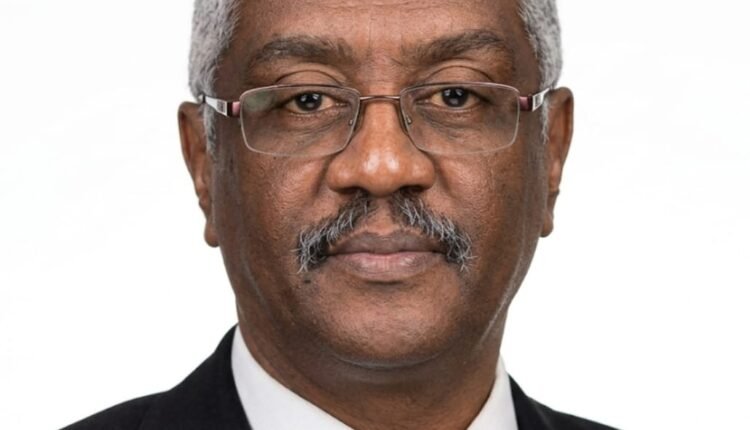
Nouman Yousif Mohammed
In the first article, we discussed why the traditional microfinance model is no longer capable of responding to the complexities of post-war Sudan. In the second, we presented an alternative model that we called “Resilient Digital Islamic Development Finance” — a model based on mobilising community resources, deploying Islamic financing modes, harnessing financial technology, and building institutions that are more resilient and capable of achieving meaningful development impact.
However, no model, regardless of its economic strength, can succeed unless it is capable of integrating into the legislative, Shariah and technological environment in which it operates. This raises a fundamental question:
Is digital readiness alone sufficient to make the transition towards digital Islamic finance successful?
In my view, the answer is no.
The real challenge lies not simply in the availability of electronic applications, the creation of digital wallets or the development of financing platforms. Rather, it lies in building an integrated ecosystem that combines Shariah authenticity with technological efficiency.
The central issue is not replacing traditional Islamic finance with a digital model, but enabling Islamic financing modes to operate efficiently within a new economy in which the nature of transactions, contracting instruments and risk-management mechanisms has changed.
Islamic finance possesses a rich body of contracts and financing modes that have evolved over centuries and demonstrated their ability to regulate economic activity. Yet most of their practical applications developed within a paper-based environment dependent on physical presence and traditional procedures. Today, however, we face a new economy in which:
– contracts are concluded electronically;
– portfolios are managed through digital platforms;
– payments are executed instantaneously; and
– data and artificial intelligence are used to assess risks and make decisions.
This leads to a more precise question:
Do we need to devise new Shariah-compliant contracts?
Again, in my view, the answer is no.
What is genuinely needed is not new contracts, but the redeployment of existing Shariah-compliant financing modes within a modern digital environment, through institutional ijtihad that takes account of both the objectives of Shariah and the requirements of the digital economy.
From Adapting Contracts to Adapting the Digital Environment
Throughout history, Islamic jurisprudential reasoning has focused on determining the rulings governing contracts and transactions. This is both natural and necessary for regulating economic activity. Digital transformation, however, raises new questions that extend beyond the contract itself to the environment in which that contract is executed. For example:
– How can the identity of a transacting party be verified in a digital environment?
– What is the legal and Shariah validity of electronic identity?
– How are offer and acceptance established through digital platforms?
– What constitutes possession (qabd) in electronic wallets?
– How should digital agency (wakalah) be managed?
– What are the Shariah parameters governing the use of artificial intelligence in credit assessment?
These are not theoretical issues that can be deferred. They are practical challenges that Islamic financial institutions will face in the coming years.
Data protection and cybersecurity, moreover, should not be regarded solely as technological requirements. They form part of Shariah compliance itself, because the protection of wealth, preservation of privacy and prevention of harm are among the fundamental objectives of Shariah.
The required ijtihad, therefore, should not seek to alter the essence of Shariah-compliant contracts, but rather to develop the operational environment within which they function, thereby achieving a balance between established Shariah principles and the requirements of financial innovation.
Where Should Development Begin?
The starting point should not be a search for new contracts, but rather the re-engineering of how existing contracts are used to serve development objectives.
The innovation required is not innovation in Shariah rulings, but innovation in:
– business models;
– resource mobilisation mechanisms;
– financing management methods;
– the use of technology; and
– measurement of development impact.
For this reason, the Resilient Digital Islamic Development Finance model distinguishes between two fundamental stages:
Stage One: Resource mobilisation.
Stage Two: Resource deployment.
First: Resource Mobilisation Modes — Turning Society into a Partner in Development
The purpose of this stage is to mobilise financial resources from society and channel them towards productive investment.
Here, restricted mudarabah (mudarabah muqayyadah) emerges as one of the most promising structures for building Islamic crowdfunding platforms. Through a trusted digital platform, investors could select the area they wish to finance — whether agriculture, small-scale industries, renewable energy, start-ups or other productive sectors.
The financial institution would then manage the funds in accordance with the agreed restrictions and conditions.
In this way, the digital platform becomes a modern channel for mobilising:
– citizens’ savings;
– the savings of Sudanese living abroad;
– awqaf funds; and
– impact investments;
and directing them straight into the real economy.
Here, it is important to distinguish between the role of the Shariah-compliant financing structure and the role of the underlying economic activity. Restricted mudarabah is not necessarily the financing mode through which every project should be funded. Rather, it is an appropriate structure for mobilising investment resources.
The deployment of those resources, however, will vary according to the nature of the economic activity and the Shariah-compliant financing mode best suited to it.
Second: Resource Deployment Modes — Choosing the Right Instrument for the Right Activity
Once financial resources have been mobilised, the second stage begins: directing those resources towards different economic activities.
This is one of the central ideas underpinning Resilient Digital Islamic Development Finance: there is no single financing mode suitable for every activity. The appropriate structure varies according to the nature of the activity, its level of risk, its capital cycle and the development objective being pursued.
The problem with many previous applications was not inherent in Islamic financing modes themselves, but in the use of a single financing structure to fund multiple activities with very different characteristics and requirements.
The next phase therefore requires a shift away from the logic of simply “providing finance” towards “designing appropriate financing solutions for each economic activity”.
Murabahah: From Asset Finance to Building Value Chains
Murabahah remains one of the most widely used modes of Islamic finance. However, developing its contribution to economic development requires moving beyond its traditional use in financing the purchase of a single asset or commodity.
It can be used to finance production requirements throughout value chains, including the purchase of equipment, machinery and other means of production; the provision of agricultural and industrial inputs; and the financing of collective purchases by groups of producers.
Digital platforms can further enhance this use by connecting suppliers, customers and financial institutions, while electronically documenting the stages of purchase, ownership and delivery. This can strengthen transparency and reduce costs.
In the agricultural and industrial sectors in particular, pooled murabahah financing could provide a practical solution for small-scale producers by consolidating purchasing orders, achieving economies of scale and reducing input costs.
Salam: Financing Production Before It Takes Place
Salam is an important financing mode that could play a pivotal role in rebuilding productive sectors, particularly agriculture, livestock and certain commercial activities.
It enables a producer to receive financing before the production process has been completed, in return for delivering the product at a future date in accordance with specified terms and conditions.
Within a digital environment, platforms can be developed to connect producers, financiers and purchasers, helping to establish more stable production and marketing relationships.
Commercial salam can also be used to finance advance supply contracts, thereby contributing to the development of supply chains and linking production more effectively to markets.
Istisna’: Financing Industry and Reconstruction
Istisna’ has particular importance in the post-war period because of its connection with financing manufacturing, asset creation and productive projects.
It represents an appropriate instrument for financing small-scale and processing industries, crafts, and reconstruction-related projects, because it allows the financing of the manufacture of a product or construction of an asset according to predetermined specifications.
Digital platforms can also play an important role in monitoring manufacturing stages, scheduling payments and verifying completion rates, thereby strengthening oversight and efficiency.
Contracting: Financing Construction and Development Projects
Contracting will assume particular importance during the recovery and reconstruction phase, when the country will require substantial financing for infrastructure, housing and public-service projects.
The Shariah treatment of contracting arrangements varies according to the nature of the project. In some cases, they may fall within istisna’ or take the form of composite contractual structures, depending on the appropriate arrangement.
Digital platforms can contribute to managing these projects by connecting contractors with suppliers, monitoring implementation stages, and scheduling payments according to verified completion rates.
Musharakah: From Financing Individual Projects to Building Productive Partnerships
Musharakah enables a transition from the conventional financier-client relationship towards a genuine partnership based on the sharing of risks and returns.
This makes it particularly suitable for financing co-operatives, producer groups, joint ventures and value chains in which several parties need to participate in the productive process.
Digital investment portfolios can also be developed to manage these partnerships more efficiently and provide investors with opportunities to participate in specific productive sectors.
Mudarabah: Financing Entrepreneurship and Innovation
Mudarabah is an important structure for financing entrepreneurs and start-ups, bringing together the provider of capital with the party possessing expertise or an investment idea.
In the digital economy, it could become an effective instrument for financing innovation, start-ups and small enterprises with strong growth potential.
Here again, restricted mudarabah is particularly important because it gives investors greater ability to specify the field or sector to which they wish their funds to be directed, while the financial institution manages those funds according to clearly defined parameters.
Fee-Based Wakalah: Expanding Access to Financial Services
The role of Resilient Digital Islamic Development Finance is not limited to providing financing. It also encompasses creating effective networks through which customers can access financial services.
Here, fee-based agency (wakalah bi al-ujrah) can play an important role in establishing networks of agents and digital platforms that provide financial services, manage collections, and facilitate access to rural and remote areas at lower cost and with greater efficiency.
Technology thereby becomes a means of advancing financial inclusion, rather than simply a mechanism for converting paper-based procedures into electronic ones.
Collective Ijtihad, Not Individual Ijtihad
Building a Resilient Digital Islamic Development Finance model cannot be achieved through the efforts of a single institution or sector.
The next phase requires a genuine partnership bringing together, among others:
– Shariah supervisory bodies;
– economists;
– bankers;
– financial technology experts; and
– regulatory and supervisory authorities.
The transformation required is not merely the development of a new financial product. It involves building an entirely new ecosystem that requires broad institutional consensus.
It is also important to emphasise that these proposals are not intended as alternative Shariah fatwas. Rather, they are economic and operational proposals designed to open the way for institutional ijtihad and assist in developing Islamic finance applications suited to the digital economy.
In this context, the expected role of the Central Shariah Supervisory Board at the Central Bank of Sudan becomes particularly important — not only in reviewing new applications, but also in establishing a flexible regulatory framework that gives financial innovation both Shariah legitimacy and institutional credibility, without allowing regulation itself to become an obstacle to development.
A Message to Decision-Makers
Sudan today has a historic opportunity to rebuild its microfinance sector in parallel with the national digital transformation project.
Success, however, will not be achieved simply by digitalising financial services or upgrading technological systems. It requires the construction of an integrated ecosystem that combines:
the authenticity of Islamic finance;
the efficiency of financial technology; and
the objectives of sustainable development.
Finance in the coming phase should not be regarded merely as a means of lending. Rather, it should be understood as a national system for mobilising resources, stimulating production, empowering communities and building a more resilient economy.
Sudan does not merely need microfinance institutions with a wider geographical reach; it needs development-finance institutions capable of delivering greater impact.
In the Fourth and Final Article
Having discussed:
Why does Sudan need to move away from the traditional microfinance model?
What is the Resilient Digital Islamic Development Finance model?
And how can it be adapted to meet both Shariah and digital requirements?
One decisive question remains:
How can this vision be transformed into an implementable national programme?
And what legislative, institutional, financing and digital priorities should be pursued during 2026–2030 so that microfinance can become one of the principal drivers of economic recovery and the reconstruction of Sudan?
This is what we shall discuss in the fourth and final instalment.
** Former Banker – Institutional Development Consultant
Shortlink: https://sudanhorizon.com/?p=16896