

Post-War Sudan: From a Centralised State to a State of Resources and Production
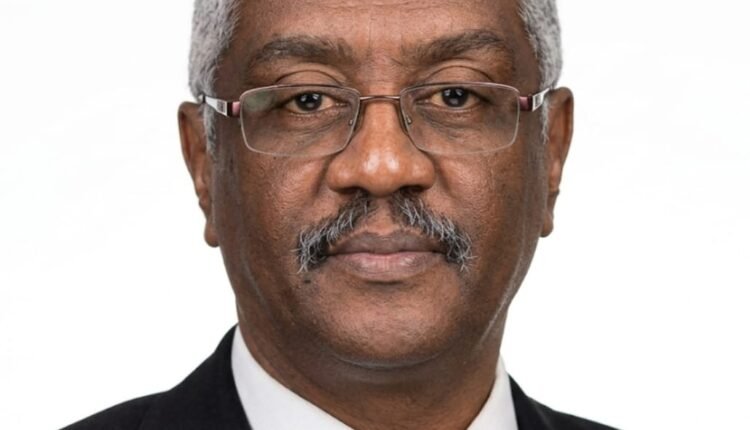
Nu’man Yousif Mohamed
Former Banker and Institutional Development Consultant
Sudan has never been a stranger to the scourge of wars and conflicts. Since gaining independence in 1956, the country has endured successive cycles of violence that have drained its human and economic capacities and squandered a significant portion of the resources that could otherwise have fuelled genuine national development.
The war that erupted in 2023 added an especially painful chapter to this history. Its consequences extended far beyond the humanitarian losses, displacement, refugee flows, and destruction of property. The conflict struck at the very foundations of the state, damaging institutions and infrastructure across vital sectors, including education, healthcare, public services, and production. Sudan emerged from the devastation appearing to require not merely reconstruction, but comprehensive national re-foundation.
Yet amidst this immense destruction, the war exposed a reality that had long been absent from national planning: Sudan’s future cannot be built from the centre alone. The excessive reliance on the capital and major urban centres has been one of the principal causes of the state’s economic and developmental fragility. Despite possessing most of the country’s real sources of strength, rural areas remained largely excluded from meaningful investment. At the same time, services, opportunities, and decision-making were concentrated within a narrow geographical space.
The new Sudan that we aspire to build must be founded upon a different vision—one that regards the countryside not as a peripheral zone, but as the foundation of national development. Sudan’s true wealth does not lie solely in the buildings and institutions concentrated in its cities. Rather, it resides in its vast agricultural lands, water resources, livestock, mineral wealth, renewable energy potential, and the productive workforce spread across its regions.
A shift from centre to periphery does not mean neglecting cities or diminishing their role. Rather, it means restoring balance between the state’s centre and its regions, ensuring that development is distributed more equitably and that citizens in every village and locality become active participants in production and in shaping the nation’s future.
To achieve this transformation, Sudan requires a national project built upon several key pillars:
First: Rebuilding the economy from the foundation of rural production by modernising agriculture, supporting small-scale producers, and establishing agro-processing and value-added industries close to production areas, rather than transporting raw materials to the centre before redistributing them.
Second: Developing infrastructure across the regions, including roads, energy networks, telecommunications, and essential public services. Rural areas cannot become engines of economic growth without an environment that attracts investment and supports long-term stability.
Third: Empowering rural human capital through improved education, vocational training, and healthcare services. The Sudanese citizen is the country’s greatest asset, and genuine development cannot be achieved if human potential is excluded from the development process.
Fourth: Redefining the relationship between the state and local communities by granting the regions a greater role in planning and decision-making. Such an approach would broaden participation and reduce the sense of marginalisation that has fuelled many of Sudan’s recurring crises.
International experience demonstrates that nations do not prosper solely through their capitals. They thrive when villages, towns, and productive regions become centres of economic strength in their own right. Sudan possesses exceptional advantages that position it well for such a transformation: vast land resources, abundant natural wealth, and a population with deep experience in agriculture, trade, enterprise, and productive work.
The tragedy of war, despite its severity, may provide an opportunity to rethink the very model of the Sudanese state. It offers a chance to move away from a system in which the centre consumes the resources of the periphery, towards one in which the centre invests in the potential of rural areas and ensures that the benefits of development are shared more broadly across society.
However, this hoped-for renaissance will not materialise unless the bloodshed ends and the chapter of conflict is closed through a broad and durable national consensus. Such a consensus must rebuild trust among Sudanese citizens and place the nation’s interests above narrow political calculations.
Peace is not merely the absence of gunfire. It is the environment that allows production to resume, investment to grow, and citizens to feel that their own future—and their children’s—is becoming more secure and stable.
Sudan’s next renaissance will not begin in Khartoum alone. It will begin in every village, every development project, every farm, and every small town that carries within it the seeds of the future. Yet before all else, it must begin with a shared national will—one that believes Sudan is greater than its crises, and that investing in both people and land is the true path towards reclaiming the nation.
Shortlink: https://sudanhorizon.com/?p=14721