

Post-War Sudan’s Microfinance Sector: Pathways to Efficiency and Sustainability (Part 2)
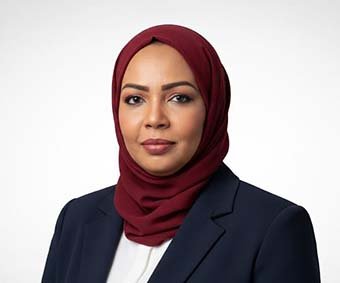
Dr Marwa Fouad Qabbani
The decline of Sudan’s microfinance sector was not caused by the war alone. It was also the result of structural challenges that had accumulated over many years, before the conflict magnified their effects on an unprecedented scale.
Even before the outbreak of war, microfinance institutions faced difficulties in securing long-term sources of funding. Most depended on portfolios provided by commercial banks or on limited financing programmes offered by certain development institutions. As economic activity weakened and risk levels increased, the capacity of these institutions to expand became increasingly constrained.
Weak banking infrastructure in a number of states, together with the high cost of reaching clients in rural areas, also increased the cost of service delivery. This, in turn, affected both the volume of finance available and the number of beneficiaries.
The war then introduced additional challenges. A number of branches were damaged, some data was lost, many productive activities came to a halt, default rates increased, supply chains were disrupted, and large numbers of clients were displaced. As a result, financing portfolios contracted and institutions’ ability to continue operating was significantly weakened.
Despite these challenges, the current crisis also presents an opportunity to rebuild the sector on more efficient and sustainable foundations, moving beyond traditional models whose capacity for expansion has proved limited.
Have Financing Ceilings Become Inadequate?
Inflation represents one of the greatest challenges facing microfinance in Sudan.
Financing ceilings that were sufficient several years ago to establish an agricultural project, purchase productive equipment, or set up a small workshop now cover only a limited proportion of the project’s actual cost.
This has reduced the economic impact of financing. Beneficiaries often receive amounts insufficient to complete their projects, increasing the likelihood of default and diminishing both the economic and social returns.
The Central Bank of Sudan should therefore adopt a policy of regularly reviewing financing ceilings and linking them to inflation rates and production costs. Banks and microfinance institutions should also be given greater flexibility to set ceilings appropriate to the nature of each economic activity.
Different financing products should be designed for agriculture, livestock, small-scale industry, services, and the digital economy, rather than relying on a uniform ceiling that fails to reflect the varying needs of different sectors.
Where Should Financing Be Directed?
During the reconstruction phase, financing should not be confined to short-term commercial activities. It should instead be channelled towards sectors that generate the greatest added value for the national economy.
Agriculture should be at the forefront, as it is a cornerstone of food security and has the capacity to create large numbers of jobs and generate export earnings.
Financing should also be expanded for livestock production, food processing, small-scale manufacturing, solar energy, traditional crafts, women-led enterprises, entrepreneurship, and the digital economy, given the direct contribution these sectors can make to increasing output and improving incomes.
It is equally important to link finance to value chains. Producers should receive not only funding, but also production inputs, training, marketing support, insurance, and access to both domestic and international markets.
Financial Inclusion: The Missing Link
Microfinance cannot succeed without broader financial inclusion.
A large proportion of the population remains outside the formal financial system, depriving people of access to finance, savings, insurance, and payment services.
Expanding access to bank accounts, electronic wallets, agent banking, and digital identity systems is therefore essential to widening the beneficiary base of microfinance.
Every citizen who enters the formal financial system becomes better able to access credit, build a credit history, and benefit from modern financial services.
What Can Be Learned from International Experience?
International experience demonstrates that the success of microfinance does not depend on the volume of funding alone, but also on the institutional environment in which it operates.
In Bangladesh, Grameen Bank showed that community trust, group lending, and women’s empowerment could transform microfinance into a financial industry with a broad economic impact.
In Kenya, mobile money services brought about a fundamental transformation. Loans could be accessed and repaid through mobile phones, reducing operating costs and widening the beneficiary base, particularly in rural areas.
India successfully integrated digital identity with bank accounts and electronic payment systems. This enabled millions of citizens to access financial services safely and rapidly, while improving the efficiency of government support and development finance.
In Rwanda, the government focused on developing digital infrastructure, linking microfinance institutions to the national payments system, and expanding agent banking services. These measures helped increase financial inclusion and improve the efficiency of service delivery.
What Do These Experiences Mean for Sudan?
Sudan does not need to replicate any one model. Rather, it needs to build a national approach that draws upon international best practice while reflecting its own economic and social circumstances.
Sudan now has an exceptional opportunity to rebuild its microfinance sector alongside the digital transformation initiatives being led by the Central Bank of Sudan. These include digital identity, the national payment switch, public key infrastructure (PKI), agent banking, and the expansion of fintech services.
If Sudan succeeds in integrating these elements into a single system, it will not merely rebuild the microfinance sector. It will establish a modern model of digital development finance capable of attracting international funding, stimulating production, expanding financial inclusion, and contributing to national reconstruction.
Strategic planning and digital transformation specialist
Shortlink: https://sudanhorizon.com/?p=16349