

Sudan’s Fragmentation: Geopolitical Engineering or Covert Conspiracy? A Systemic Reading
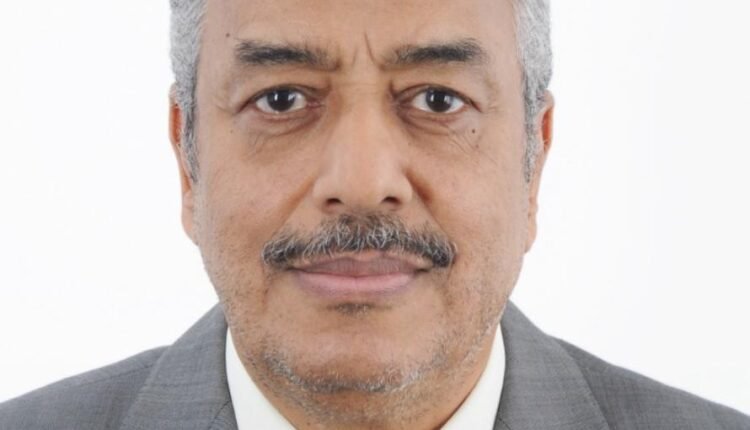
Dr Ismail Satti
When discussing Sudan’s modern tragedy, the most common explanation tends to focus on domestic factors: military coups, political conflict, social divisions, and poor governance. There is no doubt that Sudan bears substantial responsibility for many of its crises, and that successive Sudanese elites failed to build a stable state capable of investing its resources and transforming its immense potential into genuine development.
Yet history cannot be read from a single perspective.
The question many Sudanese ask, but which does not always receive sufficient attention in the international media, is this: were Sudan’s crises solely the result of its internal failures? Or did those failures interact with a regional and international environment that left Sudan persistently besieged, condemned, and denied the opportunity to invest its wealth and build a strong economy?
This article does not seek to absolve any Sudanese government of responsibility, nor does it deny the suffering endured by Sudanese citizens as a result of internal conflict. Rather, it attempts to revisit a long historical trajectory that began when Sudan was presented with an unprecedented economic opportunity, followed by a succession of events that repeatedly led to the same outcome: a weaker state, a more fragile economy, and resources from which the Sudanese people were unable to benefit as fully as they might have done.
Oil: When Wealth Became a Lost Opportunity
In the late 1970s, the American company Chevron discovered promising oil reserves in Sudan. That discovery could have marked a historic turning point for a country endowed with vast territory, abundant natural resources, and a strategic location between Africa and the Arab world.
For Sudan, oil was not merely a source of revenue. It represented an opportunity to build a modern state: to develop agriculture, construct infrastructure, improve public services, and strengthen the country’s economic independence.
Yet that opportunity was never fully realised.
By the end of the 1970s, tensions in southern Sudan had intensified over political and developmental issues. The Jonglei Canal project was one of the most controversial matters. Its supporters regarded it as a development initiative that could increase the use of water resources and support agricultural expansion, while its opponents argued that it failed to adequately account for the interests of local communities and the regional environment.
In May 1983, John Garang launched his rebellion, marking the beginning of the Second Sudanese Civil War, which became one of the longest-running armed conflicts on the African continent.
As security risks escalated in the oil-producing regions, Chevron suspended its operations and subsequently withdrew from Sudan. The company attributed its decision to deteriorating security conditions—an understandable explanation from a commercial perspective.
For many Sudanese, however, the matter was not simply an economic decision. It marked the beginning of the loss of a historic opportunity that might have transformed the country’s future.
This raises a legitimate question: why did the protection of Sudanese oil investment not receive the same level of international attention accorded to the protection of oil interests in other regions of the world? Was Chevron’s withdrawal merely a consequence of insecurity, or does its timing, amid conflict over southern Sudan and strategic resources, warrant a broader interpretation?
To develop a fuller understanding of Sudan’s trajectory over the following decades, it is important to consider the sequence of political and economic events that followed—not as isolated episodes, but as successive stages that shaped the modern Sudanese state.
Examining this sequence does not necessarily imply that every event was directly connected to the next. It does, however, help illuminate the broader context in which Sudan found itself. There is no conclusive evidence for a predetermined plan, but ignoring these questions amounts to accepting only one version of history.
From Political Accusations to the Isolation of the State
In 1989, the National Salvation regime came to power through a military coup. From that point onwards, Sudan entered into an increasingly confrontational relationship with Western powers, particularly after being accused of hosting extremist Islamist figures and organisations.
This was also the period in which the Soviet bloc collapsed, leaving the international system dominated by a single global power.
In 1993, the United States designated Sudan as a state sponsor of terrorism, on grounds that, in the author’s view, did not match the gravity of the measure imposed.
Even if one accepts that the United States had security and political reasons for making this decision, the question remains: was it appropriate to isolate an entire state and punish its economy, rather than target specific individuals or organisations?
Economic sanctions do not affect governments alone. Their consequences extend to ordinary citizens, restricting the state’s access to finance, technology, and investment.
In 1997, the United States imposed comprehensive economic sanctions on Sudan, beginning a prolonged period of economic and political isolation.
The Bombing of Al-Shifa: When Political Disputes Become Humanitarian Tragedies
In August 1998, the Al-Shifa pharmaceutical factory in Khartoum was struck by American cruise missiles.
The United States justified the attack by claiming that the factory was connected to the production of chemical substances used in weapons manufacturing and that it had links to Al-Qaeda.
This account was subsequently challenged by a number of researchers and journalists who questioned the strength of the evidence on which the decision had been based.
The factory’s owner also pursued legal proceedings in the United States and was ultimately awarded compensation for material losses, a development that, in the author’s view, reinforced criticism that major American decisions had been taken hastily and without sufficiently specific or compelling evidence to justify the scale of the action.
For Sudanese citizens, Al-Shifa was not a military installation. It was one of the country’s most important pharmaceutical factories and supplied a significant proportion of the population’s medical needs.
The bombing therefore became, in the Sudanese collective memory, an example of how political disputes between major powers and governments do not end with governments alone, but may impose their costs upon society as a whole.
Darfur: Humanitarian Tragedy and Political Questions
In 2003, armed rebellion broke out in Darfur, transforming the region into a major focus of international attention.
The scale of civilian suffering in Darfur cannot be denied, nor can violations committed by any party be justified. Human rights should never be applied selectively.
Yet many Sudanese asked why the Darfur crisis became an international issue of such magnitude while other crises—some of them perhaps even greater—in other parts of the world did not receive comparable attention.
Was the international response intended solely to achieve justice, or did the issue also become an instrument of political pressure against Sudan?
The International Criminal Court: Justice or Double Standards?
In 2008, the Prosecutor of the International Criminal Court requested an arrest warrant for President Omar Al-Bashir over events in Darfur. The warrant was issued in 2009, marking the first time the Court had ordered the arrest of a sitting head of state. Further charges were added in 2010.
Regardless of one’s view of Al-Bashir or the policies of his government, many Sudanese regarded the move as an example of double standards.
They asked why international justice is applied to some countries and leaders, while other powers evade accountability because of their political and military influence.
John Garang and Secession: Was the Opportunity for a New Sudan Lost?
John Garang was a pivotal and controversial figure in Sudan’s modern history.
Although he led the Sudan People’s Liberation Movement in a prolonged war against the central government, for most of his political career he did not advocate the secession of southern Sudan. Instead, he promoted the idea of a “New Sudan” based on rebuilding the state around citizenship and equality.
In 2005, the Comprehensive Peace Agreement was signed, ending the civil war and granting southern Sudan the right to self-determination.
Only a few weeks after the agreement was concluded, however, Garang died in a helicopter crash while returning from Uganda.
Official investigations concluded that severe weather conditions had caused the accident, but the timing of the crash and Garang’s political importance led many Sudanese to question the circumstances surrounding his death.
In 2011, South Sudan seceded, and Sudan lost most of its oil production because the majority of the oilfields were located in the south.
This constituted an enormous economic shock for a country that had become heavily dependent on oil revenues.
Gold: The Last Economic Lifeline Under Pressure
After losing most of its oil wealth, gold became one of Sudan’s most important sources of foreign exchange and public revenue.
The mining sector emerged as a strategic pillar of the Sudanese economy, despite challenges relating to smuggling, weak regulation, and inadequate oversight.
More recently, more than two years after the outbreak of war in 2023, the European Union adopted measures targeting entities and networks associated with Sudan’s gold trade. These measures were presented as an attempt to restrict the financing of parties to the conflict and prevent the illicit exploitation of natural resources.
From a Sudanese perspective, however, such actions are seen as part of a prolonged pattern of economic pressure imposed upon the country, one that has ultimately tightened restrictions around one of Sudan’s last major sources of national income.
Critics of these policies also argue that constraints on the gold trade, together with the difficulty of obtaining equipment and materials required for mining, do not affect only those accused of financing the war. Their impact extends to the wider national economy and to local communities whose livelihoods depend upon the sector.
From this perspective, Sudan’s crisis should not be addressed through measures that further weaken its economy. Instead, the priority should be to support the rebuilding of state institutions, strengthen transparency, combat smuggling, and ensure that Sudan’s remaining strategic resource does not become another instrument of pressure against the Sudanese people.
A single factor cannot explain Sudan’s tragedy.
Yes, Sudanese governments made grave mistakes.
Yes, political elites failed to manage diversity and build strong institutions.
Yes, the country paid an enormous price for its internal conflicts.
But it is equally impossible to ignore the fact that, over four decades, Sudan faced a succession of international and regional pressures that contributed to its weakening: the interruption of the oil project, sanctions, political isolation, conflicts that culminated in the secession of the south, and, more recently, increasing pressure surrounding gold.
Re-examining Sudan’s history does not mean denying its mistakes. It means rejecting the reduction of that history to a single narrative.
Sudan was not a country without problems, but neither was it a country without potential. It possessed all the foundations required for progress, yet found itself on a historical path in which successive generations were denied the full opportunity to benefit from its resources.
The question that must therefore remain open is not only:
Why did Sudan fail?
But also:
Was Sudan ever truly allowed to succeed?
Shortlink: https://sudanhorizon.com/?p=16345