

Sudan Between Budgeting and Political Appeasement
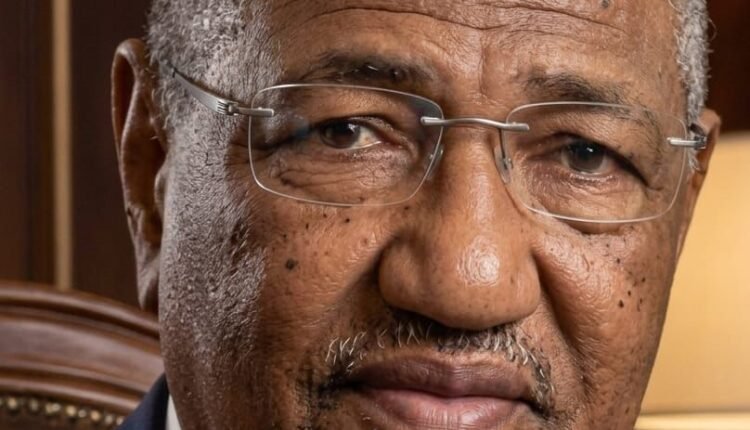
Fouad Gabbani
Sudan, that vast and expansive land of broad plains and fertile terrain, is among the countries most richly endowed with rainfall and river systems. It also enjoys a remarkable diversity of climate and soil types. This diversity alone provides the foundations for a strong economy capable of placing Sudan among the world’s leading nations in agriculture and food security.
Praise be to God, who has further blessed our country with abundant natural wealth. Sudan possesses valuable mineral resources, including gold, uranium, silica, quartz, iron and kaolin, among many others. Kaolin, in particular, is considered an important mineral often associated with industrial advancement, as it is used in a wide range of industries, from household products to sophisticated electrical equipment.
In addition, Sudan is blessed with substantial livestock and fisheries resources. These assets make the country a focal point of interest for major powers seeking access to such wealth, whether we welcome that interest or not.
This raises an important question: do our political leaders truly understand the nature and significance of these resources?
If they do, then they bear a heavy responsibility to protect the country and safeguard its wealth. If some do not, then that ignorance itself becomes the gateway through which those coveting Sudan’s resources and stability can advance their interests.
Sudan is envied and closely watched precisely because of its immense wealth.
Today, a group of Sudanese politicians is meeting in Addis Ababa to discuss solutions to Sudan’s crisis, even though some of those involved are themselves part of the problem. One faction refuses to accept another; some reject others outright. As a result, negotiation platforms have multiplied and meetings are held in various capitals, yet the solution remains elusive.
The remedy may be difficult, and what follows may not please everyone.
First, any meaningful dialogue must be genuinely Sudanese, conducted inside Sudan and around a single round table. All participants should free themselves, as far as possible, from external obligations and foreign influences.
Many Sudanese actors indeed accuse one another of betrayal, but there comes a point when reconciliation becomes necessary. We must learn to accept one another and begin a process of genuine rapprochement among all influential forces, including Somoud, Ta’sees, the Rapid Support Forces and the National Congress Party.
Everyone should recognise that actors are seeking to exclude certain parties from the dialogue process. Such exclusion would be akin to planting a time bomb. The war may eventually end on the battlefield, but Sudan will not recover, nor will the underlying causes of conflict disappear.
This leads to another important question: have Sudan’s exports of gum arabic and other resources ceased during the war?
The answer is no.
These resources continue to be extracted, exported or smuggled, which means that the interests of others continue to be served even while Sudan itself is consumed by conflict.
More importantly, the state should establish an economic advisory body composed of individuals known for their integrity, expertise and deep understanding of resource management. Such a body should examine the country’s resource portfolio comprehensively, because for those who understand the deeper dimensions of the conflict, resources lie at the heart of the problem.
We must clearly define what we are prepared to give and what we expect to receive in return. We should also recognise that equitable arrangements are rarely achieved immediately. Some oil-producing countries began by receiving no more than 18 per cent of the revenues generated from their resources. Over time, however, they gradually increased their share until they secured full ownership of their rights.
No one gives anything for nothing. International relations and economic interests are ultimately governed by reciprocity.
History also teaches us that nations torn apart by war and conflict eventually find their way back to reconciliation. Sudan must summon the courage to return to its authentic traditions of tolerance, forgiveness and social healing.
As Allah says in the Holy Qur’an:
“Those who restrain anger and pardon people.”
And He also says:
“Whoever forgives and makes reconciliation, his reward is with Allah.”
Or do we wish for a war with no end?
Let us be sincere in our intentions, honest in our words and actions, and place Sudan’s interests above all else.
May we stand united, and may Allah have mercy upon us.
Shortlink: https://sudanhorizon.com/?p=14598