

Is “Fragmenting” the RSF the Safest Solution? (1–2)
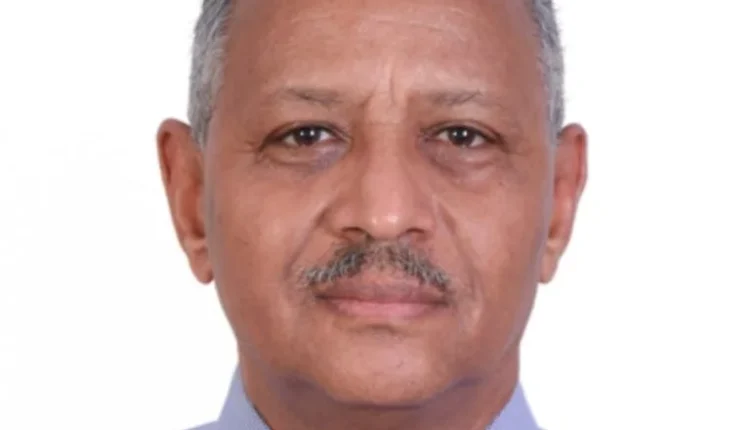
Obaid Ahmed Murawih
In October 2024, I paid a courtesy visit to a friend who serves as an Arab ambassador in Port Sudan. Over a cup of coffee, we exchanged views about the war that erupted in Sudan. I explained my perspective regarding the causes of the war and its likely trajectory. Among the points I raised at the time was that the Sudanese Armed Forces would ultimately prevail, but that the end of the war could take longer than many expected, owing to the determination of the external actor backing the Rapid Support Forces to mobilise every form of support to prolong it.
He did not comment directly on what I had said. Still, he surprised me with a piece of information whose manifestations I have continued to observe on the ground ever since, seeing it materialise time and again in one form or another. He told me that one of the ambassadors of a permanent member state of the United Nations Security Council had remarked to him:
“There is no longer one Rapid Support Force; there are now multiple Rapid Supports.”
He added that the RSF’s chances of seizing power were steadily diminishing.
That brief statement, to me, meant that influential states had realised at a very early stage that there was no future for the Rapid Support Forces. Even though it appeared strong at the time — controlling government headquarters in central Khartoum and besieging the army within its bases — its command structure had suffered a fundamental breakdown, depriving it of a coherent command-and-control system, so they believed.
Discussing the origins and composition of the RSF is a lengthy subject deserving careful study and deeper examination than the superficial discussions currently circulating. What remains firmly established in my mind is that former President Omar al-Bashir — to whom the idea and establishment of the RSF are attributed — did not suddenly wake up one day with the notion of creating such a force. Rather, the idea matured gradually in response to internal and external military and political developments over an entire decade separating the outbreak of the Darfur rebellion from the decision to establish the RSF. During that period, much happened behind the scenes, and all of it deserves consideration by anyone genuinely seeking a fair assessment of whether the decision was sound.
It is no revelation to say that the rebellion that erupted in Darfur in 2003 was led by two armed movements whose leadership and most of their fighters belonged to what later became known as the “Zurga” tribes of the region — namely the Zaghawa, Fur and Masalit. Nor was the rebellion driven solely by grievances and ambitions; at its core lay a fundamental issue: the lifting of historical injustices against that part of Sudan.
As time passed, the war dragged on and the central government proved unable to eliminate the insurgency, other regional components — particularly tribes classified as being of Arab origin — began to fear for their future. This facilitated the central authority’s mobilisation of them to fight alongside the Sudanese Armed Forces against the rebels, as later seen with the establishment of the “Border Guards” and, eventually, the RSF.
What many commentators on this issue consistently overlook, however, is that the fighting style adopted by the RSF from its inception to the present day was never that of a professional force governed by a centralised command-and-control doctrine. Instead, it reflected the very logic of nomadic life itself, rooted in the concepts of faza‘a and nafeer — the gathering of tribesmen and youth from different clans and branches into temporary groups assigned specific missions within a limited timeframe, whether for rescue, raids or even “civilian” assistance such as harvesting crops or shearing wool. Once the mission was completed, the gathering dispersed, with each contingent returning to its original location.
In its earliest formation, the RSF consisted of fighting groups loyal to semi-independent field commanders, as in the cases of Mohamed Hamdan Dagalo, Idris Hassan, Al-Nour Qubba and others. Each commander received a military rank from the armed forces and was granted several registration plates or appointments, which he distributed among relatives and loyalists without any objective criteria.
Although the National Congress Party regime attempted to institutionalise this semi-military structure by seconding officers from the security and intelligence apparatus and the armed forces into its leadership ranks, the impact remained limited and largely confined to training, force preparation and operational command. The essence of the organisation remained tribal in structure and culture — a social environment unfamiliar with ethical restraints in warfare and one that glorified looting, pillage and seizure of others’ rights.
Following the fall of the Salvation regime, the reins were effectively loosened. The RSF expanded both militarily and civically, increasing its infiltration across all sectors to the point where many described it as having established a “state within a state” in every sense of the phrase. Yet despite all this expansion, it never truly evolved into a conventional regular force. Its cultural foundation and intermediate and grassroots structures remained decentralised, essentially another expression of cross-border tribal societies.
The real transformation within the RSF’s structure — if it can be described as such — during the early transitional years was not merely its cancerous expansion within the state apparatus, but rather the reorientation of its leadership compass. The Dagalo family, which controlled the force, shifted from being aligned with the state and defenders of Arab tribal interests in Darfur during the الإنقاذ years to becoming partners in central authority in Khartoum after the 2019 change, and then aspiring to dominate Sudan altogether and dismantle the rule of what became known as the “Nile Valley tribes” or the “State of ’56”, however one chooses to phrase it.
Importantly, this transformation did not happen overnight. It unfolded in stages across differing political environments and was shaped by both domestic and foreign factors — matters perhaps best explored separately on another occasion.
Three principal factors made the Rapid Support Forces an attractive entity for recruitment and alliance during the transitional period:
limitless flowing money used to buy loyalties;
unchecked power that granted and withheld without accountability;
and the apparent proximity of complete control over Sudan’s resources.
The impact did not stop with particular constituencies within Darfur and Kordofan tribes. It extended across the entire Sahel region, where dreams and ambitions of controlling Sudan captivated Arab tribes in neighbouring countries — the so-called “diaspora Arabs”. Large-scale recruitment and naturalisation operations were conducted among them in order to absorb them into the RSF ranks during the transition years preceding the outbreak of war.
Those ambitions — together with the desire to seize the lion’s share of the spoils of the “State of ’56” — played the central role in mobilising fighters for the takeover of Khartoum and central Sudan after the RSF leadership’s “lightning coup” plan to seize power in Khartoum failed. That plan, launched in mid-April 2023, was supported by allies within the Forces of Freedom and Change and by sophisticated backing from the United Arab Emirates.
Over the course of the last three years, the RSF fought its wars and campaigns while the dreams of its leadership and sponsors — namely to seize Sudan and re-engineer the “State of ’56”, including its army, society and economy, through armed force — gradually evaporated. The force is now approaching political decline after losing all the factors that once made it attractive: there is no money, no spoils and no power visible on the near horizon.
This has facilitated the beginning of its fragmentation and return to its tribal roots. Yet to assume that this process of fragmentation alone is sufficient to eliminate this enormous danger is, in my view, both simplistic and perilous.
The real solution, as I see it, lies in a different approach — one that probes far deeper into diagnosing the cultural environment from which these tribal groupings emerged, seeks to understand it properly, and only then charts a roadmap towards sustainable solutions to this catastrophe that has devastated both land and people.
Shortlink: https://sudanhorizon.com/?p=14298