

Abu Dharr and the Bitter Truth
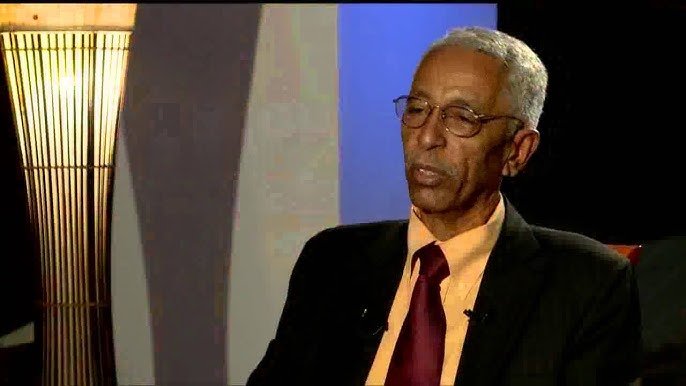
Dr Al-Khidir Haroun
It is said that one of the many Arab tyrants, ancient and modern, once ruled over a people in the age of ignorance. He was oppressive, excessive in killing, and relentless in seizing the wealth, estates and women of his subjects. A wise man foretold that, in return for what he had done to the people, he would meet a terrible and resounding death.
Yet the tyrant lived a long life, never restraining himself from any shameful or wicked act, and eventually died peacefully in his bed, as most people do.
When the wise man was questioned about this, he replied:
“Then there must be another life after death in which justice will be exacted from the oppressors.”
This may be an instinctive feeling embedded in the descendants of Adam alone among God’s creatures: the sound soul finds comfort in the just balance of righteousness and delights in hearing of it. From this arise the pangs of conscience and remorse over mistakes and sins.
“Righteousness is that in which the soul finds tranquillity, while sin is that which troubles the heart, even if people repeatedly give you rulings in its favour.”
How magnificent and complete this saying is.
These moral principles have suffered decay and are close to becoming little more than traces of what once existed. Yet I remain convinced that some of them will endure for as long as the heavens and the earth remain, as indispensable standards by which good and evil, right and wrong, may be measured.
We are now living at the beginning of the second quarter of the twenty-first century. Despite the greatness of humanity’s achievements across every field over the centuries, we still witness avarice obeyed, desire followed, worldly gain preferred, and every person admiring their own opinion.
We once believed that people’s failure to respond to horrific crimes against humanity resulted from politicised and ideologically driven media concealing those atrocities from their eyes and ears. Yet social media now presents every atrocity in image and sound, day and night, and still no injustice is lifted, and no war is stopped.
The wealthy and powerful remain slaves to their appetites, racial prejudices and corrupt beliefs. They accept that a people who have lived on their land for thousands of years may be expelled, brutalised and replaced by others who claim they once lived there. They accept that the laws governing the world may be fashioned to protect that crime, that armies may be mobilised to defend it, and that devastating wars may be ignited to preserve it.
They also accept that a militia of thugs may be unleashed to kill, rape and destroy every surviving institution in an ancient country now called Sudan.
What is most bewildering is that the information revolution has been accompanied by growing ignorance and the rejection of those with knowledge and experience. Others have described this as “the death of experience”. Triviality has become so dominant that the term ruwaybidah now describes an entire age rather than merely one insignificant man speaking ignorantly about public affairs.
Follow social media and observe the statements of natural scientists and doctors—fields in which disagreement should, in principle, be narrower than in politics or international relations. You will hear a claim presented as scientific truth, supposedly above dispute, only to find its exact opposite flowing just as smoothly from other tongues.
As for the world of the “bellies”—the contemptuous name once given to our choice of humanities and social sciences subjects in university entrance examinations, before the adoption of separate arts and science streams—there is no end to what might be said.
Great powers, despite reaching advanced levels of scientific and experimental achievement, still shape their policies according to ancient myths founded on separation, hatred and racial discrimination based on ethnicity, colour, belief and geography. This persists even though genetics has confirmed that all of us descend from Adam, that Adam was made from dust, and that humanity came out of Africa.
Differences of opinion may be legitimate when shaped by many variables. But how can contradictions of this kind be accepted in sciences founded on laboratory experiment?
Amid this turbulent sea in which standards have become confused, how is the seeker of truth to find it? Does a pure truth, free of contamination, still exist? Is the person who remains silent about it an “inarticulate devil”, endorsing falsehood through silence?
Yes, truth remains—but it is scarce and requires caution, patience and watchfulness to discern.
The Arabs once issued a warning later affirmed in a noble hadith:
“A truce built upon hidden corruption, and a community united over impurities.”
Agreements may be no more than temporary truces after which conflict and calamity return. They may represent only momentary consensus covering concealed rancour and resentment buried in the heart.
Do you now understand the misery of living in an age surrounded by suspicion, caution and constant vigilance?
This is that age.
Should one speak or remain silent, when even the clearest truth is surrounded by impurities?
The strain of thinking about this dilemma led me back to a short book written by the late Mohammed Jalal Kishk after he had abandoned communism and returned to the embrace of religion. It concerned Abu Dharr Al-Ghifari and was entitled Abu Dharr and the Bitter Truth.
Kishk drew a comparison between Abu Dharr’s position and the communist call for the widespread distribution of wealth and the prohibition of hoarding it. Abu Dharr’s views led him into a form of voluntary isolation, in obedience to Caliph Uthman, when he remained at Al-Rabadhah near Medina, away from people, until his death.
Abu Dharr Al-Ghifari was among the most virtuous of the Prophet’s Companions and one of those dearly loved by the Prophet. When he once asked for an official appointment, the Prophet told him:
“You are weak, and authority is a trust.”
I ask myself: did Abu Dharr’s weakness lie in seeing things in only two colours—black and white—when reality is, in truth, made up of many colours not visible to everyone?
Are those we call purists followers of Abu Dharr’s path? Do they rush, though with sincere emotion, to issue judgements without sufficient reflection?
Does the confusion surrounding all things make caution in judgement necessary?
Should we soften our demands and lower the ceilings of our aspirations at a dangerous turning point when our country’s very existence is threatened, and its people risk becoming displaced wanderers without a homeland?
Should we accept that preserving the country intact—as Ismail Al-Azhari, may God have mercy upon him, once said, “like a porcelain plate without crack or chip”—may require overlooking certain impurities, on the principle that what cannot be achieved in full should not be abandoned altogether?
Or should such considerations be acknowledged while we continue to identify the places of error and failure so that they do not worsen, especially when they weaken trust and delay the path to liberation?
Yes, one may conceal lesser grievances within the breast, following the counsel of the Iraqi poet Mohammed Mahdi Al-Jawahiri, and endure with a patience as painful as the cut of a blade. Great blame and the impulsive striking of one’s hand against the vessel may be postponed until conditions are restored and the stages of liberation are complete.
Then every event will have its proper discussion.
What do you think, with your gracious indulgence?
Shortlink: https://sudanhorizon.com/?p=16566