

Behind Workneh Gebeyehu’s Visit: IGAD’s Quiet Role in Sudan
Khartoum – Sudanhorizon – Mariam Abshir
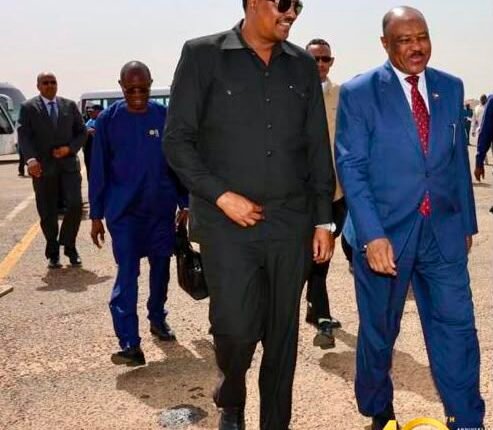
The Executive Secretary of the Intergovernmental Authority on Development (IGAD), Dr. Workneh Gebeyehu, visited Khartoum at the end of last week, accompanied by several of his advisers, on a one-day official trip—the first since Sudan restored its membership in the regional organization.
During the visit, he held key meetings with the Chairman of Sudan’s Transitional Sovereignty Council and the Transitional Prime Minister to discuss the country’s current situation and the role expected of IGAD. He also officially inaugurated the reopening of IGAD’s Coordination Office in Khartoum.
In his remarks, Gebeyehu stressed that Sudan’s future and its peace process must be shaped by Sudanese themselves, emphasizing that the organization’s role is limited to facilitating dialogue rather than imposing solutions.
Beyond the Spotlight
Although IGAD has played a significant role in Sudan through its various mechanisms, observers have tended to focus primarily on its efforts to promote security, peace, and an end to the war. While those efforts remain important, they represent only one aspect of the regional organization’s broad range of activities.
Specialized Institutions
In addition to its peace and security mechanisms, IGAD operates a number of specialized technical bodies. Sudan has continued participating in their activities since their establishment—even during the suspension of its membership and throughout the ongoing war.
These include programs covering agriculture, development, economic cooperation, the Conflict Early Warning and Response Mechanism (CEWARN), headquartered in Addis Ababa, the IGAD Public Health Emergency Center in Sudan, migration and border conflict management, border trade, epidemic prevention, election observation, and several other technical initiatives.
Sudan’s Active Participation
Since January, Sudan has actively participated in more than 28 IGAD activities, despite the previous suspension of its membership and the country’s failure to pay membership dues due to current circumstances.
According to information obtained by Sudanhorizon, Sudan has taken part in major consultative meetings on drafting migration and displacement policy guidelines, advancing knowledge on digital and electronic cross-border trade, and strengthening the network of institutions promoting digital integration across East Africa.
Sudan also participated in regional discussions on digital trade, border governance, combating trafficking and cross-border crime, and other specialized initiatives.
The country further joined a regional meeting on the Ebola virus outbreak, during which IGAD allocated US$1 million to each member state to strengthen disease response efforts. Sudan also participated in numerous other technical activities through delegations of specialized experts.
Technical Representation
Sudan’s participation in the 28 IGAD events was primarily through technical experts representing the relevant institutions for each activity.
Among the government bodies that took part were the Ministries of Interior, Foreign Affairs, Justice, Finance, as well as the Sudanese Standards and Metrology Organization, the Customs Authority, the Ministry of Environment, and several other agencies whose contributions helped ensure the success of the events.
Funding and Development Programs
Originally established in 1986 and restructured in 1996, IGAD currently consists of seven member states following Eritrea’s withdrawal in December 2025. The organization includes Djibouti (its headquarters), Ethiopia, Kenya, Somalia, South Sudan, Sudan, and Uganda.
Its work focuses on regional cooperation in development, security, economic integration, and crisis management across the Horn of Africa.
IGAD receives financial support from several international partners, including the European Union, the African Development Bank, and the World Bank.
During the war in Sudan, the organization implemented several projects inside the country, including initiatives to combat desertification and drought in eastern Sudan, strengthen epidemic prevention in border areas, support road connectivity projects linking Sudan with Ethiopia and South Sudan, and implement security and police coordination programs.
IGAD and the War in Sudan
According to documented information obtained by Sudanhorizon from a senior source, IGAD has been actively involved in virtually all regional and international efforts aimed at resolving Sudan’s crisis since the outbreak of the war in 2023.
The same source said the organization participated alongside the African Union and the European Union in coordinating various peace initiatives. It also took part in the Brussels Meeting, the Paris Conference, the Jeddah negotiations, and a series of consultative workshops examining mediation efforts, lessons learned, practical approaches, the strengths and weaknesses of previous initiatives, and the appropriate limits of external involvement.
Outstanding Financial Obligations
Despite IGAD’s extensive activities and Sudan’s continued participation in many of the organization’s regional programs, the senior source told Sudanhorizon that Sudan has been unable to pay its membership dues for the past seven years because of prolonged instability.
Some of the outstanding payments predate the war, while others accumulated after the conflict erupted in 2023. Sudan has also not paid its US$2 million contribution toward the construction of IGAD’s new headquarters in Djibouti.
The source noted that, under normal circumstances, failure to pay membership dues would prevent a member state from participating in IGAD meetings and conferences. However, Sudan has continued to attend the organization’s activities in recognition of the exceptional circumstances facing the country.
The source concluded by emphasizing that settling the outstanding dues remains an obligation that Sudan should fulfill.
Shortlink: https://sudanhorizon.com/?p=16571