

No Immunity in Humanitarian Work: Lessons from the Chad Case
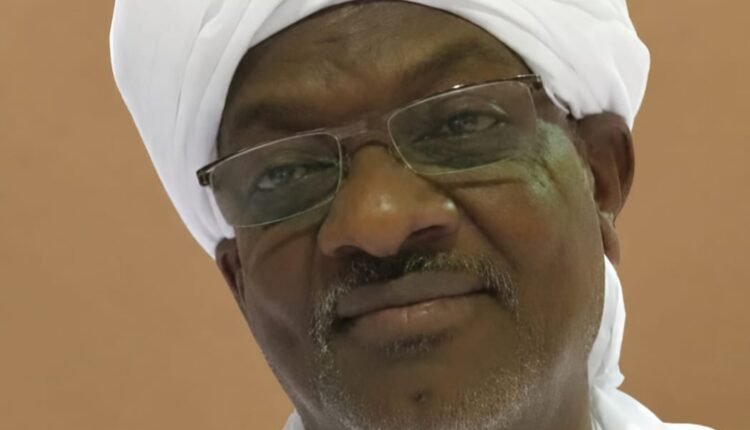
Hisham Yousif Abdelrahman
Commentary on the news report published on 16 June 2026 regarding the announcement by Médecins Sans Frontières that it had dismissed 18 employees and contractors following investigations into allegations of sexual exploitation and abuse involving Sudanese refugee women in Chad.
The announcement by Médecins Sans Frontières (MSF) that it had dismissed 18 employees and contractors following investigations that uncovered cases of sexual exploitation and abuse against Sudanese refugee women in Chad has once again drawn attention to one of the most serious challenges facing humanitarian work in situations of conflict, displacement, and disaster: the abuse of power and authority entrusted to humanitarian personnel at the expense of those who are most vulnerable and most in need of protection.
At its core, humanitarian work is founded upon the protection of human beings and the preservation of their dignity, particularly in contexts of displacement, refuge, disaster, and armed conflict. When some of those entrusted with providing protection and assistance become themselves a source of exploitation or abuse, the damage extends far beyond the immediate victims. It undermines confidence in the humanitarian system as a whole. It weakens the very principles on which humanitarian organisations are built, as well as the noble mission they seek to fulfil.
It is important to acknowledge that what occurred in Chad is not an isolated incident in the history of international humanitarian work. In recent years, documented cases have emerged within several major international organisations, including Oxfam, Save the Children, the World Health Organisation, and Médecins Sans Frontières itself. Investigations have uncovered instances of exploitation, harassment, and abuse of authority in various humanitarian settings. These incidents have compelled the humanitarian sector to review its policies and strengthen systems of safeguarding, accountability, and reporting.
Humanitarian assistance is a right belonging to beneficiaries, not a privilege granted by an employee or official. Any exploitation of that right constitutes a double violation—against both humanity and the law.
It is equally important to recognise that confronting this phenomenon does not occur through denial or minimisation. Rather, it requires acknowledgement, transparency, and firm action. Organisations that have taken the initiative to launch independent investigations and impose meaningful sanctions on those responsible deserve credit for reinforcing accountability rather than concealing wrongdoing. In this regard, MSF’s decision to publish the findings of its investigations and disclose the disciplinary measures taken against those implicated represents a positive step that should be strengthened and built upon.
Yet these efforts, important as they are, do not absolve national governments of their legal and moral responsibilities. The presence of international organisations operating within a country’s territory should never create spaces that are beyond the reach of law or accountability.
Many states already possess legislation and regulatory frameworks that align with international standards regarding beneficiary protection and the prevention of exploitation and abuse. The real challenge, however, often lies not in the absence of laws but in the effectiveness of their enforcement. Weak oversight institutions, inadequate monitoring mechanisms, limited resources and capacity, and at times corruption, conflicts of interest, or reluctance to hold influential international actors accountable can all impede the rigorous application of existing laws.
Accordingly, the task is not merely to enact legislation or establish regulatory frameworks. It is to ensure their fair and effective implementation, to investigate credible allegations promptly, and to hold perpetrators accountable under national law regardless of their nationality, position, or institutional affiliation.
International donors also bear a responsibility to intensify their efforts to verify that safeguarding policies are implemented in practice and not merely reflected in written regulations. Experience has shown that sophisticated codes of conduct alone do not prevent abuse. Effective prevention requires robust oversight, safe reporting channels, genuine protection for whistle-blowers and victims, and mechanisms that prevent individuals dismissed or sanctioned for misconduct from simply moving to another organisation or country without accountability.
At the same time, credibility demands acknowledgement that some cases of abuse may be affected by political, institutional, or diplomatic complexities, as well as competing interests among stakeholders. These factors can weaken oversight efforts or delay accountability processes. This highlights the necessity of ensuring that investigative and monitoring mechanisms remain independent and free from political influence, so that justice and accountability are applied equally to all, regardless of nationality, status, organisational affiliation, or source of funding.
It is also essential to remember that recipients of humanitarian assistance are not receiving charity or favours. They are exercising rights guaranteed under international law and humanitarian principles. Food, medical treatment, shelter, and employment opportunities associated with humanitarian programmes must never be used as tools of coercion, bargaining, exploitation, or personal gain.
Humanitarian assistance is a fundamental human right, not an instrument to be manipulated for private interests or unlawful advantage.
In contexts characterised by large-scale displacement and refugee movements—as is currently the case for millions of Sudanese affected by war—the need for protection becomes even more urgent. Women, children, and other vulnerable groups must feel safe when interacting with humanitarian institutions. They should not fear becoming victims of exploitation because of their hardship or dependency.
In honour of the thousands who serve with integrity in the humanitarian field, a small minority must never be allowed to hide behind the reputation of humanitarian work: zero tolerance for exploitation and zero immunity for exploiters.
These incidents should not cast doubt on the vital role played by humanitarian organisations or the dedication of the thousands of honourable humanitarian workers who continue to perform their duties under extremely difficult and dangerous conditions. However, preserving the integrity and reputation of humanitarian work requires a clear and uncompromising position: zero tolerance for exploitation and abuse, and zero immunity for anyone who misuses their authority or professional position, regardless of rank or status.
The Chad case should therefore be understood as another warning signal to both the humanitarian sector and governments alike. It reminds organisations of the need to strengthen internal oversight and improve systems for prevention, early detection, investigation, and accountability. It also reminds governments that protecting refugees, displaced persons, and aid beneficiaries is a sovereign responsibility that cannot be neglected or left solely to administrative processes.
Moreover, it requires all stakeholders—humanitarian organisations, donors, and national authorities—to work together more effectively to ensure that humanitarian assistance remains a means of protecting and empowering people rather than a gateway to the violation of their rights or the exploitation of their suffering. The principles of protection and accountability must remain above political, financial, or institutional considerations that might compromise the integrity of investigations or the fairness of justice.
Ultimately, the success of any humanitarian endeavour should not be measured solely by the volume of aid delivered or the number of beneficiaries reached. It should also be measured by its ability to preserve human dignity and protect individuals from harm.
When beneficiaries feel that their rights are protected, that the law stands beside them, and that those who abuse them will be held accountable without hesitation, only then is the true meaning of humanitarian action fulfilled, and only then does its noble mission achieve its purpose.
Shortlink: https://sudanhorizon.com/?p=14948