

Massad Boulos: Searching for a Diplomatic Victory in an Era of Defeats
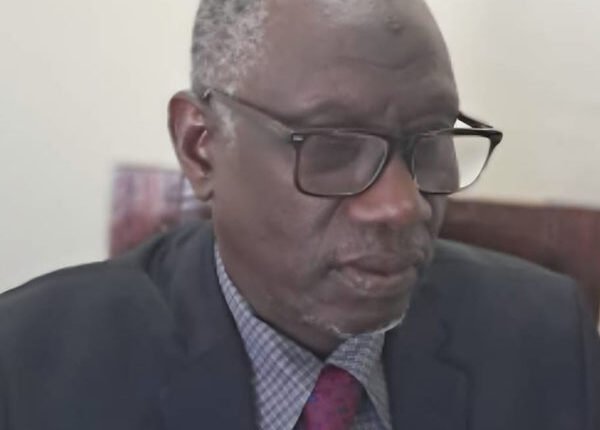
Dr Mohammed Yousif Hassan
While the terrorist militia’s drones bombard the hospital and marketplaces of El Obeid, Massad Boulos stands before the United Nations Security Council in New York, criticising the Sudanese Government for allegedly rejecting the American proposal, while ignoring the blood of civilians—a tragedy not acknowledged in a single statement.
In diplomacy, silence can sometimes speak louder than words. And words themselves are meaningless unless one asks: Who is speaking? Why now? And at whose expense?
Massad Boulos appeared before the Security Council not to discuss a ceasefire, but to advance a narrative—a remarkably concise one. According to that narrative, the Chairman of Sudan’s Sovereignty Council rejected the American proposal, Washington continues to knock at the door, and sanctions await those who refuse to open it.
This was not a technical briefing on humanitarian access. It was the launch of what appears to be a new political track that Washington seeks to introduce through the Security Council: a process that bypasses the Jeddah negotiations, sidelines the African Union, and ignores the work of UN envoy Pekka Haavisto. It is a track branded “America First”, with the key held not by the UN Special Envoy but by the US President’s in-law.
Yet the most important question in this narrative was left unanswered.
What about the other side?
Did it genuinely accept the proposal? Even if it did, does it possess the authority on the ground to enforce it?
Signing a document is easy. Silencing artillery and stopping drones from striking civilians in El Obeid is an entirely different matter—one that no communiqué can resolve.
We have seen this before.
A year ago, António Guterres announced a week-long ceasefire in El Fasher. Soon afterwards, the city became synonymous with atrocities.
We saw it again in the Democratic Republic of the Congo, where two presidents signed the so-called “Washington Agreement” in the presence of President Trump, only for militia forces to violate it four days later.
In both cases, the pattern was identical: a carefully staged announcement, a ready-made narrative, and implementation postponed indefinitely.
Before the Security Council, Boulos stated openly what others had hesitated to say explicitly: Khartoum rejected the proposal, while the Rapid Support Forces accepted it. Therefore, according to this logic, sanctions should target those who refused, while political legitimacy should be granted to those who accepted.
Yet Boulos neglected to mention one crucial word in his briefing:
El Obeid.
He said nothing about a city that goes to sleep beneath the sound of militia drones.
Nothing about residential neighbourhoods deliberately targeted.
Nothing about citizens whose Eid celebrations became funerals.
Nothing about water supplies being cut off, power stations disabled, hospitals bombed, or markets set ablaze.
These are not abstract “humanitarian concerns” appearing in Security Council reports.
They are alleged war crimes being committed today.
And yet it is in their shadow that the Sudanese Government is being urged to “accept” and sign.
This is not neutrality.
It is overt political partiality disguised as mediation.
The envoy who introduced himself as “the President’s son-in-law” did not find it necessary to condemn attacks on hospitals, yet he hurried to condemn the Government simply because it said “no”.
History has an unsettling habit of repeating itself.
In El Fasher last year, the UN Secretary-General announced a unilateral ceasefire that was followed by massacres.
In the Congo just two months ago, the Washington Agreement was violated within 96 hours.
Today, we appear to be witnessing the same script once more: another statement, another photo opportunity, another threat of sanctions—while El Obeid pays the price.
This time, however, there is a more troubling development.
Washington no longer appears content merely to facilitate negotiations; it seeks to monopolise them.
A Trump Peace Council, an American proposal, and Security Council legitimacy together form a framework that sidelines the Jeddah platform, the African Union and IGAD. In effect, the United States seeks to become the mediator, the principal actor and the principal sponsor simultaneously.
Why now?
Because the Iranian negotiating track has reached a dead end.
Because Sudan’s gold and Darfur’s mineral wealth have become strategically valuable in Washington’s broader competition with China.
From this perspective, Sudan is no longer viewed primarily as a humanitarian crisis but increasingly as a geopolitical investment.
There is no definitive answer yet.
But the sequence of events since November 2025 suggests one clear conclusion: Washington intends to hold the pen and write the final chapter itself. It seeks to be the protagonist, the arbitrator and the narrator all at once.
Here lies Sudan’s bitter paradox.
The international community never tires of producing new initiatives, yet becomes strangely reluctant when asked about their actual outcomes.
Fifty-five foreign ministers gather in Berlin and pledge €1.5 billion, excluding Khartoum from participation—a move the Sudanese authorities regarded as an exercise in neo-colonial tutelage.
Months later, Washington returns with essentially the same proposal wrapped in different packaging.
At that point, the mask slips.
A state that refused to be managed from Berlin is now being asked to accept direction directly from the White House.
A government that rejected a conditional €1.5 billion package now finds itself threatened with sanctions and international isolation unless it agrees to a minerals-related arrangement—all while its citizens are being killed by drones in El Obeid.
Sudanese people learned an important lesson from El Fasher.
Warnings do not stop bullets.
Sanctions do not open humanitarian corridors.
International legitimacy means little unless it is accompanied by genuine political will on the ground.
The real question, therefore, is no longer whether Boulos’s initiative will succeed.
The question is this:
Does peace, in Washington’s view, mean only silencing the Sudanese Army’s guns, or does it also mean stopping the militia’s drones?
If the answer is the former, then Boulos should understand that warnings do not stop drones, sanctions do not protect hospitals. Carefully crafted narratives do not restore electricity to El Obeid.
If the answer is the latter, the starting point should be clear: condemn attacks on civilians before condemning those who defend them.
Otherwise, what we are witnessing is little more than diplomatic theatre in search of a media victory—performed over the bodies of the people of El Obeid.
Or perhaps it is simply another actor seeking applause on the stage of America’s diplomatic setbacks.
Shortlink: https://sudanhorizon.com/?p=15411