

The Return of the Prodigal Sons to the Homeland
Mahmoud Hussein Serri
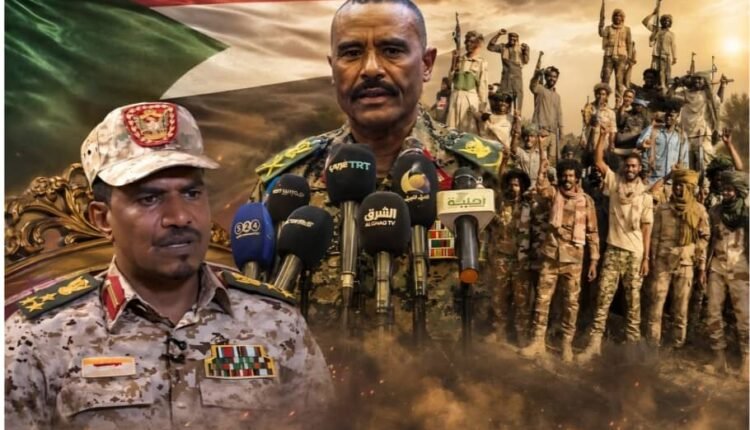
Recent months have witnessed growing fractures within the terrorist rebel Rapid Support Forces (RSF), with a significant number of commanders and advisers breaking away and announcing their return to the ranks of the Sudanese Armed Forces (SAF) and the Sudanese state.
On the military front, in October 2024, field commander Abu Aqla Keikel declared the defection of his entire force, known as Sudan Shield, from the RSF and its integration into the Sudanese Armed Forces. Keikel had previously served as the RSF commander in Gezira State before making this major shift.
In addition, in April 2026, Major General Al-Nour Ahmed Adam, widely known as Al-Nour Qubba, a prominent RSF field commander, announced his full defection, along with his troops and equipment, to the SAF. Al-Nour Qubba had emerged as one of the most influential military commanders in Darfur, particularly in North Darfur, including El-Fasher and Kutum. He was also regarded as one of the founding figures of the RSF and a key insider.
In May 2026, another field commander, Ali Rizqallah, known as Al-Safanna, also defected, withdrawing from the rebel RSF and surrendering himself and his forces to the Sudanese army.
Politically, five advisers to the RSF commander officially announced their split from the group and their return to the state and constitutional legitimacy in October 2024. The political faction was led by Dr Abdul Qadir Ibrahim Ali Mohamed, adviser to the RSF commander and official responsible for East Sudan and NGO affairs.
Upon arriving in Port-Sudan, the defecting advisers held a press conference before meeting later that day with Transitional Sovereignty Council Chairman Abdel Fattah al-Burhan. They stated that their decision to abandon the rebel force stemmed from the targeting of state institutions, attempts to divide the country, widespread abuses, and the growing realisation that foreign agendas were driving the conflict.
Former RSF media adviser Ibrahim Baqal Siraj also confirmed his official return to Sudan in May 2026 through Port Sudan International Airport. His return generated widespread controversy in Sudanese political circles due to his previous political and media positions. His statement that he entered using a diplomatic passport further fuelled debate on social media, particularly after he indicated that his return had been fully coordinated with influential figures within the state.
Some media outlets have also reported that the coming period may witness the return of additional political figures who are described as having formed part of the political incubator of the rebellion and as key components of the civilian democratic coalition “Sumoud”. Their return, according to these reports, is conditional upon abandoning support for the Dagalo militia project and fully aligning with the Sudanese state and its institutions.
At the same time, the civilian democratic coalition “Sumoud” itself appears to be suffering from severe internal divisions, fuelled by accusations of centralised decision-making, lack of institutional transparency, misuse of international funding, and the failure of conference diplomacy in Berlin, Paris, Geneva, Addis Ababa, and Nairobi to produce meaningful results on the ground. This comes despite ongoing international attempts to revive the coalition through the Nairobi Declaration of Principles framework.
There is little doubt that the defections of prominent RSF military and political figures constitute both a psychological and military blow to the group. These developments represent a major achievement for the Sudanese Armed Forces and a serious setback for the RSF’s structure, likely to weaken morale within the organisation over the medium and long term, despite efforts by RSF leaders to downplay their military significance.
Secondly, these defections have strengthened the Sudanese Armed Forces’ current battlefield position when properly utilised. The full integration of forces such as Sudan Shield into the SAF command structure directly contributed to the liberation of Gezira State and later operations to retake Khartoum.
Thirdly, these internal fractures point to a growing leadership crisis within the RSF, intensifying tribal and field-level disputes, and increasing dissatisfaction among some of its components regarding the absence of a national vision and the pursuit of narrow interests and controversial field practices. Reports also suggest that traditional commanders have faced neglect by the RSF leadership. For example, sources claim that Al-Nour Qubba spent nearly four months ill in كتم without receiving proper care or visits from the leadership.
Fourthly, these divisions strike at the tribal cohesion upon which the RSF was largely built. The recent defections reflect deeper military and social fractures within the Darfur-based structure sustaining the organisation. Many of these splits appear driven by longstanding tribal and strategic disputes, particularly in Darfur and Kordofan, which escalated after attacks on areas linked to traditional leaders such as Musa Hilal. This has strengthened local loyalties at the expense of the RSF’s central command.
Public reaction to these developments has been mixed and highly contentious, particularly regarding the army’s decisions to grant general amnesties to defectors. Many Sudanese have raised legitimate political and legal concerns about the possibility of impunity for individuals accused of serious human rights abuses, war crimes, and crimes against humanity.
Human rights advocates argue that integrating such figures into the military without accountability undermines justice, disregards victims’ rights, and damages the reputation of the Sudanese Armed Forces. Critics also question the broader political and security logic of such arrangements, insisting that crimes against humanity, war crimes, and grave violations cannot simply be erased through political settlements or amnesties. Under international humanitarian law, responsibility extends not only to direct perpetrators but also to commanders who knew, or should have known, of violations committed under their authority and failed to prevent or punish them.
Since the outbreak of war, the government in Port Sudan has launched various legal and military proceedings against RSF members and leaders. Courts in Port Sudan have begun trying senior RSF leaders in absentia, including Mohamed Hamdan Dagalo, known as Hemedti, and his brothers, on charges carrying penalties up to death, including alleged involvement in the killing of former West Darfur Governor Khamis Abakar.
Specialised courts, including terrorism and state security courts, continue to prosecute civilians and alleged collaborators accused of assisting the RSF. Death sentences and prison terms have already been issued against some individuals convicted of “waging war against the state”. Trials are also ongoing against individuals accused of supporting the formation of a civilian government aligned with the RSF.
Meanwhile, the return of former RSF figures to urban centres has generated growing public anxiety over the expanding presence of armed groups in Khartoun State, which has recently witnessed significant voluntary returns. Omdurman has already seen several armed clashes between the Joint Forces allied with the Sudanese army and other armed factions, including confrontations involving Al-Nour Qubba’s defected forces and incidents in Souq Sabreen. Reports indicate that a sudden firefight erupted between members of the Joint Forces and a combined police-intelligence security unit following an argument that escalated into gunfire, leaving one person dead and three others wounded.
Despite the controversy, supporters of these reconciliations insist that the return of former RSF military, political, and security figures — alongside members of “Sumoud” and other political currents, including Islamists — represents a strategic victory for the Sudanese Armed Forces, military intelligence, national security services, and regional actors that facilitated these contacts and settlements. They argue that these returns may help end the war, reduce escalation, achieve a ceasefire, weaken the rebellion, and boost the morale of the Sudanese army.
They further maintain that defeating insurgent movements cannot rely solely on battlefield operations, but also requires complex intelligence and political processes capable of sparing the country further bloodshed and destruction. From this perspective, returning defectors should ultimately be regarded as Sudanese citizens entitled to return to the state and national fold.
However, for such a process to succeed, the author argues that returns must be carefully organised, regulated, and secured under Sudanese law. He calls for a new legal framework governing the reintegration process to prevent chaos, arbitrariness, and further security incidents, such as those recently witnessed in Omdurman. Such legislation, he argues, should regulate general amnesties, national reconciliation, national security safeguards, transitional justice, victims’ rights, accountability, transparency, and institutional governance while dismantling militia structures.
According to the article, the international and regional community is closely observing how Sudan’s civilian authorities, armed forces, and relevant institutions handle this highly sensitive and dangerous file. Success in managing it could restore unity and peace, while failure could push the country towards another catastrophe.
The author points to the example of Rwanda, which recently commemorated the thirty-second anniversary of the 1994 genocide that claimed nearly one million lives. Rwanda, he argues, succeeded in transforming itself into a globally recognised example of how deeply divided societies can move from mass violence to sustainable peace through reconciliation, forgiveness, acknowledgment, and broad societal participation.
Rather than embracing revenge, Rwanda pursued comprehensive amnesty and transitional justice mechanisms aimed at reintegrating both perpetrators and victims into a shared national community. Similar experiences, the author notes, can also be found in South Africa and Morocco, including models based on “truth in exchange for amnesty”, reducing ethnic polarisation, promoting coexistence, reconciliation discourse, compensating victims, and fostering confession-and-forgiveness processes.
Ultimately, the author concludes that the issue of returning “prodigal sons” — whether political or military — requires a clear legal and institutional framework established by the Sudanese state to prevent repetition of the crisis, preserve national security, ensure justice, and uphold human rights.
Shortlink: https://sudanhorizon.com/?p=14206