

No Genuine Renaissance Without a Strong State
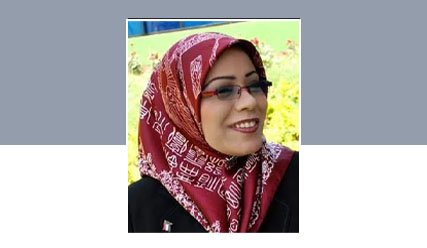
Dr Enas Mohamed Ahmed
Countries emerging from war often face a fundamental dilemma: how to rebuild and reconstruct, and questions such as: Where should reconstruction begin? And what form should development take?
In Sudan, we have lived through years upon years of wars here and there, wars that have exhausted our country, weakened our economy and thwarted every attempt to reform it. Then came the latest war, making the challenge greater, the crisis deeper, and the internal and external threats more numerous.
We can agree that the foundation for national revival after the ordeal of war is organisation, planning and a national vision. Geopolitical circumstances then come into play, directing these efforts towards the interests of state reconstruction and the fight against corruption and favouritism.
Let us begin, for example, with the Han River model in South Korea. When South Korea emerged from the Korean War in 1953, it was little more than an exhausted and battered country, dependent on aid and assistance. It had neither a strong economy nor substantial resources. Its people lived amid illiteracy, ignorance, bleak circumstances and an uncertain future, with no solutions apparent on the horizon. Yet, thanks to sound planning, genuine national determination, the fight against corruption and favouritism, and the scientific management of resources, South Korea was able, over six decades, to overcome the barriers of chaos and destruction and become one of the world’s strongest industrial economies.
This transformation was not the result of a miracle, but of sound economic planning that set the country’s development compass toward sectors in which it could succeed.
It established an alliance between the state and major corporations — the State–Chaebol Alliance. These companies were neither entirely independent entities nor wholly state-owned enterprises. Rather, they were economic partners committed to achieving strategic economic and development objectives defined by the state as part of its long-term plans for national advancement. In return, the companies received conditional government support tied to specified performance, including long-term loans, guarantees, exemptions and access to new markets, including markets outside the country.
The situation evolved further in 1997, when reforms were introduced to strengthen transparency and global competitiveness, dismantle bureaucratic barriers and establish a strong administrative apparatus based solely on competence rather than loyalty. This administrative machinery could implement government plans despite policy changes under successive governments.
Another example is Taiwan, which adopted a model based on an intelligent partnership between the state and competitive markets that innovate, manufacture and then export.
The third example is Rwanda, which emerged from a civil war and genocide in 1994, leaving it a failed state. Yet over three decades, it moved beyond economic collapse and political failure to become one of Africa’s fastest-growing economies. Rwanda sought to establish an economy based on innovation and technological development rather than relying solely on agriculture and pastoralism. It also adopted transitional justice through the Gacaca courts to help forge a social contract and national reconciliation, firmly establishing citizenship as a criterion for state-building. This helped make it one of the least corrupt and least nepotistic countries in Africa.
Rwanda understood that development is not merely a matter of resources; it is also a matter of the state’s capacity to combat corruption, manage resources properly and steer the economy towards disciplined investment.
These three experiences may differ in their timeframes, their geographical settings and the circumstances of the wars each country experienced. Nevertheless, they show that national revival begins with capable strategic plans, the effective use of all available resources, and disciplined institutions grounded in the rule of law and committed to fighting corruption—the foremost enemy of development.
Economic development is also closely linked to the characteristics of the state, the resources and wealth it possesses, and its capacity to develop them and benefit from them in global markets. No country can copy another country. Rather, it can follow the right steps towards progress and implement a package of development measures suited to its own circumstances.
The first path to recovery is therefore to formulate a social contract and a national dialogue involving all sectors, focused on advancing the state, with safeguards against political fluctuations and a concerted effort to move the country from war and crisis into an era of reconstruction and development.
Added to this is the need for international or regional agreements on reconstruction, infrastructure, and the development of energy resources, as well as addressing the environmental damage caused by the war, assessing its extent, and determining how it can be remedied.
Countries emerging from war face two choices: either to reproduce a fragile development model that will not last long and will return them to the cycle of poverty, or to transform the recovery phase into an opportunity to build an economy, development, justice and meaningful social dialogue on strong foundations — foundations capable of serving as a platform for a fundamental positive transformation that can lift the state towards a better future.
Peace does not begin when the war stops; it begins when people feel that they have an opportunity to rebuild their lives and their future.
Shortlink: https://sudanhorizon.com/?p=17853