

Sudanese Dialogue: Bringing Politics Back to Sudan
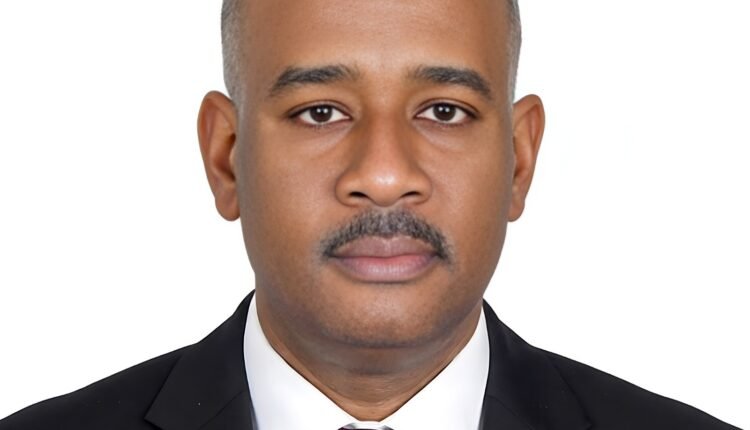
By Muhannad Awad Mahmoud
For years, Sudan has suffered neither from a shortage of initiatives, nor from a lack of mediators, nor from any scarcity of conference halls. Sudanese have gathered in Addis Ababa, Juba, Cairo, Jeddah and elsewhere. Tripartite, quadripartite and five-party mechanisms have been established; statements, agreements and roadmaps have been issued; and regional and international powers have supported various political processes. Yet Sudan has arrived at one of the worst wars in its modern history. Perhaps the wrong question all along was: Where should we bring the politicians together? The more important question is: Where is Sudanese politics itself?
The problem we have not discussed sufficiently is that Sudanese politics has, over the past years, gradually been displaced from its natural social environment. Positions inside Sudan have at times been interpreted from abroad, while the definition of the “civilian forces” has come to be shaped by a limited number of organisations and alliances. Meanwhile, broad sections of Sudanese society have remained outside political decision-making. Native administrations, professionals, women, young people, students, the private sector, farmers, internally displaced persons and refugees, as well as the communities that have borne the greatest cost of the war, have often appeared in political discourse as groups that ought to be represented or assisted. Yet they have rarely been direct partners in designing the political process itself.
Here, in my view, lies the most important opportunity offered by the Sudanese–Sudanese dialogue now being proposed. Its value does not lie in the fact that it is the first dialogue, nor in the belief that its preparatory committee possesses some magic formula, nor in the fact that all political forces have agreed to it. None of that has happened, nor will it happen at the outset. Its real value could lie in something deeper: bringing politics back to Sudan.
One of the most frequently used expressions since the outbreak of the war has been “civilian forces”. But who exactly are the civilians? Are they only members of political parties and alliances? The Sudanese man living in a village in Gezira is a civilian; the displaced woman is a civilian; the farmer in Gedaref, the doctor, the engineer, the student, the businessperson, the native administration leader and the refugee in Egypt or Chad are all civilians as well. There is no logical reason their will should reach the political process only through a political-party intermediary.
This is not to diminish the importance of political parties. Parties are indispensable to any serious democratic system, but they remain part of a society larger than themselves. Therefore, moving from elite dialogue to dialogue with society is not merely an expansion of representation; it corrects the very structure of Sudanese politics.
One paradox of Sudanese politics is that we sometimes demand an agreement before we agree to dialogue. We ask: Have these people agreed? Have those people rejected it? Will this political current sit down with that one? If everyone were already in agreement, what need would there be for dialogue?
Dialogue is not a meeting of people who already agree. It is managing differences before they turn into conflict, and creating a space that allows opponents to listen to one another. Therefore, the real test of any new process should not be how many people support it. Instead, it should be its ability to reach those who are hesitant or opposed, understand the reasons for their rejection, and build a minimum level of trust that allows them to participate.
Another dimension has remained relatively distant from the heart of political action: internally displaced persons and refugees. We often speak about them in the language of humanitarian organisations: food, medicine, shelter and return. But a refugee is not a package of aid, and a displaced person is not a number in a report. Both are citizens with an opinion about the state to which they will return, and both have a legitimate question: What will prevent what happened from happening again?
If Sudan genuinely wants a different kind of dialogue, it must move these people from beneficiaries of humanitarian assistance to stakeholders in the state. They must have a voice in matters of safe and voluntary return, justice, public services, reconstruction, and restoring communities devastated by the war.
The argument that dialogue should be held inside Sudan should not be understood merely as a choice of venue. What is meant is that the issues discussed must be connected to people’s lives; that the voices of communities must reach the process; that it must be subjected to the test of Sudanese public opinion; and that there must be a daily relationship between the political process and the reality it is supposed to change.
This does not mean excluding Sudanese living abroad. Consultations can reach them wherever they are, and meetings can be held outside the country if that is necessary to build confidence. But the centre of political gravity must return to Sudan.
Nor does this mean diminishing the role of the regional and international community. Sudan needs the African Union, the Arab League, the United Nations, the European Union, neighbouring states and everyone capable of contributing to ending the war, providing humanitarian assistance, supporting reconstruction and offering guarantees. But support and ownership are fundamentally different.
A process whose architecture depends on external actors will later need those same actors to protect and implement it, and it may falter when their priorities change. By contrast, a process that grows from within society may benefit from external support, but it does not derive its life from it.
For this reason, regional welcome for any Sudanese initiative is important, but it should not become the source of its legitimacy. Genuine legitimacy comes from its ability to knock on Sudanese doors of all kinds, listen to those whose positions contradict one another, and preserve its independence when real interests begin to collide.
It would be a mistake to measure the success of the dialogue by the day when a hall is filled with participants and photographs are taken. Sudan has done that many times. The real test begins before the hall: Have Sudanese agreed on the rules governing the process? Have those who hold different views felt safe? Have they been able to express their opinions without fear? Has the suffering of ordinary citizens become central to the discussion? Have the voices of displaced people, women, young people and the regions been heard? And has the process become larger than the individuals who initiated it?
If that happens, only then can we say that we are not witnessing yet another political conference, but the beginning of rebuilding Sudanese politics itself.
Sudan does not need another dialogue that merely adds a new document to its archives. It needs to restore the relationship between citizens and politics, between society and the state, and between disagreement and peace.
Therefore, the most important question is not: Will the Preparatory Committee succeed? The bigger question is: After years of internationalising their crisis and displacing their politics, can Sudanese bring politics back to its homeland?
If they succeed, the dialogue will not merely be a pathway out of war; it may become the beginning of Sudan’s own recovery.
Shortlink: https://sudanhorizon.com/?p=17860