

Alobeid A. Murawih: Dialogue a Gateway to Establishing New National Legitimacy
Khartoum – Sudanhorizon
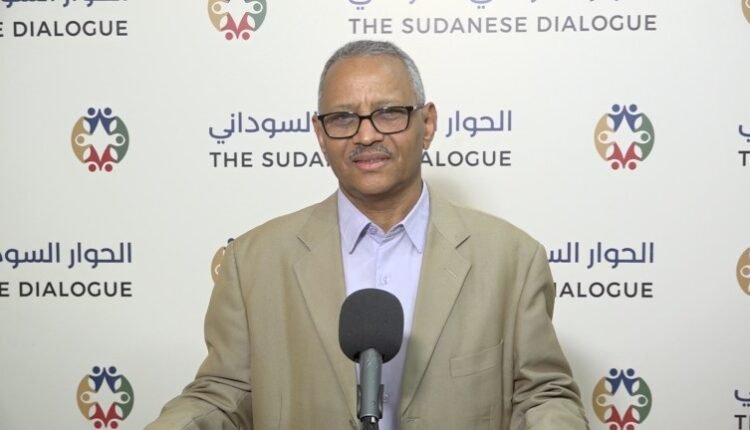
Alobeid A. Murawih, a member of the National Foundation Platform, stated that the Sudanese-Sudanese dialogue represents a crucial gateway to reaching a consensus on a new transitional constitutional framework based on national agreement and the participation of political and societal forces, given the impossibility of holding elections during the current phase.
In a press statement following his meeting with the Sudanese Dialogue Groundwork Committee at its headquarters in Khartoum on Monday, Murawih explained that the National Foundation Platform was launched in response to the need to re-establish popular legitimacy following the disruption of the balance underpinning the Constitutional Document signed in August 2019. He noted that political developments, including the rebellion by the Rapid Support Forces (RSF) and the withdrawal of the Forces of Freedom and Change (Central Council), had undermined the balance on which the document was based.
He added that the platform proposed forming an initiative group to convene a preliminary conference, where participants would agree on a national committee to manage the dialogue, paving the way for an agreement on a transitional constitutional framework.
Murawih further explained that the proposal involves selecting a group of Sudanese experts to draft constitutional foundations covering the judiciary, the public prosecution, elections, and electoral law. These proposals would subsequently be submitted to a popular referendum, paving the way for a consensual democratic process that defines the country’s future.
He emphasized that the National Foundation Platform was not established to achieve political gains, but rather to present ideas that political and societal forces could adopt and develop. He noted that approximately 38 individuals from diverse backgrounds and areas of expertise participated in drafting the platform, including members of factions within the Unionist movement and the Umma Party, as well as individuals with diplomatic and foreign affairs experience and legal experts.
Murawih pointed out that the platform’s proposals initially encountered a political environment that was not conducive to engaging with them. However, he expressed appreciation for the current momentum surrounding the Sudanese dialogue, describing it as an important step toward mobilizing civil forces to address the repercussions of the war.
He stressed that civil forces cannot remain silent while the war continues or remain beholden to external actors. He warned against the exploitation of Sudanese political forces to serve foreign agendas and underscored the importance of reaching a national consensus that reflects the will of the Sudanese people.
The initiative to prepare for the Sudanese-Sudanese dialogue was launched on August 30, 2026, and received a broad response from political, civil, and societal forces, alongside expressions of support from the African Union, the League of Arab States, and various regional and international organizations.
The initiative aims to create a conducive environment for dialogue, build trust among Sudanese parties, and facilitate preliminary consultations on the dialogue’s terms, methodology, and guarantees. These efforts are intended to pave the way for a comprehensive dialogue held inside Sudan and driven entirely by Sudanese will.
The Sudanese Dialogue Groundwork Committee has emphasized that its role is limited to preparation, facilitation, listening to the positions of the parties, and bridging differences, without imposing a predetermined agenda or a ready-made political path.
The committee has also stressed the importance of securing clear, written, and verifiable guarantees. These include protecting participants from criminal proceedings related to their political positions during the dialogue, ensuring the necessary freedoms of expression, safeguarding venues where consultations and dialogue take place, and preventing the use of state authority to influence the outcomes. Such measures are intended to reinforce the dialogue’s independence and preserve Sudanese ownership of its results.
Shortlink: https://sudanhorizon.com/?p=18935