

Double Standards: Washington between ‘Terrorism’ by the Houthis and the ‘Innocence’ of the RSF
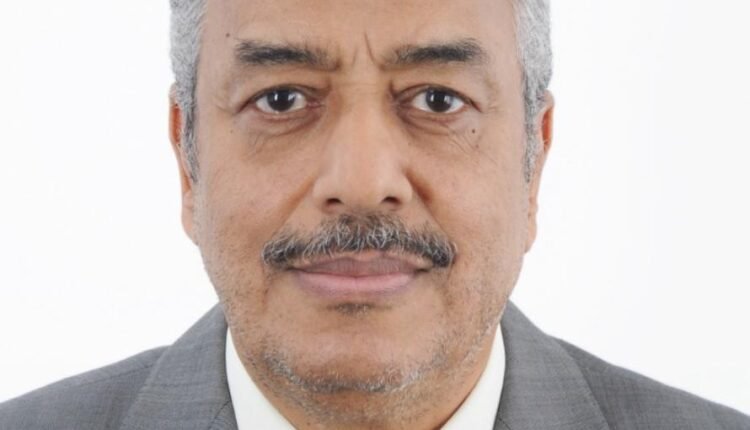
Dr Ismail Sati
A statement attributed to the US Embassy in Yemen was published concerning the detention of its staff, stating that the Yemeni government has the right to end the Houthis’ capacity to engage in terrorism.
Here, the blatant double standards governing many aspects of US policy towards crises in the region become strikingly apparent. While Washington raises its voice loudly when it comes to the Houthi group in Yemen, describing it as terrorist and taking political, military and economic measures against it, American language towards the Rapid Support Forces (RSF) militia in Sudan appears far more ambiguous, and at times more accommodating, despite the militia’s long record of violations and crimes against Sudanese civilians.
This is not about questioning the legitimacy of Washington’s position towards the Houthis in itself, a position we support, nor is it about defending any group that uses violence against civilians or threatens the security of states and maritime routes.
The more pressing question is: Why do violence and terrorism become sufficient grounds for war, designation and sanctions when the perpetrator is Houthi, while the same violence becomes merely ‘part of a conflict’ when the perpetrator is the Rapid Support Forces?
If Washington’s standard is the protection of civilians, why should that standard not be applied consistently? If the standard is combating terrorism, why should the language and measures differ according to which party is perpetrating the violence? And if the United States says that it is working for peace in Sudan, how can that peace be just if it does not begin by establishing responsibility for crimes and holding those who committed them accountable, rather than placing the aggressor and the defender of the state on the same footing?
From Yemen to Sudan: Where Does the Standard Disappear?
In Yemen, the United States has treated the Houthis as a security and political threat extending beyond Yemen’s borders. Attacks on shipping in the Red Sea, together with threats linked to Israel’s security and US interests, have led Washington to regard the group as part of a regional threat network that cannot be treated lightly. It has therefore not hesitated to use highly forceful language or take direct action against it.
No one can dispute that threatening international shipping or targeting civilians is serious, and that states have the right to protect their citizens and interests.
But the problem begins when this principle is transformed from a general rule into a selective instrument—applied to one party while suspended or diluted when another party is involved.
In Sudan, this is not a matter of isolated incidents or a political disagreement that can be contained through negotiations. We are facing a war ignited by the Rapid Support Forces that has created one of the world’s largest humanitarian catastrophes, displaced millions of Sudanese, destroyed cities and infrastructure, and opened the door to widespread violations against civilians.
The RSF is not simply a political group at odds with the government, nor is it a military institution that can be equated with the Sudanese Armed Forces (SAF) as two equal parties to a political conflict, as some claim.
It is an armed formation that originally emerged outside the traditional structure of the armed forces, then developed into a massive military force with weapons, resources, economic networks, and regional relationships before entering open confrontation with the state and its institutions.
The question is therefore legitimate: If the use of force against civilians and the threat to security and stability constitute a criterion for terrorism or sanctions in one place, why does the same conduct become merely a ‘dispute between two parties’ requiring a political settlement in Sudan?
The Enemy When He Is an Enemy… and the Tool When It Becomes a Tool
Perhaps the answer lies in the fact that US policy does not always move according to the principles it proclaims, but according to a combination of strategic interests, regional alliances and calculations of influence.
In Yemen, the Houthis have become an unmistakable adversary of US and Western interests in the region. They form part of a regional axis that Washington regards as a competitor and a threat to its principal ally, Israel. Their attacks on international shipping also directly affect economic and security interests.
Sudan, by contrast, presents a far more complex picture. It is a resource-rich country with an exceptionally important strategic location at the intersection of the Horn of Africa, the Red Sea, and the Arab world.
The conflict over Sudan is therefore not merely an internal confrontation between two military forces. It involves multiple regional and international interests.
This is precisely why it is dangerous to treat the Sudanese war simply as a confrontation between ‘two warring parties’, without considering the nature of each party, its project, its sources of strength and its external relationships.
The Sudanese Armed Forces represent the state’s official military institution. In contrast, the Rapid Support Forces are an armed force that emerged outside the state’s traditional framework and subsequently entered into military confrontation with it.
Political equivalence between the two, if it fails to take this fundamental distinction into account, effectively means ignoring the very nature of the conflict.
More dangerously, a settlement that treats the RSF as merely a political partner equal to the state and its institutions may, rather than ending the war, reward those who took up arms against the state and send a dangerous message: that the road to power in Sudan does not run through elections and institutions, but through building an armed force and then imposing its presence at the negotiating table.
When ‘Civilian’ Becomes a Political Cover
The picture of this policy is incomplete without considering the role played by some Sudanese civilian forces which, in the eyes of broad sections of the Sudanese public, have become political cover for the war rather than an independent force working to end it.
Over recent years, various names and alliances have emerged — from Qahat to Taqaddum, then Sumoud, and perhaps Tasis — all of which have raised the slogans of democracy, civilian rule and ending the war.
But the problem is not with the slogan of civilian democratic rule. No one can object to establishing a civilian democratic state.
The problem lies in the political alliances some of these forces have entered into, the positions they have adopted, and their willingness to deal with the RSF as a normal political partner, despite the nature of the force it represents and the criminal record of violations attributed to it.
Here, a distinction must be drawn between the genuine civilian who rejects war by any party and those who use the slogan of civilian rule to justify a political position biased towards an armed party whose primary objective is to re-establish the Sudanese state in opposition to the values and wishes of its people.
Not everyone who raises the slogan of democracy represents democracy, and not everyone who speaks in the name of the Sudanese people represents the Sudanese people.
Political legitimacy is not acquired merely by holding a press conference abroad, issuing a political statement or obtaining recognition from a foreign capital.
The Sudanese people themselves are entitled to determine who represents them.
It is particularly dangerous when such forces become channels for conferring political legitimacy upon those who bear arms, while the institutions of the state, foremost among them the armed forces, are portrayed as the principal obstacle to peace.
Peace based on redistributing political roles among armed actors and their political supporters does not address the roots of the crisis. It merely reproduces the crisis in a new form.
Massad Boulos: When Mediation Becomes Part of the Problem
This brings us to the pivotal role of US envoy Massad Boulos, who has become a link in implementing these selective policies in the Sudanese file.
His positions and statements do not appear to be merely passing diplomatic pronouncements. Rather, they reveal an interpretation of the conflict that raises many questions, particularly when he insists on holding the Sudanese Armed Forces responsible for prolonging the war, or directs allegations against it without producing a single piece of evidence to substantiate them. At the same time, the RSF is treated as a political actor that can be incorporated into a future settlement, despite the serious allegations against it, supported by evidence and facts that cannot simply be dismissed.
More troubling still is that this approach does not stop at treating the RSF as a military party to the conflict. It extends to seeking political channels through which to grant it indirect legitimacy, via civilian entities aligned with its political positions or providing it with political cover.
Here, Boulos’s role appears closer to reshaping the Sudanese political landscape in accordance with a particular political conception than to that of a mediator seeking to address the roots of the conflict according to a single standard.
When the army, as the state’s institution, is blamed for prolonging the war, while the force that launched the war, expanded its scope and has continued to face widespread allegations of violations against civilians, is allowed to appear as a political component that can be accommodated within Sudan’s future, the question is no longer simply about mediation in pursuit of peace.
It becomes a question of the nature of the peace being pursued.
How can the army be the fundamental problem while the RSF, despite the allegations and documented facts surrounding it, is treated as a political partner that could have a place in the state’s future?
This type of approach does not lead so much to peace as to redefining the conflict itself.
Instead of the fundamental questions being:
Who started the war? Who bears responsibility for the violations? Who has the right to bear arms within the state? And how can the state and its institutions be rebuilt?
The question becomes:
How do we divide power between two parties?
That is a dangerous transformation of the issue. It turns the conflict from a state confronting an armed rebellion into a contest between two forces for power. It makes military strength a legitimate means of securing a place at the table of government.
Genuine mediation does not mean equating the aggressor with the defender, nor does it mean disregarding crimes in pursuit of a political deal. Nor does it mean granting political legitimacy to those who impose their presence through force of arms.
Genuine mediation begins with a correct diagnosis of the crisis, followed by pressure on all parties according to a single standard and accountability for those proven responsible for crimes, while ensuring that the outcome of negotiations is one state, one army and a civilian authority deriving its legitimacy from the people, not from weapons or foreign recognition.
Peace Cannot Be Built on Double Standards
If the United States is serious about helping Sudan emerge from the war, it must apply the same standard to Sudan that it applies elsewhere.
Targeting civilians cannot be a crime when committed by the Houthis and then merely an ‘act of violation’ or ‘part of the complexities of war’ when committed by the Rapid Support Forces.
Nor can bearing arms outside the framework of the state be considered a security threat when it concerns an armed group in Yemen, while becoming a ‘political party’ when it concerns an armed force in Sudan.
Nor can defending state institutions be a legitimate principle in one country and then become an obstacle to peace in another.
The most dangerous thing Washington could do in Sudan is to pursue a quick peace at any cost, ignoring the roots of the crisis, treating armed force as a legitimate route to power, and using certain civilian fronts to provide political cover for that approach.
True peace is not simply the signing of an agreement between political and military leaders.
True peace is for the Sudanese citizen to feel that the state has once again become a state that belongs to them; that the law is stronger than the gun; and that weapons do not give their holder an additional right to determine the country’s future.
A Final Word to Washington
The region’s experiences have shown that policies based on double standards do not create lasting peace. They create crises that are merely postponed.
If Washington genuinely wishes to be an impartial mediator in Sudan, it should begin from a simple principle:
No terrorism that is acceptable here and rejected there; no terrorist militia in one place and ‘political militia’ in another; and no civilians who represent the Sudanese people merely because Washington has decided to deal with them as their representatives.
The Sudanese people know better who represents them. They are the ones who have paid the price of this war in blood, homes, cities and their future.
Attempts to reshape Sudanese reality from outside Sudan, or to impose political formulas not grounded in the will of the Sudanese people, will not produce stable peace. They will merely postpone the next explosion.
It is time for Washington to recognise that the peoples of the region no longer judge American policy by its official statements, but by the gap between what it says and what it does.
When Sudanese people see a group classified as terrorist in one place being given a different description by Washington in another, the message they receive is not one of peace, but a clear one:
The standard is not the crime itself, but where the perpetrator stands in relation to the balance of American interests.
That is the essence of double standards.
And ultimately, it does not harm Sudan alone, nor the victims of the war alone. It damages the credibility of American policy itself in the eyes of peoples worldwide and undermines confidence in any American role that claims to seek a just and sustainable peace.
Shortlink: https://sudanhorizon.com/?p=17851