

UN Official Holds Intensive Talks with Government Officials
Khartoum –Sudanhorizon
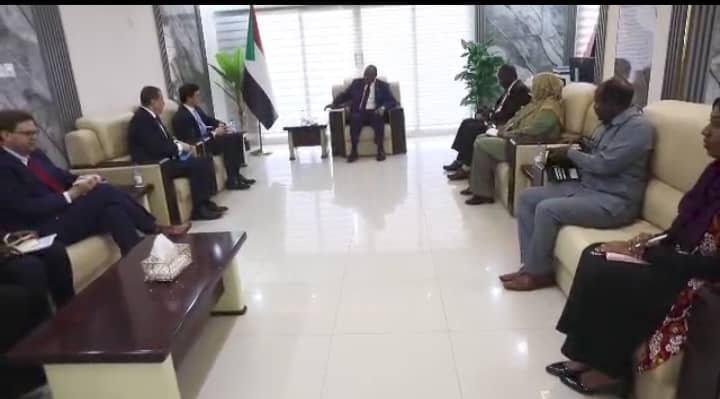
The World Food Programme (WFP) Executive Director Mark Lindberg began a series of talks with government officials in Khartoum on Tuesday, his first visit to the country since assuming his post. The meetings focused on discussing the humanitarian situation, the agricultural sector, and the support the WFP provides to Sudan.
Minister of Agriculture and Irrigation, Ismat Qureshi, conveyed to Lindberg assurances of the recovery of Sudan’s agricultural sector. During a bilateral meeting, he explained that farmers are continuing production despite the war and climate challenges.
The minister noted that the cultivated area this season exceeds 10 million hectares, reflecting the agricultural sector’s resilience and ability to maintain production.
The two sides discussed strengthening cooperation and developing interventions to support the agricultural sector and food security in the country.
Qureshi praised the significant efforts undertaken by the WFP, emphasizing that it is a key partner of the Sudanese government in humanitarian work, supporting smallholder farmers, development programs, and enhancing food security.
The Minister of Agriculture and Irrigation explained that there are fragile areas, particularly those under the control of rebel militias, facing dire humanitarian and production conditions. He emphasized that what is happening in these areas amounts to starvation, and stressed the importance of directing humanitarian and development interventions according to the actual needs of communities and farmers.
Regarding the Integrated Food Security Phase Classification (IPC), Qureshi reiterated the Sudanese government’s position rejecting the conduct or publication of any food security analyses without its participation, noting that the government withdrew from the process in December 2024.
He emphasized the necessity of respecting Sudanese sovereignty and ensuring the participation of relevant government institutions in data collection, verification, and analysis.
At the same time, he affirmed the government’s openness to exploring new mechanisms for implementing food security and nutrition analysis programs that guarantee professionalism, transparency, and data accuracy.
He expressed his appreciation for the technical and humanitarian support provided by the World Food Programme, emphasizing the importance of continued cooperation and coordination between the two sides to serve farmers and affected families and enhance Sudan’s capacity to achieve food security.
For his part, the Executive Director of the World Food Programme (WFP), Luc Lindbergh, expressed his appreciation for the continued cooperation with Sudan, noting that his visit, his first since assuming his post, underscored the importance of Sudan and the priority of working there.
Lindbergh affirmed that the WFP continues its work, providing assistance and strengthening partnerships, pointing out that approximately 266 million people worldwide are currently facing acute levels of food insecurity, primarily due to conflict.
He explained that the WFP has reached nearly 600,000 Sudanese and provided them with assistance, emphasizing that strengthening the partnership with the Sudanese government is essential to ensuring the success of programs and achieving a greater impact on the ground.
Separately, the Minister of Foreign Affairs and International Cooperation, Ambassador Mohi El-Din Salem, received the Executive Director of the World Food Programme, Luc Lindbergh.
The Minister welcomed the UN official, expressing the appreciation of the Sudanese government and people for the significant assistance provided by the WFP, particularly during the current conflict, and affirming the government’s commitment to full cooperation and providing all necessary facilities to all humanitarian partners.
The minister also stressed the need to prioritize and provide increased support for school meal programs for students in safe areas, in order to ensure student stability and a conducive learning environment.
For his part, Luc Lindbergh expressed his pleasure at visiting Sudan on his first trip abroad since assuming his post late last month, affirming his personal commitment to providing further support for the program’s activities in Sudan and contributing to recovery and stabilization programs in the country.
The Executive Director of the World Food Programme also emphasized the importance of women’s participation in the political process, which contributes to establishing the foundations of peace, security, and stability in Sudan.
Shortlink: https://sudanhorizon.com/?p=20099