

Kerreri and Sheikan: Lest We Forget
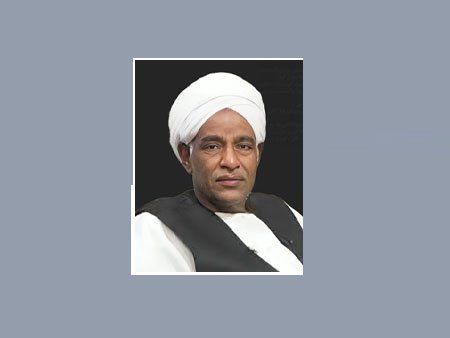
Mahjoub Fadl Badri
Dr Salah Al-Bandar wrote a substantial, dignified and engaging article to mark the 128th anniversary of the Battle of Kerreri, which took place on 2 September 1898 in the Kerreri area, north of Omdurman. It is regarded as the decisive battle between the Mahdist State’s army, led by Khalifa Abdallah al-Ta’aishi, and the invading forces that placed our country under Anglo-Egyptian rule. General Herbert Kitchener led the campaign.
The Mahdist army fought valiantly before modern weaponry eventually overwhelmed it, and Maxim guns mowed down the ranks of those brave and steadfast men. Churchill was compelled to acknowledge, in his book The River War, the courage, determination and faith of the Mahdist army in their cause — as the saying goes, even the enemy bears witness to their virtue.
In the article referred to above, Dr Al-Bandar wrote:
“I do not find myself in need of proving the heroism of those men who defended their land, honour and religion, nor do we betray those martyrs by saying that they were defeated.”
Yet this should not prevent us from acknowledging that we commemorate this defeat suffered by the Mahdist army without sufficiently examining the reasons for that defeat and the consequences that followed, including the violation of sanctities and the pursuit of the Mahdist leadership until the Khalifa himself was killed at the Battle of Umm Diwaykarat near Kosti.
The accomplished poet Abdul Wahid Abdullah Yousif composed his magnificent poem, which gave us a deserved moral victory. Yet its verses cannot withstand the bare historical facts when stripped of emotion. He says, for example:
“Kerreri, speak of men
Like ravenous lions.”
This metaphorical description is perhaps the closest to historical truth.
“They entered the flames.” Yes, without the slightest doubt.
“And scattered the masses of the aggressing invaders.” No. This is not correct. The invading army was not scattered. Quite the opposite: it advanced, spread out, overran the country and first laid waste to Omdurman, then to the rest of our land. It finished off the wounded, violated the sanctity of the dead and committed all manner of atrocities.
“None of our horsemen ever faltered.” This is entirely correct.
“But the tyrant’s army fled in retreat.” No. That is incorrect. It did not happen. The opposite occurred.
Al-Bandar did not intend to put the magnificent poem on trial, particularly since the great artist Mohammed Wardi enhanced its beauty still further through his melody and voice. Rather, he asked whether it is logical for us to treat the poem — and accept what it contains of flowing, beautiful verse — as though it were historical fact.
Al-Bandar then asks why we do not devote greater attention to the crushing and overwhelming defeat that the Mahdist army inflicted on Hicks Pasha’s army in the Sheikan forest, 15 years before the Battle of Kerreri.
That was a resounding victory achieved through meticulous planning, strict execution, and intelligence work through which the Mahdist army drove the enemy toward the ambush—or the “killing ground”.
Before that, the Ansar had exhausted Hicks Pasha’s army. They buried the wells along the invading army’s route, cut it off from its supply lines through skirmishes, offensive operations, reconnaissance, and situation assessment, and undertook everything warfare required. Accurate information from intelligence operatives sat at the heart of a plan that could be modified whenever circumstances demanded.
The overall plan succeeded, first and foremost, by the grace of God, and then because of the faith that the Mahdi’s cause had inspired.
But the circumstances of the Mahdist State had changed under the leadership of Khalifa Abdallah al-Ta’aishi. Opposition to his rule multiplied on every front — social, religious and political — as rivalries over power intensified. The Khalifa committed many violations and atrocities as a result. Then came the famine that engulfed the country and shook the foundations of his rule.
This does not mean that the Mahdist army failed to devise an appropriate plan for confronting the invading army. But the plan failed despite the men’s bravery, their faith in their cause, and their determination to fight to the death in accordance with it. They were not merely dervishes carrying spears and confronting modern weapons.
This is where the comparison arises, despite the sensitivity surrounding this particular point: between our victory at Sheikan, which we do not commemorate as we should, and our defeat at Kerreri, whose anniversary we renew every year with pride!
The article delves into the lessons that can be learned — lessons that Britain itself understood and exploited. The British learned from the mistakes made at Sheikan and considered them when planning their colonial campaign in Sudan. The Mahdist army, however, did not do the same at Kerreri.
We must apply the lessons of Sheikan and Kerreri to the course of the present War of Dignity, as well as to our dealings with the civilian opposition.
The Janjaweed are invading mercenaries acting on behalf of the UAE, a client state serving as the claw of the forces of global domination and Zionism. The civilian opposition is not far removed from that same state. Our people know how to distinguish the worthless from the valuable, and they are rallying around our brave army, the protector and guardian of the homeland.
Tribute and glory to the martyrs who rose in the cause of God and the noble faith.
Shortlink: https://sudanhorizon.com/?p=17773