

A Reading of the American Proposal to Extend the Arms Embargo Across Sudan
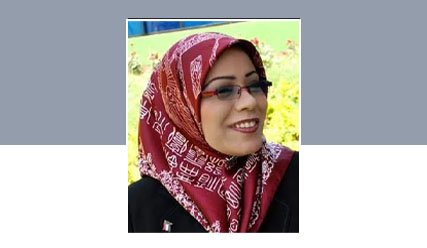
Dr Inas Mohamed Ahmed
The war in Sudan has entered its fourth year. It is no longer merely a confrontation between the Sudanese Armed Forces and the rebel militia; rather, it has become a confrontation involving complex networks and multiple actors whose interests intersect and whose agendas may conflict, yet who are united in targeting Sudan, its resources and its sovereignty. Against this backdrop, a proposal has emerged before the Security Council to impose an arms embargo throughout Sudan. Arms embargoes are well known as tools available under Chapter VII to maintain international peace and security.
Chapter VII of the United Nations Charter provides a legal framework that grants the Security Council the authority to take coercive measures, whether military or otherwise, to protect international peace and security, whether conflicts are internal or international. The provisions of Chapter VII come into effect when the Council determines, pursuant to Article 39, the existence of a threat to the peace, a breach of the peace or acts of aggression. The Security Council has therefore identified acts and threats that endanger international peace and security, most notably terrorism, the proliferation of weapons of mass destruction and the illicit trafficking of arms.
Chapter VII also authorises the Security Council to take measures “to prevent an aggravation of the situation”. This phrase provides broad scope for various forms of action, including the withdrawal of armed forces, refraining from hostile acts, ceasefires, and creating exceptional conditions to enable humanitarian assistance to be delivered swiftly and without obstruction.
Among the measures the Security Council most frequently uses to enforce its decisions are sanctions, which it may impose on states, groups, or individuals. These may include economic or trade sanctions, arms embargoes, travel bans, financial, commercial or diplomatic restrictions. The Council may also resort to Article 42 of Chapter VII, which grants it the right to take whatever action it considers appropriate, including military action, as occurred in relation to Iraq before the 2003 invasion, as well as during the Second Gulf War and in relation to the Korean War of 1950–1953.
Security Council resolutions adopted under Chapter VII are binding upon all United Nations Member States; they are not merely recommendations. This is where the gravity of Chapter VII lies.
At the same time, the five permanent members of the Security Council may block such decisions through their veto power, since a single negative vote is sufficient to prevent the adoption of a substantive resolution, regardless of the support of the remaining members.
Historically, the record of international law shows that the first arms embargo imposed by the Security Council was a voluntary, non-binding embargo adopted in August 1963 under Resolution 181 against South Africa, in protest against its policies of apartheid. This was followed by Resolution 232 of 1966, issued in response to the white-minority government of Southern Rhodesia—now Zimbabwe—declaring independence from Britain in 1965. It was a binding decision that prohibited the supply of arms and imposed other economic sanctions, including restrictions on military equipment, vehicles, and aircraft, in addition to an oil embargo. The embargo was lifted in December 1979 following Zimbabwe’s independence.
At the national level, the United Nations Security Council imposed an arms embargo specifically on Darfur in Sudan through Resolution 1556, adopted on 30 July 2004. The resolution initially prohibited supplying arms to non-governmental entities, such as militias. Resolution 1591, adopted on 29 March 2005, subsequently expanded and strengthened the embargo by applying sanctions to parties obstructing the peace process in Darfur. The Security Council also established a committee to oversee asset freezes and travel bans. However, the embargo remained limited to the Darfur region and has been renewed annually since then.
On 25 August, the Security Council held an extraordinary session in New York, at Denmark’s request, to discuss the protection of civilians and highlight the humanitarian situation in Sudan. Calls were made for a humanitarian truce and for the International Criminal Court’s jurisdiction to be extended to cover all of Sudan. Masad Boulos, the US President’s adviser for African and Arab affairs, then responded by proposing that the arms embargo imposed on Darfur be expanded to cover the entire country, including unmanned aerial vehicles.
Although the American proposal, based on Security Council Resolution 1591 of 2005—which applies only to the Darfur region—was not put to a vote, Denmark, Britain and France supported it, while China and Russia opposed it.
This flawed American proposal would prevent the Sudanese Armed Forces from exercising their right to acquire and develop weapons to fulfil their national and constitutional duty to defend the country. The Sudanese Armed Forces are the country’s legitimate army, and placing them on an equal footing with a rebel terrorist militia is contrary to the law and cannot be accepted. Meanwhile, an embargo on arms supplies would not affect the militia in the same way, because weapons reach it through smuggling and other illicit channels, including through countries that finance the militia in order to prolong the war—and America knows this.
The American proposal also calls for increasing the number of members of the Panel of Experts assisting the Sanctions Committee established under Resolution 1591, to strengthen its capacity to track and monitor violations.
The question is: why was the United States’ proposal not directed towards ending the war through well-established international measures aimed at preventing the militia from receiving arms and mercenaries, and at imposing international sanctions on the states or entities violating the very Security Council resolution whose scope it now seeks to expand? Why does America disregard international pressure that should be directed towards safeguarding Sudan’s sovereignty and protecting its territory, so that the country may move from war to peace, development and reconstruction?
Yet America has never been—and is not—serious about ending the war in Sudan. If it were serious, it would not have advanced such a proposal, which ignores the continuing violations of Security Council Resolution 1591 and allows the militia to catch its breath and prolong the war. Moreover, why did the proposal not explicitly provide for the protection of civilians and the delivery of humanitarian assistance?
To implement the proposal, the Security Council would need to vote, and America knows Russia or China could use their veto power against such a resolution. Nevertheless, it continues, in one way or another, to prolong the war and seeks to shift the focus of the Sudanese conflict away from violations and crimes against civilians, and from the question of designating the militia as a terrorist organisation, towards a file of international sanctions under Chapter VII that would target the country’s sovereignty and its national institutions.
The American proposal comes at a dangerous moment, when the United States is aware that the Sudanese Armed Forces are making advances on the battlefield that could eliminate the militia. Through this proposal, it is giving the militia another chance to survive when it is already on the brink of collapse. It has become increasingly evident that whenever the Sudanese Armed Forces advance and achieve victories on the battlefield, the militia’s supporters seek to produce a new initiative or mechanism capable of easing its death throes and prolonging its existence.
Peace will come only through the Sudanese will and national hands, through the victories of the Sudanese Armed Forces and the complete elimination of the rebellion, and without foreign intervention of any kind.
Shortlink: https://sudanhorizon.com/?p=17411