

Towards a New Sudan: Perspectives on Building a Developmental State and a Productive Economy (7)
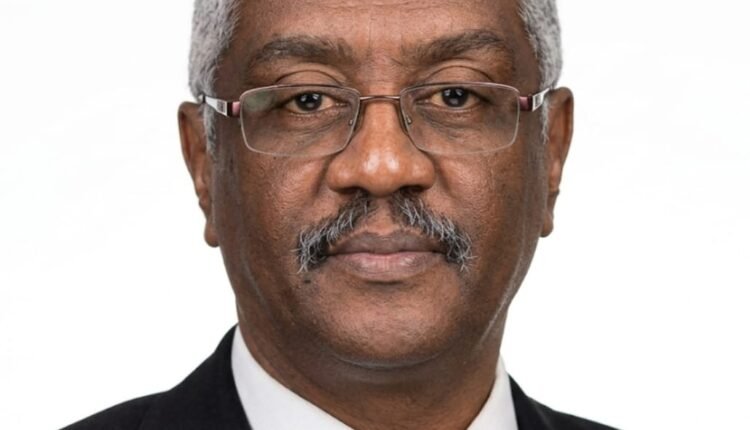
Nauman Yousif Mohammed
The path towards Sudan Vision 2040, conceived as a national project to move from a state of recovery to a competitive state, begins by drawing the greatest lesson from this war: that it must become the last crisis of the past and the first lesson of the future.
The problem is not simply that the war has devastated Sudan. Wars, however brutal, may destroy cities and exhaust economies, but they do not have the power to determine the destiny of nations. The true test of nations begins not on the battlefield, but after the guns fall silent, when the central question becomes: do we rebuild what once existed, or do we build the Sudan that ought to have existed?
The answer to that question will determine what Sudan looks like in 2040 and where it stands in a world that rewards countries not merely for the resources they possess, but for how effectively they use them.
History has shown that peace, in itself, does not produce national renewal. Some countries emerging from devastating wars became global models of development because they changed their thinking before rebuilding their physical infrastructure. Others remained prisoners of the past because they confined themselves to repairing the consequences of destruction without addressing its underlying causes.
Today, Sudan stands at a rare historical moment, perhaps the most important since independence. It is a moment in which the country’s future will not be written on the battlefield, but in the minds that will shape the state to come. It is an opportunity to move from managing the consequences of war to creating a different future, and from reconstruction to national refoundation.
The question that should therefore guide the next phase is not: How do we return Sudan to what it was? Rather, it is: How do we build the Sudan that it ought to have been?
The difference between these two questions is the difference between recovery and renaissance. Recovery restores the ability to stand; renaissance creates the ability to compete. Nations that settle for recovery remain hostage to their crises, while those that possess a vision for the future transform their crises into points of departure.
This is why Sudan needs a national vision extending to 2040—not as a temporary government programme or a technical document destined to remain in a drawer, but as a social compact around which the state, private sector, universities, civil society, and young people can unite. Such a vision should define the structure of the economy, the priorities of development, and the nature of the state we seek to build for future generations.
From a Resource Economy to a Value Economy
The world has entered a new era in which the strength of nations is no longer measured by the natural resources they possess, but by the value they are able to add to them.
Competition between countries is no longer simply about who possesses land, minerals, or water. It is increasingly about who possesses knowledge, innovation, effective institutions, and the ability to transform resources into products, data into decisions, and ideas into wealth.
The digital revolution, artificial intelligence, the green economy, global value chains, the circular economy, and innovation have become the new engines of growth. The question the world now asks is no longer: What does this country possess? It is: What can this country offer the world?
The central idea of this vision can therefore be summarised in a simple but profound truth:
The twenty-first century is no longer the century of countries rich in resources, but of countries rich in the capacity to transform resources into value.
This is the point of departure Sudan must embrace.
Sudan: A Country of Deferred Potential
Few countries possess the combination of advantages available to Sudan: vast agricultural land, abundant water resources, substantial livestock wealth, promising mineral reserves, and a geographical location linking Africa, the Arab world, and the Red Sea. It also has a young population that could become a demographic dividend if properly developed.
Yet these resources, however extensive, will not become wealth unless they are managed efficiently. Nor will they give Sudan a competitive position unless they are integrated into a productive economy based on manufacturing, modern services, value chains, and innovation.
The experience of many countries has shown that national renewal does not begin with an abundance of resources, but with the quality of governance and management.
The achievements of countries such as Singapore, South Korea, and Rwanda did not result from their possessing more resources than others, but from their having a clear vision, strong institutions, and a long-term commitment to investing in people.
The Foundational Principles of Sudan Vision 2040
For this vision to become an implementable national project, it must be built upon a number of governing principles.
First: People Are the Primary Source of Wealth
There can be no competitive economy without high-quality education, no high productivity without good health, and no innovation without an environment that encourages scientific research, entrepreneurship, and freedom of thought.
Real investment is not confined to projects. It is also investment in the Sudanese citizen, the only asset whose value increases the more society invests in it.
Second: Institutions Matter More Than Resources
History has shown that countries with independent, efficient, and accountable institutions have been able to compensate for limited resources, whereas resource-rich countries have failed due to weak governance.
Building modern, digital, and transparent institutions must therefore become the foremost national project.
Third: Production Is the Foundation of Economic Sovereignty
A country that imports its food cannot claim economic independence. A country that exports raw materials and imports manufactured goods cannot be competitive. Nor can a country dependent on temporary revenues or foreign grants enjoy financial stability.
Sudan needs an economy that produces knowledge as well as food, manufactures before it exports, and adds value before selling its primary resources.
Fourth: Digital Transformation Is the Language of the Modern State
Data has become a strategic resource no less important than oil or minerals.
The more capable a state is of managing its data, the more capable it becomes of managing its economy, improving public services, increasing institutional efficiency, strengthening transparency, and making better decisions.
Fifth: The Private Sector Is the Principal Partner in Development
The state does not build the economy on its own. Rather, it creates the environment within which the private sector can build it.
Improving the investment climate, simplifying procedures, expanding access to finance, supporting small and medium-sized enterprises, and encouraging entrepreneurship are therefore indispensable pillars of a productive economy.
Sixth: Young People Are Sudan’s Greatest National Project
The largest national undertaking after the war is not merely the reconstruction of roads and bridges, but the rebuilding of young people’s hopes.
They must be equipped with knowledge, skills, and technology and empowered to lead the new economy. Nations do not rise simply by restoring their buildings, but by restoring the confidence of their younger generations in the future.
Seventh: Regional Integration and Global Openness
Sudan’s geographical position should not be viewed merely in terms of political borders. It should be seen as an economic platform connecting African and Arab markets and as a corridor for trade, energy, food, and logistics.
Eighth: Sustainability Is an Economic Necessity
Water, energy, soil, forests, and pastureland are no longer merely natural resources. They have become factors that determine national competitiveness.
The green economy must therefore be an integral component of Sudan’s future vision.
From Crisis Management to Shaping the Future
For decades, Sudan has been more accustomed to managing crises than managing development.
Policies were designed to address deficits rather than create surpluses, to extinguish fires rather than prevent them, and to solve today’s problems rather than create tomorrow’s opportunities.
The time has come to break this cycle.
The number of projects implemented will not measure the success of Sudan Vision 2040, but by the scale of the transformation it brings about in the economy and society.
The real questions will be:
How much has economic productivity increased?
How much has domestic value added grown?
How much has the contribution of manufacturing and modern services to gross domestic product increased?
How far have high-value exports expanded?
How much has unemployment declined, particularly among young people?
How much has Sudan improved its ranking in governance, competitiveness, and ease-of-doing-business indicators?
And how much more resilient has the economy become in the face of shocks?
These indicators, rather than the scale of spending alone, will reveal whether the developmental transformation has succeeded.
A Message to the Future
From its outset, this series has sought to outline an integrated project for post-war Sudan.
It began with the developmental state and then examined value-chain economics, digital transformation, financial-sector reform, governance, and the productive economy, ultimately culminating in a broader vision that brings those ideas together within a single strategic framework.
Perhaps the most important message the series has sought to establish is that Sudan’s future will not be determined by what the war has left behind, but by the policies Sudanese people choose afterwards, the institutions they build, the human capacities they unleash, and the culture of production and innovation they cultivate.
Sudan Vision 2040 is neither an idealistic dream nor a political promise. It is a call to move from managing crises to building competitive advantages, from consuming resources to producing value, and from reacting to events to planning for the long term.
Nations do not create their futures by chance, nor do they build them through resources alone. They do so when they agree on the direction before disagreeing over the details, and when they place people at the centre of development, institutions at its service, production as its objective, innovation as its culture, and governance as its guarantee.
Nations are not measured by what they lose in wars, but by what they learn from them.
If Sudan succeeds in transforming this war from a catastrophe into a turning point, then 2040 will not merely be a date on the calendar. It will mark the beginning of a new chapter in the story of a nation that has chosen to write its own future.
Only then will Sudan cease to be merely a country that emerged from war. It will become a country that emerged from it with a deeper awareness of itself, greater confidence in its people, a stronger capacity to compete, and a greater readiness to build a future worthy of its history and potential.
The future is not inherited. It is built.
Former banker and institutional development consultant
Shortlink: https://sudanhorizon.com/?p=16386