

Green Sukuk: A New Era for Financing Sustainable Development – Saudi Electricity Company Leads the Way (Part 1 of 3)
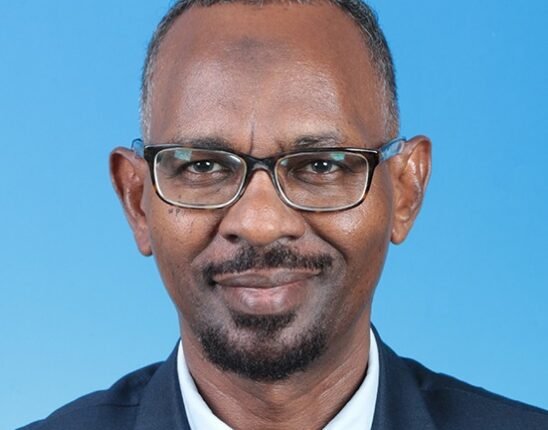
Dr Ahmed Abdel-Bagi
Access to clean and affordable energy is essential for the development of agriculture, business, communications, education, healthcare, and transport. This is reflected in Sustainable Development Goal 7, which seeks to achieve five principal targets by 2030:
ensuring universal access to modern energy;
increasing the global share of renewable energy;
doubling the rate of improvement in energy efficiency;
promoting research and investment in clean energy and related technologies; and
expanding and upgrading energy services in developing countries.
Progress towards this goal, however, remains insufficiently rapid, largely because of the slow transition to renewable energy sources, particularly in the electricity sector. This delay is attributable to several factors, foremost among them the lack of adequate financing to accelerate the electrification the world requires, let alone to facilitate the transition to renewable energy.
In this regard, United Nations statistics indicate that more than 1.2 billion people, representing approximately 13 per cent of the world’s population, lack access to modern electricity services. In other words, around one in every five people worldwide remains without electricity. Most of these people are concentrated in approximately twelve countries across Africa and Asia.
Moreover, around three billion people depend on wood, coal, charcoal, or animal waste for cooking and heating. This reliance has adverse implications for climate change, particularly through increased carbon dioxide and greenhouse-gas emissions. It therefore reinforces the world’s need for more sustainable and renewable sources of energy to mitigate climate change and advance the Sustainable Development Goals.
Achieving all—or even part—of the targets under Sustainable Development Goal 7 relating to renewable energy, particularly electricity generation, requires a substantial increase in investment in sustainable-energy infrastructure.
The International Renewable Energy Agency estimates that the world requires US$4.5 trillion to remain on a pathway consistent with limiting the increase in global temperatures to 1.5°C above pre-industrial levels, based on the 1850–1900 reference period.
This necessitates the adoption of a range of measures, including the expanded use of renewable-energy sources, particularly solar photovoltaic power, wind power, hydropower, and other forms of clean energy.
Accordingly, several countries have adopted national energy strategies. These include major global economies as well as developing countries, such as Malaysia and Indonesia in Asia, and Saudi Arabia, the United Arab Emirates, and other Gulf states in the Middle East and North Africa.
To implement these strategies, increasing attention has been directed towards securing finance through investment in renewable-energy projects.
Investment in Renewable Energy
Many countries have prioritised investment in renewable energy in pursuit of the Sustainable Development Goals. Specific categories of investment, commonly described as green investments, have therefore emerged.
These investments make use of financing instruments such as green bonds and green sukuk. Green bonds initially gained prominence through initiatives led by the World Bank and European countries, while green sukuk have expanded in Islamic and developing economies, including Malaysia, Indonesia, the United Arab Emirates, Saudi Arabia, and several other states.
Given the importance of promoting such investments, a report published in 2025 by the International Renewable Energy Agency (IRENA), the Brazilian Presidency of the COP30 climate conference, and the Global Renewables Alliance (GRA) indicated that annual renewable-energy investment would need to increase by approximately US$1.4 trillion during the period from 2025 to 2030.
Although additions to global renewable-energy capacity reached an unprecedented 582 gigawatts, this level remains insufficient to keep the world on track to achieve the target established under the UAE Consensus at the twenty-eighth Conference of the Parties, COP28.
That target calls for global renewable-energy capacity to be tripled to 11.2 terawatts by 2030.
As a result, global initiatives have intensified to mobilise additional investment for renewable-energy projects, including solar photovoltaic, wind, and thermal-energy projects. These initiatives also seek to improve energy-use efficiency, establish enabling policies and regulatory and incentive-based frameworks, attract investment into these sectors, and support projects through advanced technological and physical infrastructure.
To reach the desired renewable-energy target of 11.2 terawatts by 2030, investment in renewable energy expanded in 2025 to an estimated US$2.2 trillion.
Solar photovoltaic energy accounts for a particularly large share of this investment. Investment in utility-scale and rooftop solar photovoltaic systems is estimated to reach US$450 billion in 2025.
Global expenditure on battery storage for the electricity sector is also expected to reach US$66 billion.
Against this background, green bonds and green sukuk are increasingly viewed as important financing instruments capable of covering all, or a substantial proportion, of the investment required to achieve the renewable-energy capacity targets outlined above.
What, then, are green sukuk and green bonds?
To be continued…
Shortlink: https://sudanhorizon.com/?p=16296