

Us and the Sheep
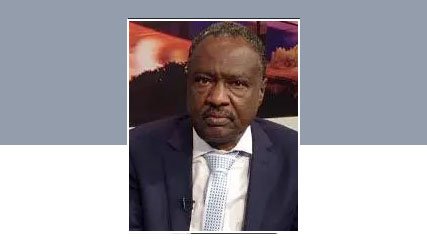
Rashid Abdelrahim
Mrs Mahasin Ali Yacoub, Minister of Industry and Trade, said they had stopped importing powdered milk because it contains hydrogenated oils and soya beans. She then added: “We advise citizens to raise sheep.”
I remember that my grandmother—or, in quintessentially Sudanese parlance, my haboba—used to keep sheep, chickens and pigeons at home. In a far corner of the house was a place we called the “sheep pen”.
The sheep shared this space with the chickens, while metal containers holding pigeons lined the wall. This small household production unit supplied milk for tea in the morning and evening, for the children, and for cooking. We used the milk to make mullah al-roob or roob, or served it as a relish with bread. The roob itself was also used as a relish with kisra, the traditional Sudanese flatbread.
We ate the eggs and chickens after selling a portion of them, while we sold the pigeons entirely, as eating pigeons or drinking pigeon soup was not part of the culture at the time.
The house we lived in was more than 500 square metres—a size that today would be associated with affluent neighbourhoods such as Al-Riyadh, Al-Imarat, and similar districts. Anyone living in such a house would hardly need to follow the Minister’s advice; they would simply buy milk, whatever its source.
The problem with our current government is that it has too many voices, especially after the right to “speak” appears to have been taken away from its official spokesman.
The real problem is that this multitude of government voices has become damaging to the government itself, as ill-considered, ill-advised statements have proliferated and provoked ridicule. The Minister’s advice that we should raise sheep is a case in point.
Our homes today simply cannot accommodate animals that we would keep for their milk.
Has imported powdered milk suddenly become harmful because the government has failed to provide the foreign currency needed to import it?
Was it not harmful when we imported it with the government’s knowledge—and indeed its approval—while the government collected substantial fees and revenues from those very imports?
Where was the Minister of Industry and Trade while people were drinking hydrogenated oils and consuming soya beans?
Is this not a serious offence—one that could even amount to a major crime?
The Minister now presides over both the Industry and Trade portfolios. Her responsibility should have been to work towards establishing dairy-processing plants capable of producing milk for people to buy either fresh or in powdered form, without soya beans or hydrogenated oils.
The Minister’s statement brings to mind the story of Marie Antoinette, the Queen of France, who was reportedly told that the people were hungry because they could not find bread, and responded by suggesting that they eat cake.
Our Minister today wants us to live alongside sheep, while most ordinary people’s homes are no more than 400 square metres.
The Minister of Industry appears to have wanted to divert public attention from the crisis caused by the deterioration of the national currency. Instead, she strayed from the task at hand and failed to achieve what she intended. This is what might be described as an “own goal”—and it does not rebound by accident; rather, it comes back to hit her and her government, which has failed to teach its ministers when to speak and, equally importantly, when to remain silent. After all, silence is golden.
Those entrusted with governing us seem unable to preserve gold through silence—or to export it either. Gold is a precious mineral that God has abundantly endowed the people of Sudan with, and it is relatively easy to extract.
Shortlink: https://sudanhorizon.com/?p=18213