

Rapid Leaps in the Dollar’s Price Against the SDG… Has the State Become the Largest Hard Currency Buyer ?
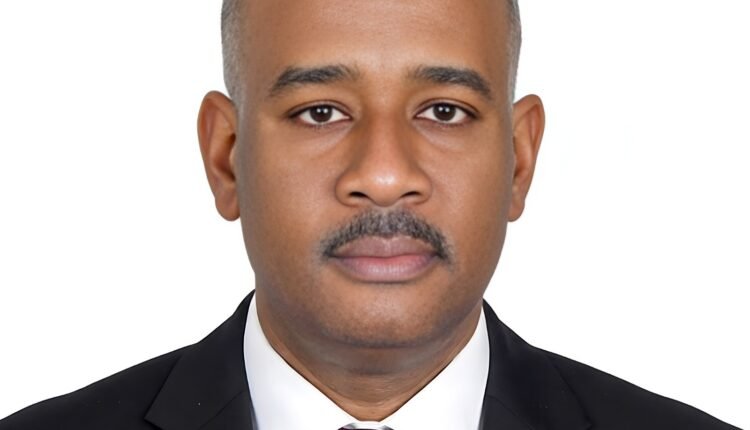
Muhannad Awad Mahmoud
When the war broke out, the dollar was trading around 580 Sudanese pounds. Today, it has approached the 5,000 pound mark, an increase of over 760% in a short period, while the Sudanese pound has lost more than 88% of its value. Despite the gravity of these figures, the question preoccupying public opinion and decision-makers is still being framed incorrectly. The issue is no longer why the dollar has risen, but rather who is purchasing the USD?
For years, the blame has been placed on speculators, brokers, and currency traders. These factors undoubtedly exist, but they alone do not explain what is happening today. The more disturbing truth is that the state itself has become one of the largest buyers of foreign currency, not through speculation, but due to its increasing obligations under the current war and economic conditions.
The war, now in its fourth year, is not financed solely by the Sudanese pound, as some might imagine. Weapons, ammunition, spare parts, technical equipment, and external supply chains all require dollars or other foreign currencies. The longer the war drags on, the greater the demand for foreign currency becomes. At the same time, the country needs hard currency to import fuel, medicine, and certain strategic goods, as well as to meet the operational needs of vital infrastructure.
Amid these pressures, the Central Bank of Sudan announced new amendments to its gold policies aimed at attracting production to official channels and increasing export revenues. In principle, the move seems logical, as Sudan produces more than seventy tons of gold annually, according to official estimates. However, the crucial question is: how much actually enters official channels and the public treasury? Available figures indicate that official quantities remain significantly lower than total production, meaning that a large portion of this most important source of foreign currency remains outside the formal economic cycle.
Even more concerning is that gold is purchased in Sudanese pounds. When miners and traders receive billions of pounds for their production, they don’t hold onto it for long given the continuous decline in the value of the local currency. Instead, a significant portion of this liquidity is used to buy dollars, dirhams, or gold again. Thus, the funds initially invested in gold become an additional source of foreign currency. This means the government injects Sudanese pounds into the market, only to find itself indirectly contributing to increased demand for the dollar.
Around the same time, the cabinet has decided that the government would import petroleum products to stabilize the market and control the exchange rate. However, this decision raises a fundamental question that the government has yet to answer clearly: Where will it obtain the necessary dollars to import fuel?
Assuming that the cost of a single tanker is approximately $34 million, and that the country needs only four tankers per month, the annual fuel bill exceeds $1.6 billion. These are enormous figures in an economy already suffering from a severe shortage of foreign currency. Some economists have discussed the possibility of resorting to deferred payments or credit facilities, but the current reality raises legitimate questions about Sudan’s ability to secure substantial trade financing given the ongoing war, banking isolation, and the high risk assessment the world assigns to the Sudanese economy.
Beyond fuel and gold, another growing demand for dollars is emerging. Sudan is heading, sooner or later, towards a reconstruction phase. The bridges that were destroyed cannot be rebuilt with Sudanese pounds, nor can power stations be purchased with Sudanese pounds. Infrastructure equipment, airports, ports, and heavy machinery all require foreign currency. The electricity sector alone faces a massive crisis, with estimates indicating that the power supply deficit exceeds 70% in some areas. Rehabilitation efforts and the import of transformers, spare parts, and equipment require hundreds of millions of dollars.
Meanwhile, sources of dollars are decreasing rather than expanding. The war has weakened agricultural and industrial production, disrupted supply chains, driven many companies out of the market, and increased transportation and insurance costs. Worse still, the government continues to impose numerous fees and levies on agricultural exports and other goods. This policy provides quick revenue in Sudanese pounds but directly reduces the competitiveness of exports and the foreign currency reserves the economy desperately needs. Every additional fee on sesame, peanuts, gum arabic, or other commodities means higher costs for Sudanese producers and fewer opportunities for dollars to enter the country. Here, the state makes a strategic error by looking at its immediate needs for quick revenue while losing a larger and more sustainable source of foreign currency.
The bleeding doesn’t stop there. Sudan imports large quantities of sugar annually, worth hundreds of millions of dollars, in addition to other essential goods. With each new shipment, an additional amount of foreign currency leaves an economy already suffering from limited resources.
If we add up the war bill, the fuel bill, the electricity sector’s needs, reconstruction requirements, and the import of sugar, wheat, medicine, and other essential commodities, we find that the demand for dollars is increasing at a much faster rate than the economy’s capacity to produce it. This is the point overlooked by many analyses that focus on the parallel market and forget the real economy.
Therefore, the current crisis appears to be deeper than just a problem in the exchange market. It is a crisis of foreign currency management and a crisis of economic priorities. The state needs dollars for the war, for fuel, for electricity, and for reconstruction. The private sector needs them for imports and operations. And citizens seek them to protect their savings. While sources of access to it are declining due to the war and the drop in exports and Fees, taxes, and weak production.
Therefore, blaming speculators alone is no longer convincing. The market is not driven by statements, press releases, or emergency meetings. It is driven by real resources, confidence, and the relationship between supply and demand. If significant new foreign currency reserves do not enter the Sudanese economy, and if all parties, including the government itself, continue to chase dollars in a market already suffering from a severe shortage of foreign currency, the question will not be whether the dollar will exceed five thousand Sudanese pounds, but rather to what level it might reach.
The responsibility here lies directly with the Ministry of Finance, the Central Bank of Sudan, and the entire economic team. Sudan does not need separate decisions regarding gold, fuel, and the exchange rate, but rather a unified vision that manages these issues as parts of a single equation. Economic crises are not defeated by slogans or managed through reactive measures, but rather by a clear plan that first identifies the source of the dollars before deciding how they will be spent.
The problem isn’t that the dollar has reached five thousand Sudanese pounds, but rather that the Sudanese economy now consumes more foreign currency than it produces, and that the state itself is competing with ordinary people and the private sector for a resource whose primary responsibility should be to increase, not compete with others for. This is the fundamental truth that any serious discussion about the future of the Sudanese economy must begin with.
Shortlink: https://sudanhorizon.com/?p=14801