

Sudan’s Ambassador to China: Beijing is a Strategic Partner in Sudan’s Reconstruction
Beijing – Sudanhorizon
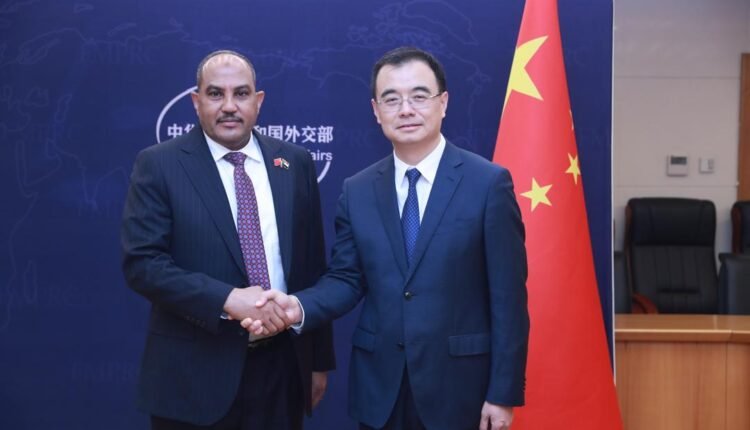
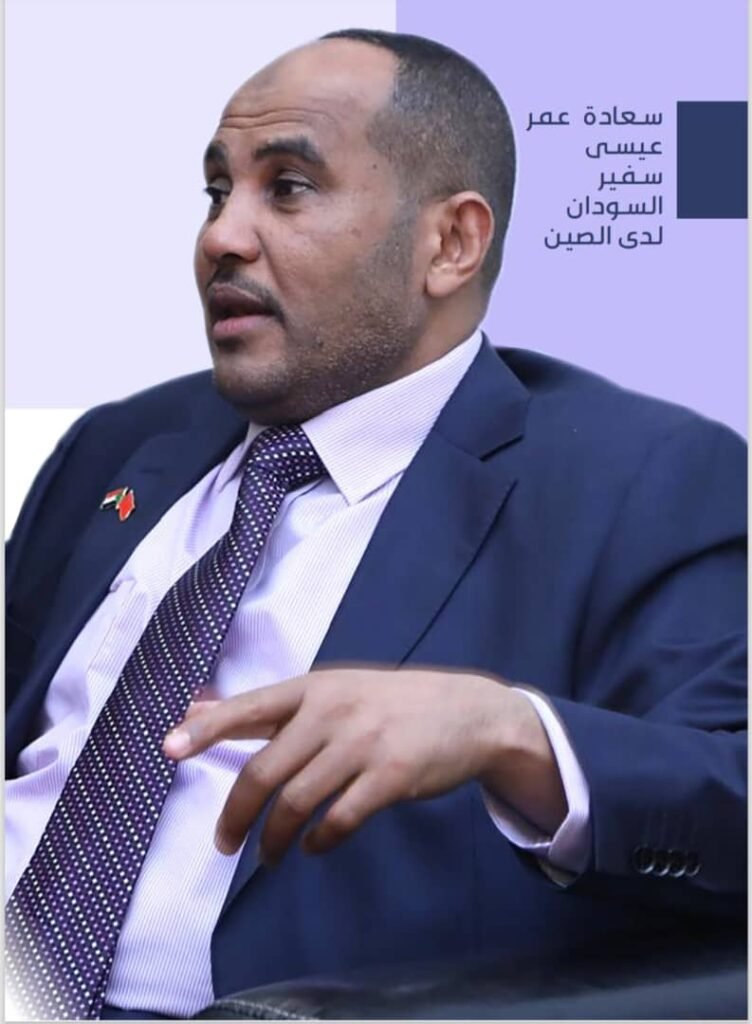
Omar Issa, Sudan’s ambassador to China, has reaffirmed that Sudanese-Chinese relations are entering a new phase, offering vast opportunities to strengthen the bilateral partnership.
The ambassador emphasized that the potential for cooperation between the two countries is “limitless,” and that seven decades of friendship, trust, and mutual understanding form a solid foundation for transitioning relations to more impactful and practical partnerships.
In an exclusive interview with “The Silk Road International Magazine,” the Sudanese Ambassador stated that his return to Beijing as ambassador for the second time is an exceptional experience, a blend of nostalgia, pride, and amazement.
He noted that China, which he knew during his studies and diplomatic career, has witnessed tremendous transformations in infrastructure, technology, innovation, and artificial intelligence, while simultaneously maintaining its core values of discipline, diligence, hospitality, and mutual respect.
Issa explained that his previous experience in China reinforced his conviction that the areas of cooperation between the two countries are far broader than traditional frameworks, given Sudan’s agricultural, mineral, and livestock resources, its strategic location on the Red Sea, and China’s expertise, technologies, and experience in production, construction, modernization, rural development, education, and technology.
Reconstruction: The Urgent Priority
Ambassador Omar Issa pointed out that the war left widespread destruction and significant humanitarian, economic, and developmental repercussions. He emphasized that the next phase requires leveraging Sudan’s determination to rebuild, coupled with China’s willingness to contribute to reconstruction efforts.
He explained that the action plan focuses on three main pillars: first, rehabilitating damaged infrastructure, particularly projects that China originally helped construct; second, revitalizing economic activity and encouraging Chinese companies to return to Sudan and invest in the infrastructure, energy, mining, agriculture, and telecommunications sectors; and third, strengthening trade and opening markets for Sudanese exports.
Another focus is on the humanitarian aspect, through strengthening support for the Sudanese people in the humanitarian, health, and educational fields. The aim is to translate the distinguished political relations between the two countries into tangible results that benefit Sudanese citizens and support recovery, development, and reconstruction.
Oil: A Successful Model of Strategic Partnership
Ambassador Omar Issa affirmed that the oil sector is one of the most prominent examples of the success of Sudanese-Chinese relations, emphasizing that it constituted a strategic turning point in the cooperation between the two countries.
He explained that Chinese companies have played a pivotal role since the 1990s in exploration and production operations, the construction of pipelines and refineries, and the training of Sudanese personnel, which has contributed to placing Sudan on the map of oil-producing countries.
The ambassador affirmed that China has not lost interest in this sector despite the repercussions of the war, noting that while some activities have been affected by the security situation, Chinese interest in oil cooperation remains strong, and Beijing views Sudan as a strategic partner with promising long-term potential.
He noted that an improved security and investment environment would pave the way for the resumption and expansion of Chinese companies’ activities, including in the gas and renewable energy sectors, expressing his confidence in the ability of Sudanese-Chinese relations to revitalize this vital sector.
China has not abandoned Sudan:
Regarding China’s position on the Sudanese crisis, the ambassador affirmed that Beijing has adopted a consistent stance since the outbreak of the war, based on respect for Sudan’s sovereignty, unity, and territorial integrity, the preservation of state institutions, and the rejection of interventions that would complicate or prolong the crisis.
He stated that China has consistently supported Sudan in international forums, emphasizing that the country’s future must be determined by the Sudanese people themselves. He added that coordination and exchange between the two countries continue in various forums under the auspices of their respective leaderships.
The Sudanese diplomat also highlighted China’s relief and humanitarian aid to those affected by the war, stressing that despite the impact on its interests and projects in Sudan, China has not abandoned its partnership with Khartoum and has not approached the relationship from a purely profit-and-loss perspective.
Issa emphasized that relations between the two countries were not built solely on economic interests, but rather on a long history of mutual respect, trust, and cooperation, which enabled them to withstand the repercussions of war.
Debt does not define a seven-decade-long relationship:
Regarding the issue of Chinese debt to Sudan, the ambassador called for a calm and objective approach to the matter, stressing that financial obligations are a natural part of a relationship that has witnessed the funding of major development and strategic projects.
He explained that China has financed projects in the oil, electricity, roads, bridges, and infrastructure sectors for decades, and that the resulting financial obligations have not weakened relations or hindered their development.
He affirmed that the Sudanese-Chinese relationship is “broader and deeper than a financial issue,” noting that Sudan is working on a new approach to the best way to address the debt issue, and that the Chinese side has shown understanding and flexibility, pointing to previous measures to reschedule some debts and forgive others.
Ports, energy, agriculture, and mining on the reconstruction agenda:
The Sudanese ambassador revealed several projects and memoranda of understanding currently being developed with China, emphasizing that China will be one of the largest contributors to Sudan’s reconstruction efforts and the rehabilitation of its infrastructure.
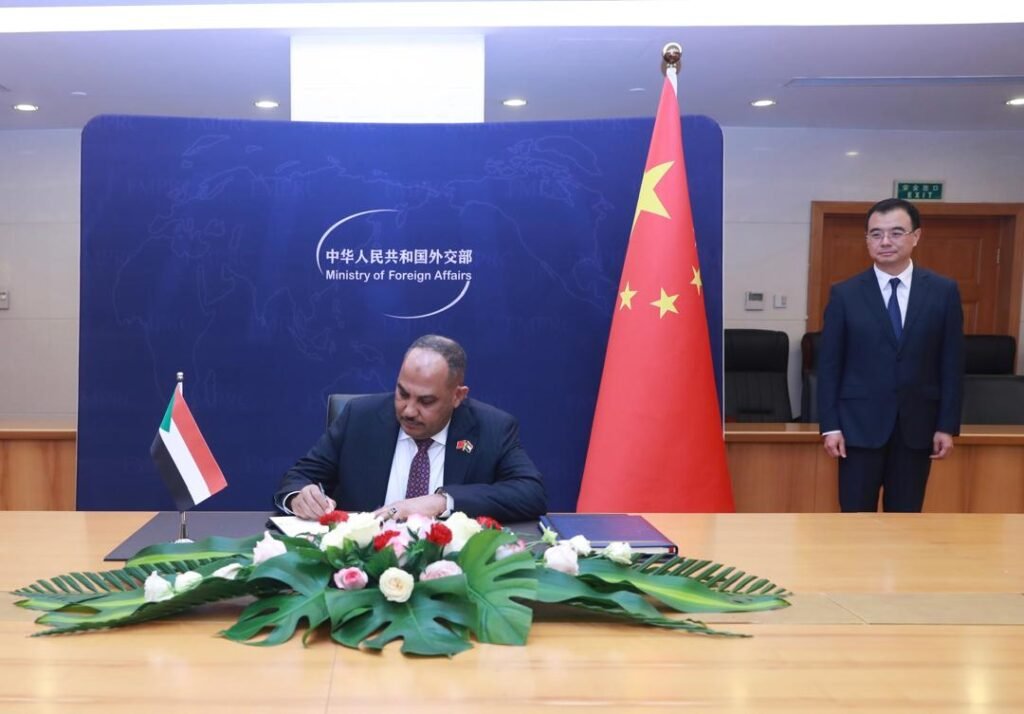
He noted the signing of a memorandum of understanding between the Sea Ports Corporation and the China Harbour Engineering Company for cooperation in port and dock construction, in addition to ongoing discussions with Chinese companies. He pointed to the fact that there is an intention to rehabilitate a number of key power stations.
In the agricultural sector, he explained that the Sudanese Agricultural Bank has signed agreements with companies operating in the field of machinery and equipment to provide production inputs, technology, and agricultural mechanization.
He also noted that the Sudanese Ministry of Minerals signed several memoranda of understanding in the areas of exploration and mining, coinciding with discussions between the Sudanese Geological Research Authority and the China Geological Survey regarding a memorandum of understanding on geological exploration and research.
In the field of digital transformation, he revealed work on ambitious joint projects to establish the infrastructure for this sector, in cooperation with the Chinese Ministry of Industry and Information Technology, emphasizing that these projects represent initial models for the significant work being prepared between the two countries.
People’s Diplomacy: A Permanent Bridge Between the Two Peoples:
Ambassador Issa stressed the importance of people’s diplomacy and friendship societies in supporting official relations between countries, stressing that friendship between peoples represents a strong foundation for the flourishing of relations between nations.
He praised Sudan’s role in strengthening Arab-Chinese friendship, noting that Khartoum hosted the first conference of the Arab-Chinese Friendship Associations League and has been its headquarters for the past twenty years, in addition to Sudan holding the position of Secretary-General of the League.
The Ambassador congratulated the Arab-Chinese Friendship Associations League on its twentieth anniversary, considering it to have played a significant role in strengthening people-to-people relations between the Arab and Chinese peoples, contributing to cultural dialogue, academic exchange, delegation exchanges, and the enhancement of economic and people-to-people ties.
He expressed his confidence that Sudan, having overcome the exceptional circumstances it is currently witnessing, will be able to continue hosting the League and fulfilling its historical role in supporting Arab-Chinese relations.
1,665 Sudanese Students in China:
On the educational front, the Sudanese Ambassador revealed that there are 1,665 Sudanese students and scholarship recipients in China, including 720 pursuing Master’s and Doctoral degrees.
He affirmed that the Embassy is working to support these students and enhance their participation in cultural and community activities. He noted that the years of war witnessed a significant increase in the number of Sudanese students studying in China, considering this development an opportunity to strengthen scientific, cultural, and people-to-people exchanges between the two countries and to develop qualified Sudanese personnel capable of propelling bilateral relations to broader horizons.
He also praised the opportunities offered by Chinese educational institutions to Sudanese students through scholarships and training programs, emphasizing that the embassy is working to increase study and training opportunities for Sudanese students and professionals, given their direct impact on supporting development and strengthening Sudanese-Chinese cooperation.
Shortlink: https://sudanhorizon.com/?p=17072