

Salma Ishaq School Feeding Campaign Target Over 1 million Children 1st Phase
Sudanhorizon – Nashwa Ahmed Al-Tayeb
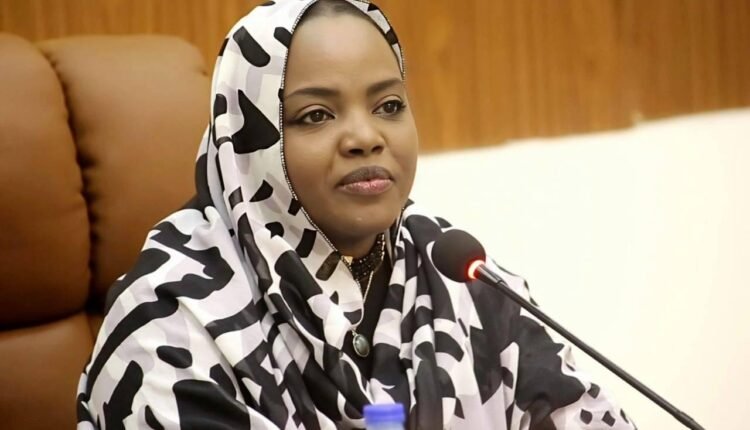
Dr. Salma Ishaq, Head of the Women and Children’s Advisory Council, revealed that the national school feeding campaign will launch before the end of November. In its first phase, it will target more than one million children, with the scope expanding to reach five million children across Sudan in the next phase.
In an exclusive interview on Monday, she stated that implementation will begin simultaneously in several schools, not in a single location. The campaign will proceed in two consecutive phases, with the second phase commencing immediately after the first , without a delay . She explained that the program will cover the entire 140-day school year and will focus on government schools, particularly primary schools and a portion of intermediate schools.
Her statement came after the second meeting of the National School Feeding Mechanism, held at the Sovereign Council’s Advisory Office for Organizations and Humanitarian Action. The meeting included representatives from five national entities: the Women and Children’s Advisory Office, which chairs the mechanism; the Ministry of Health; the Ministry of Education; the Ministry of Human Resources and Social Welfare; and the Poverty and Social Security Commission. International partners were also present, led by the UN Resident Representative, along with four UN agencies: the World Food Programme (WFP), the United Nations Children’s Fund (UNICEF), the Food and Agriculture Organization (FAO), and the International Organization for Migration (IOM).
The meeting concluded with an agreement to establish a coordination mechanism where organizations can mobilize their efforts, and the government can work to unify national budgets and resources.
Ishaq explained that the plan covers Khartoum State, as well as other states experiencing population returns, and areas suffering from fragility due to high poverty rates, including some that have not seen large-scale returns or have not been affected by the conflict.
She noted that these areas were selected some time ago, not solely in response to the current situation, and emphasized that the program encompasses all regions, with the UN responsible for reaching areas inaccessible to the government.
Regarding the division of responsibilities, she stated that the budget allocated for school feeding is provided by the United Nations and is entirely directed towards the quality and quantity of food and the caloric needs of children. The government, on the other hand, bears the burden of transportation, coordination, staff training, mobilizing community efforts and volunteers, and streamlining procedures for partners. She declined to specify the size of the government’s contribution, explaining that the figures have not yet been finalized.
Concerning the phrase “politicization of humanitarian work,” which appeared in the meeting’s outcomes, she clarified that the intention is for humanitarian work to remain purely humanitarian, whether in areas where the United Nations operates but which the government cannot reach, or in areas under government control. She acknowledged that humanitarian work still faces “numerous obstacles” due to difficult economic conditions and the large numbers of returnees and internally displaced persons, without specifying the nature of these obstacles or the areas where they are present.
She emphasized the need to mobilize more resources from both the government and the international community, sufficient to cover the needs, so that children do not receive fewer calories than they require for healthy growth.
This announcement comes at a time when the World Food Programme is targeting more than 900,000 children with school meals during 2026, meaning that the target announced by the Chancellor, which is 5 million children, exceeds the currently announced targets by more than 5 times.
Shortlink: https://sudanhorizon.com/?p=20044