

Top Democratic Block Official, Sally Zaki, Explains Why She Resigned
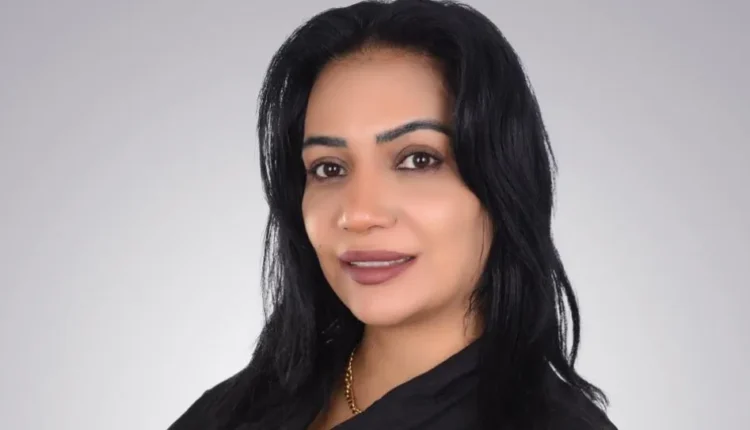
Cairo – Sudanhorizon – Sabah Moussa
Sally Zaki, the resigned assistant to the head of the Democratic Bloc, stated that the bloc was divided into two groups regarding participation in the recent Addis Ababa, Ethiopia, meetings: one group opposed participation, while the other believed attendance was necessary to express opinions and defend the bloc’s principles.
In an exclusive statement to the news website Sudanhorizon, Zaki explained that the invitation was extended by the five-member committee to the head of the bloc, Jaafar al-Sadiq al-Mirghani. She noted that the bloc’s deputy head, Mini Arko Minawi, submitted the names of the participants to the head, who then made amendments before forwarding them to the five-member committee.
She added, “We did not choose to participate by ourselves; rather, the selection and approval were made by the head of the bloc, after which the official invitations were sent to the delegation.” She indicated that al-Mirghani decided before the delegation’s departure that his representative, Mu’taz al-Fahl, would not participate. She explained that there were parties within the delegation who opposed participation and others who supported it. She stated that the delegation traveled, with the exception of the representatives of Jaafar al-Mirghani, Jibril Ibrahim, al-Tom Hajo, and Mustafa Tambour. She affirmed that the delegation carried with them the bloc’s principles and the foundations that had been agreed upon internally.
Zaki added, “We held a press conference at the beginning of the meetings and presented our vision as a bloc. Things were progressing smoothly, and we were seeking an agreement with the Sumud Alliance regarding the formation of a preparatory committee for the Sudanese-Sudanese dialogue, while emphasizing that the dialogue should take place inside Sudan.”
She added that “the discussions started from the principle of agreeing on a minimum set of principles and focused on the formation of the preparatory committee and the bloc’s vision, which is based on conducting the dialogue inside Sudan after creating a suitable environment for it.” She explained that this vision was preliminary and subject to modification, given that the head of the bloc was not participating in the meetings.
She argued that, “We cannot sign a final agreement with this group alone, nor can we speak on behalf of the bloc when its head is not present.” She noted that the other members of the delegation believed they were authorized to speak on behalf of the bloc and its head, while her opinion differed. She considered that any final signing should be preceded by consulting with the other components of the bloc.
She added, “We were not making individual decisions, and the bloc and Sumud do not represent all of Sudan. If we want a comprehensive dialogue, we should not reproduce the crisis as happened in the framework agreement.” She emphasized that this was one of the reasons that prompted her to withdraw.
Zaki revealed the formation of a joint committee comprised of two members from the bloc and two from the Sumud Alliance to develop the general framework for the statement and the preparatory committee. She explained that the committee included Mubarak Ardoul and Ali Trio from the bloc, and Taha Othman and Khalid Omar from the Sumud Alliance. She added that the committee prepared the general framework for the preparatory committee, and that representatives from each side presented the agreed-upon points to their respective delegations. However, the document was only read to them once. She said, “We had reservations about the document and requested a copy to study it thoroughly, but this was refused under the pretext of fear of leaks. At that point, I decided to withdraw even before signing, because what was ultimately presented was a final agreement, while I insisted it should be merely a proposal open for discussion.”
Regarding her reasons for resigning from the Democratic Bloc, Zaki stated that she made the decision due to what she described as a state of division within the bloc.
She added, “As an assistant to the president, I find it difficult, as this responsibility requires me to consider and respect everyone’s opinions. However, the reality is that each party now has a different viewpoint, and I can no longer express myself freely.” She continued, explaining that the disagreements that have surfaced publicly recently have made it more difficult to express these differences constructively.
She emphasized that what transpired at the Addis Ababa meetings, along with these disagreements, was the primary reason behind her resignation. She clarified that she submitted her resignation in writing to the head of the bloc, confirming that her decision is final and irrevocable.
Zaki asserted that the Democratic Bloc currently represents the largest political alliance in Sudan, given its broad diversity. She stated that it has a promising future if it can overcome this current phase. She added that the bloc has successfully navigated numerous difficult periods in the past, but considers the current phase the most challenging in its history.
She emphasized that all components of the bloc reject the participation of the “Founding” Alliance in the dialogue, denying reports that the bloc’s delegation had accepted such participation.
She clarified that the disagreements within the bloc are not as significant as some media outlets portray them and that they can still be contained and resolved. She expressed her hope that these differences can be overcome to preserve the bloc, announcing that she will continue her political activism as a citizen, independent of political organizations. She reiterated her commitment to her resignation and her decision not to return to the bloc, especially after having served as an assistant to the president and the responsibilities that come with it.
In closing, Zaki said that regional and international organizations are making efforts to resolve the Sudanese crisis, but the crisis becomes more complicated after each meeting. She believes that the greatest opportunity lies in a Sudanese-Sudanese dialogue held within the country, with the international community playing a facilitating role. She added, “We are the most capable of understanding our issues, and our participation in such events was aimed at filling any political vacuum. Withdrawing from them is a position of weakness, and it is more appropriate to declare positions and principles and defend them within these forums.”
Shortlink: https://sudanhorizon.com/?p=14586