

He Was Not Infallible, Yet He Strived for Infallibility
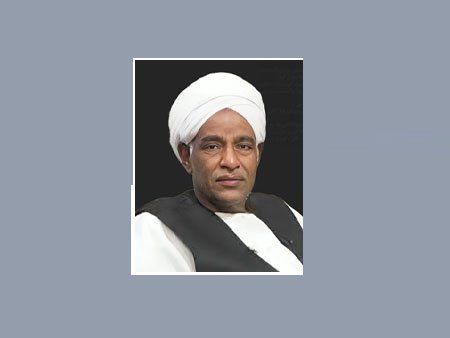
Mahjoub Fadl Badri
Every person, they say, carries a share of their name’s meaning. Thus, Ismat lived seeking ismah — protection from sin and wrongdoing — and God granted him success along the difficult, thorny paths he walked, for “whoever is destined to tread a path shall surely tread it.”
The name Ismat, ending with the open “t”, signifies protection or purity, much like similar Arabic names whose meanings derive from their forms: Ra’fat from compassion, Hishmat from modesty, Safwat from purity, Ulfat from affection, Shawkat from strength, and Tal‘at from appearance.
I came to know Brigadier Police Officer Ismat Ahmed Babiker during his tenure as Executive Director of the Office of the Minister of Interior. What immense responsibilities the minister entrusted to him for follow-up and execution. Yet what first caught my attention was that his desk was entirely free of visible papers — literally empty. How could the desk of an executive director possibly contain no papers or files whatsoever? Yet Ismat managed precisely that. He memorised the titles and contents of his files, and more than that, he covered the glass doors of his filing cabinet with curtains so that no visitor’s eyes could fall upon a single word — not even a file number.
I had never seen anything similar to any other official; every other office desk was buried beneath files, except Ismat’s. Yet despite this, he carried out his duties with complete competence.
It was precisely because of this discipline — together with his precision, diligence, and sincerity — that Ismat was selected to become Executive Director of the Presidency Office, serving everyone there: the President, his deputies, ministers, state ministers, and advisers. He never failed them in any detail, whether implementing presidential decrees, ministerial decisions, committee procedures, arrangements for public holidays, official visits, internal and external travel, or even following up on spontaneous public remarks made by the President or his deputies and ensuring the Palace fulfilled any resulting commitments.
Despite these immense responsibilities, Ismat never neglected his colleagues during their celebrations or times of grief. He never frowned at anyone seeking assistance or service from the Presidency. Quietly and without showmanship or self-promotion, he rendered countless services to the employees of the Presidential Palace.
He was always the first to arrive at the office — before the porter, the office assistant, or the driver — and no one ever left after him. He was the first to arrive and the last to depart. In his neighbourhood in Nile City, Omdurman, he also built a spacious mosque for the local residents, personally contributing generously while helping raise donations from others.
Administrative and organisational arrangements eventually elevated Ismat to the post of Undersecretary of the Presidency. I bear witness that this office came to him willingly; he never sought it in the slightest. Indeed, he seemed almost indifferent to such promotion, content as he had been with his former role in a narrow office that could scarcely accommodate more than one or two visitors — all within that vast and imposing palace.
Ismat was exceptionally meticulous. He personally photocopied documents and maintained meticulously organised files that only he fully understood, yet could produce instantly whenever requested. Many of these were highly sensitive financial documents. He respected bureaucratic procedures — if not outright sanctified them — and respected himself too much ever to place himself under suspicion. Money is a temptation, after all, and he handled public funds in multiple currencies without anyone ever hearing or sensing the slightest negligence on his part regarding public money.
He would remain seated in his office for extraordinarily long hours, eventually developing haemorrhoids from prolonged sitting, yet he neither complained, absented himself, nor travelled abroad for treatment.
Before the war, I learned that Ismat had suffered a fractured hip while travelling to Egypt. I received him at Cairo Airport, where he arrived in a wheelchair, accompanied by his only son, Ahmed and his wife, Umm Ahmed. He underwent surgery attended by Dr Abdel Majid Haroun and Dr Mohamed Al-Mukhtar Hassan Hussein alongside me. Later, I visited him during his convalescence at his residence in Faisal, Egypt. I did not know then that this would be the last time I would see his cheerful, radiant face.
Ismat later honoured the physician who supervised his treatment, Dr Abdel Ati Al-Mana‘i, during the latter’s visit to Sudan. He hosted him generously and invited several former Presidential Palace colleagues to meet him — a gesture Dr Al-Mana‘i never forgot.
Then came the news of Ismat’s passing. Every soul shall taste death. Until his final moments, he would sit outside his home greeting passers-by as they greeted him in return, until he surrendered his soul to its Creator.
May you dwell in the eternal gardens of Paradise, Abu Ahmed.
Indeed, to God we belong, and unto Him we shall return.
Shortlink: https://sudanhorizon.com/?p=14197