

We Left Khartoum for Three Days… and Returned After Three Years
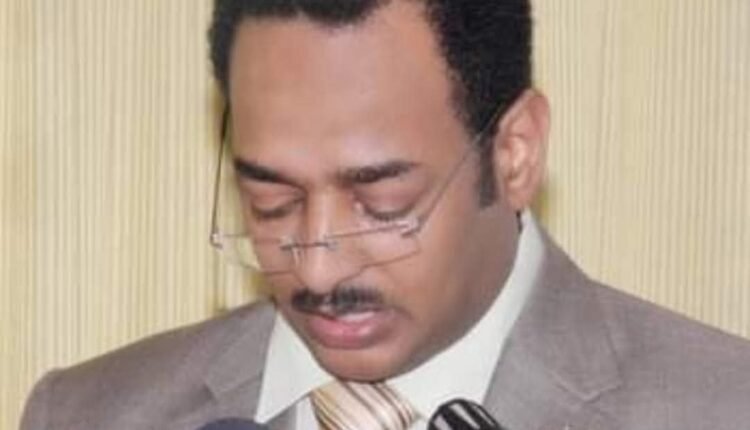
Dr Salah Da’aak
One of the memories that remains firmly lodged in my mind is what happened when the war first broke out in Khartoum. We stayed for around ten days, hoping the gunfire would stop and the war would come to an end. Most of the extended family had already left for Wad Madani and Shendi, and they remained in constant contact with my wife and brother, urging them to leave as well.
As for me, the idea of leaving never truly crossed my mind. Everything around me suggested that this was merely a temporary crisis that would last a few days before life returned to normal.
But with the mounting calls and pressure from relatives, anxiety slowly began to spread among my family. They, in turn, started pressing me to leave. At that point, I had already shut off the water supply to the house, and we were bringing water from nearby factories. We could see anti-aircraft fire above our heads, and at times aircraft and explosions so close that one could almost believe they were occurring inside the house itself.
Then came a moment when a plane flew directly overhead, followed by a massive explosion that made us genuinely believe the house had been destroyed. Everyone in the family stood frozen — including my brother and his wife — fear plainly visible in their eyes. The pressure on me intensified, while I continued trying to reassure them that the situation would calm down soon.
Yet anxiety had already begun growing within me as well.
I had learned that certain vehicles, particularly Land Cruisers, had become targets, and that some people were being pulled from their cars and had their cars confiscated. At that moment, I realised matters were slipping beyond control, especially as the entire family gathered around me, their fear impossible to ignore.
I have a daughter who was around eight years old at the time. She knew the nature of my work in conflict zones such as Iraq, Syria, Yemen, and Darfur. She looked at everyone present and said:
“Dad is used to working in war zones… that’s why he refuses to leave here.”
She said it with the innocent humour of a child, trying both to ease the tension and provoke me into action. It was a surprisingly perceptive remark for someone her age, and at the same time, it revealed how accurately she understood my attitude.
Yes, working in such environments had made me less sensitive to danger — but not to the point of leaving my family and children exposed to it. The scene around us was terrifying by every standard.
Chaos in the Streets
Outside, movement in the streets intensified amid scenes of complete disorder.
We began witnessing the looting of factories in Bahri. Some people carried gas cylinders, others dragged refrigerators on donkey carts. In contrast, others pushed brand-new cars stolen from showrooms or hauled away distribution vehicles belonging to cola and Pepsi factories.
It was a state of frenzy and collapse that opened the appetite for looting and theft.
Meanwhile, family members — including my younger brother — coordinated with a bus driver. An agreement was reached at a price nearly ten times the normal fare: the equivalent of US$1,500 to transport us to Wad Madani in Al Jazirah State.
Under ordinary circumstances, the fare would have been around 750 Sudanese pounds, while the dollar traded near 450 Sudanese pounds at the time.
I had expected an air-conditioned and comfortable coach.
The reality was entirely different.
The bus was extremely old. Its windows had no glass, the dashboard was barely functioning, the seats were torn apart, and there was no ignition key in the normal sense — merely two exposed wires touched together to start the engine. The smell of petrol filled the air.
I turned and saw a large punctured fuel container tied to a hosepipe. When I asked about it, the driver simply replied:
“That’s the fuel feed.”
The moment he started the engine, the entire bus shook violently, and the noise was deafening, as though the exhaust system emptied directly into the passenger compartment.
The Flowers I Thought I Would Return To
Everyone loaded their luggage and boarded the bus.
Then suddenly I remembered that I had not watered the plants and seedlings at home.
I had no fewer than ninety flowerpots, many of which contained rare species I had collected during travels to different countries. Every morning I would spend time watering and caring for them. Some released their fragrance at dawn, others at night, until the house had become something resembling a botanical garden or living flower exhibition.
I stepped off the bus, took the hosepipe, and began watering them one by one. The process took more than half an hour. I hoped that single watering would sustain them for two or three days until I returned.
The Road to Wad Madani
During the journey, tension and fear dominated everyone. The possibility of being stopped or searched hovered constantly over us.
Yet along the roads we saw young villagers standing beside passing vehicles offering water and juice to travellers, insisting on providing food and supplies.
Those were among the first signs of the spontaneous self-organised relief efforts launched by ordinary Sudanese themselves: a drink of water or a simple sandwich, because they knew that people were fleeing their homes and leaving all their possessions behind.
Schools Become Shelters
Upon arriving in Wad Madani, families dispersed.
Some went to relatives, while others headed to shelters first opened by local residents inside schools. Entire schools were transformed into accommodation centres, and the academic year was effectively suspended as classrooms became homes for displaced families.
It now seems clear that those who planned the outbreak of war understood perfectly that two or three days before Eid al-Fitr, most residents of Khartoum traditionally travel to their home regions, leaving only a small number behind. That was relatively easier during those days, since many people were already travelling for holidays and family visits.
Return to the Villages
As the war dragged on, many people were forced to reconnect with their roots — especially those who had settled permanently in the capital and become disconnected from their original regions.
Unexpected transformations began to emerge.
Doctors returned to villages. Clinics opened in places that had never previously known specialised medical services. Some villages evolved into small medical centres.
From there, relief and voluntary work began expanding rapidly as people realised the war would not end quickly.
Families began helping displaced households within shelters. Communal kitchens were opened. Rural families hosted displaced people in their homes until a single household might shelter twenty or even thirty families — scenes that resembled collective solidarity more than harsh displacement.
True humanitarian work began with ordinary Sudanese themselves: neighbours, relatives, and ordinary people.
Sudanese society became the primary host to the displaced, a phenomenon that astonished the world.
According to United Nations estimates, the displacement of seven million people should have produced enormous camps and endless rows of tents. But that did not happen.
The displaced instead integrated into communities through a rare form of social solidarity that became a humanitarian lesson for the world.
Nor was the effort confined to those inside Sudan. Sudanese abroad also played a major role in supporting their families both within Sudan and beyond — though that is another long story altogether.
Three Days That Became Three Years
I left my home in Khartoum, carrying only a few clothes and personal belongings, completely convinced I would return in just three days.
I did not return for three years.
When I finally entered the house, I found it looted. Furniture lay scattered everywhere. The flowerpots had dried out and hardened against the walls, as though they had raised their hands towards the sky, crying for help…
And no help ever came.
Shortlink: https://sudanhorizon.com/?p=13938