

Al-Nuhud Executive Director: Al-Safana’s Defection Has a Positive Impact on the Local Situation
Cairo – Sudanhorizon – Sabah Musa
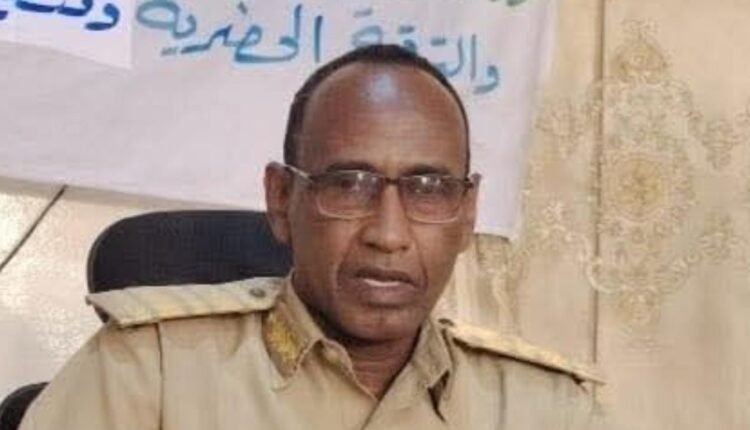
Al-Nuhud Executive Director, Musa Ali Ibrahim, has confirmed that the defection of Ali Rizqallah, known as “Al-Safana,” from the Rapid Support Forces militia will have a positive impact on the security and operational situation in Al-Nuhud province and the surrounding areas.
In an exclusive statement Ibrahim said that Al-Safana was one of the most prominent commanders who led the attack on the city of Al-Nuhud. He pointed out that Al-Safana’s appearance in several videos while touring the city after its fall about a year ago, and his announcement of its capture at the time, reflects the extent of his influence within the militia.
He added that Al-Safana’s defection will have a direct impact on the morale of the remaining Rapid Support Forces (RSF) elements inside and outside the city. He described Al-Safana as a prominent and influential leader and expressed his hope that this would encourage more militia commanders in West Kordofan State to surrender themselves, their equipment, and their forces to the Sudanese Armed Forces (SAF). He clarified that no criminal charges have yet been filed against Al-Safana as an individual by merchants in Al-Nuhud. He noted that he had contacted a number of merchants, and none of them confirmed filing any charges against him. He emphasized that what is being circulated about this matter is nothing more than rumors, and that previous charges were directed against the RSF in general.
The executive director highlighted the strategic importance of El-Nuhud, a city situated between the Kordofan and Darfur regions and a vital center from a security, military, and economic standpoint.
He emphasized that the local population was among the hardest hit by the war, particularly as Al-Nuhud was the last remaining safe area in West Kordofan State before its fall. He expressed his hope that the residents would soon return to their homes, shops, and farms, explaining that the area encompasses numerous villages and hamlets, including the old city of Al-Nuhud and its surrounding rural areas. He added that all these areas were affected by the war, displacement, and the violations committed by the militias against the civilian population.
Ibrahim added that the city has become almost deserted, and that more than 95% of the citizens have been displaced to different areas within Sudan, including rural areas, the city of El Obeid, and Ad-Dabba in the Northern State, in addition to Kosti and Rabak in the White Nile State, Al-Qadarif, Omdurman and other areas.
He added that the citizens have been scattered since the attack on the city a year ago, stressing that the humanitarian situation in An-Nuhud is very unfortunate, pointing out that the militia looted the property of citizens, including herders and farmers, and that the city has turned into a ghost town. He added that the humanitarian situation in the areas under the control of the Rapid Support Forces is not reassuring, explaining that the traders of Al-Nuhud suffered great losses after their warehouses were completely looted, noting that the city is one of the largest markets for cash crops, especially peanuts, gum arabic and watermelon seeds, stressing that the traders’ property was completely looted, and that some of them had previously filed complaints against the Rapid Support Forces militia.
Shortlink: https://sudanhorizon.com/?p=13932