

Towards Reforming Sudan’s Justice Institutions (4): The Judiciary in Sudan — What Is It, and What Are We Rebuilding After the War?
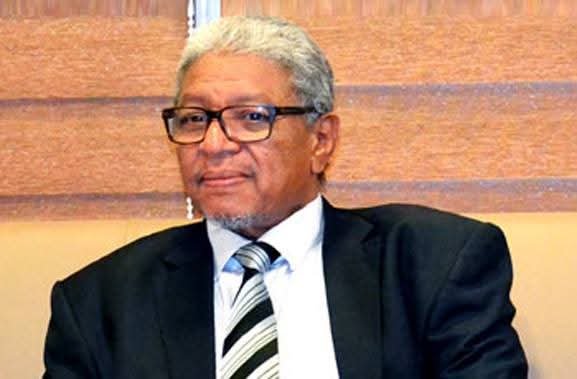
Dr Awad Al-Hassan Al-Noor
As we said before, and repeat here, the war in Sudan has inflicted severe damage on the institutions of the state, and the justice institutions have not been spared. Courts have been disrupted, files and records have been lost or damaged, professional expertise has become dispersed, and access to justice has become extremely difficult across large parts of the country.
Yet, when the conditions for reconstruction are in place, rebuilding should not be confined to restoring buildings, files, and equipment to the condition they were in before the war.
The more important question is: What kind of judiciary do we want to rebuild?
Restoring the judiciary to the form it took on the eve of the war may restart the institution. Still, it does not necessarily address problems that had accumulated before the war itself. The ordeal, harsh as it has been, therefore presents an opportunity for reassessment: What worked in Sudan’s judicial experience and deserves to be preserved? What is no longer fit for purpose? And what can we learn from other systems without losing the distinctive character of the Sudanese judiciary?
This aligns with the general premise of the Judicial Committee for Post-War Reconstruction’s recommendations, which did not confine reform to the judiciary alone. Rather, they addressed the Constitutional Court, the Judiciary, the Public Prosecution, the Ministry of Justice, training and legal education, while taking into account the different legal schools that have shaped Sudan’s justice system.
A Sudanese Judiciary Formed in a Different Environment
It is difficult to consider the future of the judiciary in Sudan without recalling its history. At a key stage in its development, the modern Sudanese judiciary formed within a legal environment shaped by Anglo-Saxon traditions. This was reflected in the standing of the judiciary, the role of judicial precedents, and the role judges played in interpreting and developing the law, as well as in the formation of a judicial character with considerable room for legal reasoning.
Nor was this confined to the method of delivering judgments. During certain periods of Sudanese judicial experience, judges were not entirely removed from the investigation stage, as in some other systems. Sudan knew judicial supervision of investigations, as well as the institution of the investigating judge.
This is not merely a historical fact. It reveals a difference in criminal justice philosophy and in how responsibilities are allocated among the judge, the Public Prosecution, and the police—the bodies responsible for bringing prosecutions.
Sudan subsequently underwent successive legislative and institutional changes, particularly from the transformations of the 1970s onwards, and, in certain respects, its legal structure moved closer to Arab systems influenced by the civil-law tradition. Over time, the respective positions of the judiciary, the Public Prosecution and the Ministry of Justice also changed, as did their relationships with one another. This included adopting judicial administration through the Higher Judicial Council, alongside a gradual move toward greater independence for the Public Prosecution.
The purpose of pointing this out is not to argue that the Anglo-Saxon system is superior, or that adopting elements from Arab systems was a mistake. The question is more precise:
Did Sudan move from one judicial model to another through a fully integrated institutional transition, or did it, over the course of its development, combine elements from different systems without always resolving the philosophy governing the relationship between them?
This is a question around which a calm legal dialogue should be opened during the reconstruction phase.
What Judiciary Are We Talking About?
Defining the judiciary may appear self-evident: judges and courts that adjudicate disputes and apply the law. But this definition is not enough to build an institution.
Is the judiciary simply the courts? What is the position of the Public Prosecution? Is the Public Prosecution part of the judiciary, an independent authority of a judicial nature, or a separate justice institution? What is its relationship with the police? Who is responsible for appointing its members, promoting them, inspecting their work and disciplining them?
Conversely, where does the Ministry of Justice stand? Which functions should remain with it as a state institution with executive, administrative and technical dimensions, and where should its jurisdiction end so that it does not overlap with the judicial function or with the functions of investigation and prosecution?
These questions are not disagreements over terminology. They concern the distribution of power and the protection of rights.
The Judicial Committee’s recommendations were therefore right to make achieving integration between the judiciary, the Public Prosecution, and the Ministry of Justice one of the objectives of reform, while drawing on Sudanese precedents, legislation, and experience to arrive at a distinctly Sudanese national model.
This series will address the position of the Public Prosecution and its relationship with the judiciary and the Ministry of Justice separately, as it deserves a discussion broader than a passing paragraph.
Judicial Independence Is Not Merely a Constitutional Provision
Judicial independence is one of the principles on which there is almost universal agreement. Disagreement, however, begins when we ask what that independence actually means.
It is useful to distinguish between the independence of the judiciary as an institution, the independence of the judge, and the administration of the judicial service.
The independence of the judiciary means that, in exercising its constitutional function, it should not be subject to the dominance of the executive or any other authority, and that it should have the institutional safeguards necessary to protect that independence.
The independence of the judge, on the other hand, means that the judge is free to form his or her judicial conviction and apply the law to the facts, without receiving instructions regarding a judgment from a minister, political or administrative official, or even from a judge of higher rank outside the avenues of appeal established by law.
The administration of the courts, however, is a different matter. Managing buildings, procurement, staff, human resources, services, technological systems, and other administrative affairs is not, in itself, the exercise of judicial power.
The Sudanese system has traditionally provided for the administration of the courts under the Chief Justice, with management entrusted to a person appointed by the Chief Justice from among judges of the Supreme Court or Courts of Appeal.
At the same time, the reform recommendations called for judges to be removed from administrative work, for administrative processes to be automated, and for such functions to be delegated to specialists in administration, economics and human resources, thereby freeing judges to concentrate on their core judicial duties.
This raises the question clearly:
Does judicial independence mean that judges must manage every aspect of the judicial institution, or does sound administration require judges to administer justice. In contrast, professional specialists manage the judicial service under the supervision of the judicial authority?
The time the Chief Justice, as head of the judicial institution, and judges spend on day-to-day administrative details is time taken away from the function only they can perform.
Before Building the Court, We Should Build the Judge
The best structures and laws will not create an independent judiciary if the judge is not capable of exercising independence.
Judicial reform should therefore not be confined to defining the relationship between the judiciary and the executive and legislative branches. It must also address the personal and professional safeguards of those entrusted with the administration of justice.
The first of these safeguards is security of tenure. Transfer, secondment, promotion, inspection or disciplinary action must not become indirect means of influencing a judge.
This does not mean placing judges beyond accountability. Judges are among those who should be most firmly subject to the law. But accountability should follow publicly stated standards and fair procedures that guarantee the right to a defence and to appeal.
The Committee’s recommendations called for clear standards for appointment and promotion, and for the development of judicial inspection so that it becomes a means of improving performance rather than merely a punitive instrument.
Personal protection is particularly important in post-war Sudan. A judge hearing serious crimes, and a prosecutor investigating them, should neither of them — nor their families — be left exposed to threats, retaliation, inducement or corruption as a result of performing their duties.
Such protection is not a privilege granted to judges or prosecutors. It protects the authority of the law they represent.
A Dignified Standard of Living as a Safeguard of Independence
It may be unrealistic to speak of judicial independence without speaking frankly about the material circumstances of judges and prosecutors.
The state demands integrity and impartiality from them and, by virtue of their positions, imposes legitimate restrictions on employment and activities that could provide alternative sources of income. In return, it has a duty to provide a standard of living that preserves the dignity of the office and protects the office-holder and his or her family from financial hardship.
An adequate salary, housing, healthcare, insurance and an appropriate pension are not personal privileges granted to judges or prosecutors. When established with moderation and transparency, they form part of the objective safeguards of their independence and integrity.
The Judicial Committee’s recommendations expressly called for mechanisms to improve the living conditions of judges and prosecutors.
In circumstances of inflation and economic instability, it is not enough to determine a nominal salary and then allow its real value to erode over the years. It is therefore worth discussing the creation of an objective legal mechanism, through the Higher Judicial Council, for the periodic review of salaries, allowances and pensions, as far as possible removed from administrative and political bargaining.
Independence is not merely a constitutional provision. It is also the practical ability of a judge to uphold the law without fear, need or favour.
The Oath and the Swearing-In: The Other Face of Independence
Since safeguards do not operate in only one direction, judges and prosecutors, to the extent that they demand that the state and society respect and protect their independence and provide them with a dignified life, are in turn bound by a heavy responsibility.
This is where the oath becomes important.
The swearing-in of judges and prosecutors, and its public declaration, should not be treated merely as a ceremony preceding the assumption of office. It is a declaration before the state and society — and, before all else, before one’s own conscience — that the person entrusted with this office has committed himself or herself to the supremacy of the Constitution and the law, to integrity and impartiality, and to performing his or her duty without fear, favour or personal interest.
The Committee’s recommendations gave this matter attention in relation to both the judiciary and the Public Prosecution. They regarded the effect of the oath as extending beyond the words spoken, making it a code of honour and an ethical constitution guiding the work of the judge or prosecutor.
Perhaps justice-system reform provides an opportunity to reconsider the wording of the oath itself, so that it clearly expresses the values on which judicial office rests: the Constitution, the rule of law, independence, integrity, impartiality, and the protection of rights and freedoms.
Independence without accountability may become immunity; accountability without independence may become a means of control.
What is required is a balance between the two.
We should neither return to the past nor start from scratch. Nor should references to the Anglo-Saxon roots of the Sudanese judiciary, or to the historical role of judges in supervising investigations, be understood as a call to restore the previous system in its entirety.
Conversely, we should not assume that the model Sudan adopted later, or any contemporary Arab or European model, can be transplanted wholesale into Sudan.
The Sudanese experience itself is a resource from which we should begin.
We should retain what has demonstrated its value: the independence of the individual judge, the strength of legal reasoning and judicial precedent, accumulated experience, and judicial oversight of procedures affecting rights and freedoms.
We should review what requires revision, and then look outwards: How are modern courts administered? How do countries select judges and prosecutors? How do they organise inspection and training? How do they separate judicial work from administration? And how have they used technology to bring justice closer to the citizen?
The proposed Higher Judicial Council contained in the reform papers took into account several experiences, including those of France, Italy, South Africa and India, while emphasising the need to respect Sudanese particularities.
In my view, that is the right starting point.
From Reconstruction to Re-establishment
If the courts destroyed by the war must be rebuilt, it would be better not merely to rebuild the buildings but to review the institution itself.
If files and records must be restored, why should the default for the future not be electronic files and secure archiving?
If Sudanese people have been dispersed across the states and beyond the country, why should remote litigation not become an established means of accessing justice wherever the nature of the case permits it?
And if the judiciary is to be rebuilt, why should this not be accompanied by judicial specialisation, continuous training and modern professional administration?
The Committee’s recommendations themselves identified digital transformation, specialisation and removing judges from administrative duties as elements of reforming the Judicial Authority Act.
The ambition, therefore, should not be for the Sudanese judiciary simply to return to the day before the war. It should emerge from reconstruction more independent, more efficient and more capable of serving the citizen than it was before the war.
Legislation: From Amending Laws to Building the System
The judiciary cannot be reformed in isolation from legislative reform.
Laws are not merely instruments regulating court procedures; they translate the philosophy of the justice system into institutions, jurisdictions and safeguards.
Reconstruction should therefore not be based on piecemeal amendments imposed by immediate necessity. It should instead involve a comprehensive legislative review that clearly defines the position of the judiciary, the Public Prosecution and the Ministry of Justice; regulates the Higher Judicial Council, appointment, promotion, inspection and accountability; and establishes the legal foundations for professional judicial administration, specialisation, training, digital transformation, remote litigation, the simplification of litigation procedures and the introduction of case-management systems, among other measures.
The Committee’s recommendations have already called for a review of several laws governing the justice institutions, including the Judicial Authority Act, the Public Prosecution Act and the Ministry of Justice Act, among others.
More importantly, legislation should be preceded by agreement on the philosophy of the system we seek to build. Good legislation does not begin with drafting provisions; it begins by defining the purpose those provisions are intended to achieve.
The legislative process itself should therefore be participatory, drawing on judges, prosecutors, legal advisers, lawyers, universities and other Sudanese expertise. The reconstruction of justice must not become merely a matter of replacing one law with another.
Retired Judges: Experience That Should Not Retire
Among Sudan’s resources — and perhaps one from which it has not benefited sufficiently — are its retired judges.
A judge reaching retirement age ends his or her judicial tenure in accordance with the law, but that does not erase the knowledge accumulated over decades: knowledge of the law, drafting judgments, managing cases, and understanding the traditions and ethics of the judiciary.
In the post-war period, when there will be a pressing need for retraining, institution-building and the recovery of judicial memory, wasting this expertise would be a loss that would be difficult to compensate for.
The Committee’s recommendations have already called for benefiting from retired Sudanese judges and from expertise based outside the country.
This can be done without altering the retirement age or closing the way for younger generations, through training and capacity-building, participation in the preparation of curricula and judicial manuals, research and legislation, documentation of precedents, mediation and arbitration, technical and advisory committees, and the selective engagement of individuals whose competence, age and health permit it where the law allows.
In this field, the Sudanese Association of Retired Judges could play an important institutional role in bringing together this expertise, organising it and making it available to the state, the Training Institute and the judiciary, rather than leaving it as scattered individual efforts.
Renewal does not mean breaking with previous generations. It means that a new generation assumes responsibility while benefiting from the memory and experience of those who came before it.
Rebuilding the judiciary therefore requires legislation that looks to the future, a new generation prepared to assume responsibility, and the experience of previous generations to preserve judicial memory and transmit its traditions, so that reform becomes a renewal of the institution rather than a rupture with its history.
A Call for Dialogue
The purpose of this article is not to present a final model for the judiciary. It calls for dialogue on the philosophy of the system we wish to legislate before enacting the legislation itself.
Disagreements over details can be resolved later. The starting point, however, should be a set of fundamental questions:
What are the limits of judicial authority? What is the position of the Public Prosecution? What is the role of the Ministry of Justice? Who administers the judiciary? How is a judge selected? How is the judge protected? How is a dignified standard of living guaranteed? How are judges trained, assessed and held accountable? What is the position of the Supreme Court in a state moving towards a federal system? And is the Constitutional Court independent, or a division of the Supreme Court?
These questions do not concern judges and lawyers alone. They concern constitutional values and, ultimately, the citizen’s right to find, when wronged, an independent, competent, secure and decently supported judge — one who fears no one and depends on no one, and who has sworn to discharge the responsibilities of office in accordance with the Constitution and the law.
Perhaps this is the gateway to the more difficult question that should be the subject of the next article.
Shortlink: https://sudanhorizon.com/?p=17799