

From a Survival Economy to an Economy of Recovery: How Can Families Begin Building the Future?
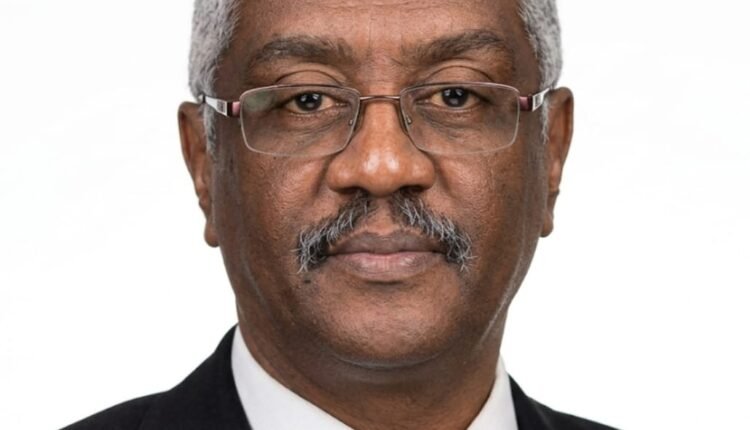
Nu’man Yousif Mohamed
Former Banker – Institutional Development Consultant
In the first article in this series, we examined how Sudanese families cope with an inflationary economy and how they can protect purchasing power amid rising prices and declining real incomes by shifting from automatic consumption to conscious management of income and expenditure.
In the second article, we took this a step further by exploring how families can build financial resilience through diversifying income sources, saving, investing in skills and technology, and cooperation.
This instalment moves another step forward: what can a family do with these capabilities once it has developed greater financial awareness and a stronger ability to manage its resources?
The objective should not stop at surviving high prices. Survival is a necessity, but it is not a future. An economy that remains preoccupied with protecting what is left, without moving towards producing what it needs, remains trapped in crisis.
This is where the transition begins — from a survival economy to an economy of recovery, and from protecting resources to creating value.
From survival to recovery
In a turbulent economy, preserving income, cutting expenditure and preparing for emergencies are rational behaviours. These skills have been essential for Sudanese families over the past several years. But recovery requires the addition of a new economic behaviour: turning available resources into value.
A family that produces some of its own food, invests a small amount of space in a productive activity, or turns one member’s skills into a paid service creates a new source of value and income.
A young person who learns a skill the market demands is no longer dependent on waiting for a job. A craftsman who improves his product or marketing methods becomes more competitive. A farmer who understands market demand before beginning production is more likely to achieve a better return.
In this sense, economic recovery does not begin with the size of capital, but with the effective use of the resources already available.
The economy does not begin with large-scale projects
When recovery is discussed, attention usually turns to major factories, large projects and substantial investments. These are essential for rebuilding the economy, but they are not the only forces that can restart economic activity.
A large, less visible economy is made up of productive households, artisans, small farmers, workshops, home-based businesses, service providers, small traders, and micro-enterprises.
Each activity may seem modest on its own. But when thousands of small enterprises enter the production cycle, they become a substantial economic force.
One key to Sudan’s recovery, therefore, is to reactivate the small-scale resources dispersed throughout society and connect them to markets, rather than waiting solely for major enterprises to return to full capacity.
A strong economy is not simply an economy dominated by a limited number of large companies; it is one in which a broad base of producers participates.
From consumers to producers
During the recovery phase, Sudan will need functioning markets, improved incomes, restored services and stronger demand. But greater purchasing power alone is not enough to create sustainable recovery.
Rising demand requires production that can respond. When part of household income is converted into demand for locally produced goods, and that demand encourages producers to increase output, a new economic cycle begins:
income → demand → production → new income → new demand.
If, however, most of the additional demand is directed towards imported goods, a substantial portion of the economic benefit of higher incomes will leave the domestic economy.
Genuine recovery therefore requires combining the restoration of purchasing power with the revival of productive capacity. At that point, the family and the small enterprise become part of the solution rather than merely recipients of the crisis’s consequences.
From resources to added value
Sudan possesses abundant resources: land, water, livestock, agricultural products, human resources and a strategic geographical position. But resources alone do not create a strong economy.
Economic value increases when resources enter an integrated chain that begins with production and extends to processing, storage, transport, marketing and finance.
Selling a crop in its raw form generates income, but processing, drying, packaging and marketing it can create significantly greater value and additional employment. The same applies to livestock, food products, handicrafts and services.
Here lies one of the major opportunities for an economy of recovery: moving from an economy that sells resources in their raw form to one that adds value before bringing them to market.
This does not always require large-scale factories. Many stages of the value chain can begin with small enterprises engaged in food processing, packaging, drying, storage, transport, maintenance, services and marketing.
The small enterprise is part of a larger value chain
A small enterprise does not operate in isolation.
A farmer needs inputs, finance, transport, storage and access to markets. A factory needs raw materials. A trader needs suppliers. A consumer needs a good-quality product at an appropriate price.
An enterprise’s strength therefore depends not only on its individual capabilities, but also on its relationships with others in the value chain.
It may begin with farmers producing a particular commodity, followed by a processing unit, distributors, markets and consumers. Around this chain, further activities emerge in finance, transport, storage, maintenance, marketing and technology.
Individual activity thus develops into an economic ecosystem, and the success of one small enterprise creates opportunities for others.
This is one of the important roles that cooperatives and local partnerships can play during the recovery phase: bringing together small capabilities and transforming them into greater economic strength.
Work is broader than employment
It is also necessary to reconsider the concept of work. Work does not mean only a government position or a monthly salary. It can take the form of a trade, commerce, farming, a service, a home-based business, digital activity, a partnership or cooperative production.
This does not mean that everyone should become a business owner. Rather, employment should become one form of work, rather than its only form.
In an economy that needs more jobs than traditional employment can provide, the ability to create economic activity — and to create work for oneself and others — becomes an important resource for recovery.
This is why practical, vocational and digital skills are becoming increasingly important. They do not merely improve people’s chances of finding employment; they also open opportunities for self-employment, production and service provision.
Finance is a tool for growth, not a substitute for the enterprise
It is impossible to discuss enterprises and recovery without discussing finance. Businesses need capital, and economies need financial resources to drive production and investment.
But finance alone does not create a successful business.
Money that is not linked to a viable idea, a clear market, appropriate skills, sound management and productive capacity can become a burden rather than a tool for growth.
The financing ecosystem for enterprises should therefore be based on an integrated equation:
idea + skills + market + production + finance.
When finance operates within this ecosystem, it becomes better able to generate income, employment, and added value.
This highlights the importance of banks and financial institutions developing products that understand the nature of small enterprises and link finance to real economic activity rather than focusing primarily on consumption.
Production-oriented finance will be a central theme of the next article in this series.
From individual initiative to an economic ecosystem
Responsibility for recovery cannot rest solely with families or individual citizens.
Individual initiative needs an economic environment that allows it to grow.
Banks need to develop appropriate products for small enterprises. Financial institutions need to understand small producers’ circumstances. Cooperatives can help pool savings, purchases, production and marketing. Training institutions need to connect skills with market requirements. Government must make it easier and less costly to engage in economic activity. Meanwhile, the private sector can connect small producers to markets and supply chains.
Through these complementary roles, individual initiatives can develop from scattered efforts into an economic ecosystem capable of generating value and employment.
Recovery begins from the top and the bottom
Economic recovery requires two parallel tracks.
The first is a top-down track, driven by policies and reforms, infrastructure reconstruction, the creation of a favourable business environment, and the provision of finance and essential services.
The second is a bottom-up track, driven by households, producers, farmers, artisans, small enterprises and cooperatives.
When the two tracks converge, the recovery cycle begins to take shape:
The productive household supports the local market; the market encourages the producer; the producer creates demand for services; services create jobs; jobs generate incomes; and incomes stimulate markets once again.
In this way, small initiatives can develop into a broader economic movement.
From a survival economy to an economy of hope
The past several years have taught us how to preserve what remains. The next phase must teach us how to rebuild.
Yes, survival was a legitimate objective during wartime. But it cannot be a permanent strategy. An economy that remains permanently on the defensive cannot build a future.
We now need an economy that produces, adds value, creates opportunities, links finance to production, turns skills into economic assets, transforms cooperation into strength, uses technology as a tool for work, and turns the small enterprise into a building block within a larger economic system.
This transformation may not begin with a major economic decision. It may begin with a family deciding to produce some of what it consumes; a young person learning a skill that is in demand; a craftsman improving his product; a farmer joining a better value chain; a group of producers cooperating in purchasing, production or marketing; or a bank directing its resources towards financing productive activity.
These steps may appear small individually, but thousands of small steps can create a far-reaching economic transformation.
The objective of the previous phase was survival. It then became protecting income and building financial resilience. The next step is to turn that resilience into production, income, value and opportunity.
Sudan will not fully recover simply because markets reopen, incomes improve or the severity of the crisis diminishes. Its recovery will be complete when Sudanese people themselves return to production, and when every family, every young person, and every small producer has a genuine opportunity to contribute to building a new economy.
A true return does not mean merely returning home; it means returning to work, production, value creation, and building the future.
Shortlink: https://sudanhorizon.com/?p=17490