

Misdiagnosis and the Wrong Remedy: The Crisis of Pan-Africanist Thought in Reading Sudan’s Reality
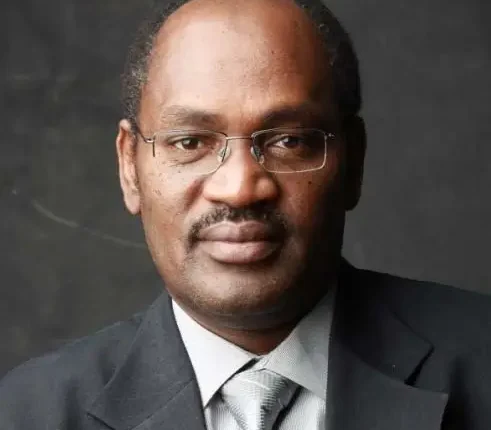
Ramadan Ahmed
One of the most persistent problems in Sudan’s intellectual and political discourse is the tendency to interpret Sudanese realities through theoretical frameworks borrowed from experiences that differ fundamentally from Sudan’s own historical and social context. This tendency is evident in certain strands of Pan-Africanist thought, particularly in the writings of Dr Abbakar Adam Ismail on the issues of centre and periphery. Too often, experiences drawn from other African contexts are projected onto Sudan without sufficient regard for the profound differences between those societies and Sudanese reality.
This is not to deny that marginalisation is a genuine problem in Sudan, nor that serious disparities in the distribution of power, wealth and public services have existed since independence. The real disagreement concerns the origins of the problem and, consequently, the nature of the solutions proposed. A flawed diagnosis inevitably produces the wrong remedy, and the consequences can sometimes be more harmful than the illness itself.
Many African intellectuals have been shaped by the literature of liberation movements that emerged in contexts of settler colonialism and institutionalised racial oppression. South Africa provides the most obvious example. Under apartheid, an elaborate legal system denied the black majority their political, civil and economic rights solely on the basis of race. Rigid racial classifications governed housing, education, employment, freedom of movement and political participation.
The same broad pattern could be seen in former Rhodesia, now Zimbabwe, where white settlers monopolised land and political authority for decades, giving rise to a national liberation struggle against a clearly identifiable colonial order. Similar experiences unfolded in Namibia under South African rule and, in different forms, across parts of West and Central Africa that endured slavery, colonial domination and racial hierarchy.
These historical experiences produced powerful intellectual traditions rooted in binaries: coloniser and colonised, master and slave, black and white. The question, however, is whether such binaries adequately explain Sudan.
Looking at Sudan’s history, the answer is far from straightforward. Sudan never experienced a system comparable to South African apartheid. There were no laws preventing citizens of particular regions from accessing education, employment or residence because of their ethnic origins. Equally important, Sudanese society has, for centuries, been characterised by extensive social, cultural and tribal intermingling that makes simple racial classifications difficult to sustain.
I recall a personal experience that illustrates this point. While working as a simultaneous interpreter in South Africa during a peacebuilding workshop organised by the Accord Institute, I met a young participant from South Sudan who harboured deep resentment towards Arabs and Muslims in Sudan. His interventions were often marked by anger and a strong sense of grievance.
As part of the programme, participants visited the Apartheid Museum in Johannesburg. We spent hours listening to detailed accounts of racial segregation, political exclusion and the systematic denial of basic rights. When the tour ended, the young man appeared unusually quiet. Then he said something that has remained with me ever since: “If this is the kind of oppression black people suffered here, then what happened to us in Sudan was something entirely different.”
That moment of direct comparison prompted him to reassess many of his assumptions about the Sudanese conflict. It highlighted a distinction that is often overlooked: the difference between political and developmental marginalisation on the one hand, and institutionalised racial oppression on the other.
At its core, Sudan’s crisis is not one of internal colonialism in the sense experienced by some African societies. Rather, it is a crisis of nation-building — a challenge that Sudan’s political elites have struggled to address since independence.
When colonial rule ended, Sudan’s leaders failed to establish a modern conception of citizenship and statehood. Instead, political authority became concentrated in the hands of a narrow elite, while large sections of the population remained politically marginal. Traditional loyalties based on sect, region and personal allegiance continued to dominate political life. Political parties evolved into vehicles centred on individuals and families rather than programmes, institutions or national visions.
As a result, political competition in Sudan has tended to revolve around who governs rather than how the country should be governed. The struggle for power has repeatedly overshadowed debates about ideas, institutions and long-term national development. In the absence of a coherent national project, political life has often become little more than a contest between competing elites.
The concentration of political power in Khartoum further deepened this problem. Successive elites viewed Sudan largely through the lens of the capital and invested insufficient effort in understanding the distinct needs and realities of the country’s diverse regions. The challenges facing Darfur differ from those confronting Eastern Sudan. Kordofan’s concerns are not identical to those of Northern State, Blue Nile or White Nile. Yet public policy has often been shaped by a centralised mindset that assumes solutions designed for Khartoum can be applied uniformly across the country.
Even the educational system has contributed to this disconnect. Rather than introducing Sudanese citizens to the rich diversity of their own society, it has tended to focus overwhelmingly on the capital, leaving generations with only a limited understanding of one another’s histories and cultures.
It is from this reality that perceptions of marginalisation have emerged across much of Sudan. These grievances are not confined to a single ethnic group or geographical region. They stem from structural weaknesses in governance, uneven development and the unequal distribution of opportunities and resources.
A glance at some of Africa’s more successful experiences is instructive. Countries that have managed to overcome deep social divisions have generally done so not by reinforcing identity politics but by building inclusive national institutions. Ghana, despite its ethnic and linguistic diversity, has made significant progress in consolidating citizenship and democratic governance. Rwanda, after the horrors of the 1994 genocide, consciously adopted a national discourse aimed at transcending ethnic divisions rather than perpetuating them. In Tanzania, Julius Nyerere forged a strong sense of national identity through the promotion of Swahili and the development of shared public institutions despite considerable ethnic diversity.
Many other African countries have likewise moved beyond cycles of military intervention and elite domination towards constitutional governance and stronger concepts of citizenship.
The difficulty with some strands of Pan-Africanist discourse is that they often focus more on cultivating narratives of victimhood than on generating practical solutions. They may identify genuine grievances, but frequently stop at denunciation and blame, inadvertently reproducing anger and historical resentment rather than offering pathways towards reform.
Productive political thought should do the opposite. It should transform a sense of injustice into a programme for change and turn diversity into a source of strength rather than a catalyst for conflict. Sudan does not need deeper polarisation between Arabs and Africans, nor between centre and periphery. What it needs are fresh ideas about balanced development, meaningful decentralisation, effective management of diversity, strong institutions and the mobilisation of its immense human potential.
Moreover, an excessive preoccupation with tribal and regional identities is becoming increasingly disconnected from the realities of a rapidly changing world shaped by digital technology, global connectivity and artificial intelligence. The most successful societies today do not prosper because they are ethnically homogeneous; they prosper because they are able to harness diversity and convert it into social and economic value.
The central question facing Sudan is therefore not who is the victim and who is the oppressor. The more important questions are these: How do we build a state capable of accommodating all its citizens? How do we transform diversity from a source of division into a source of national strength? And how do we move from a politics centred on competing for power to one focused on building institutions and a durable state?
Sudan possesses abundant natural resources, remarkable human potential and all the ingredients necessary to become one of Africa’s most prosperous and dynamic nations. Yet that future will not be realised by importing the conflicts of others and projecting them onto Sudanese realities. It will be realised only through an honest understanding of Sudan’s own challenges and the pursuit of solutions rooted in the unique circumstances of the Sudanese experience itself.
Shortlink: https://sudanhorizon.com/?p=14572