

Towards a New Sudan: Visions for Building a Developmental State and a Productive Economy (Part 4)
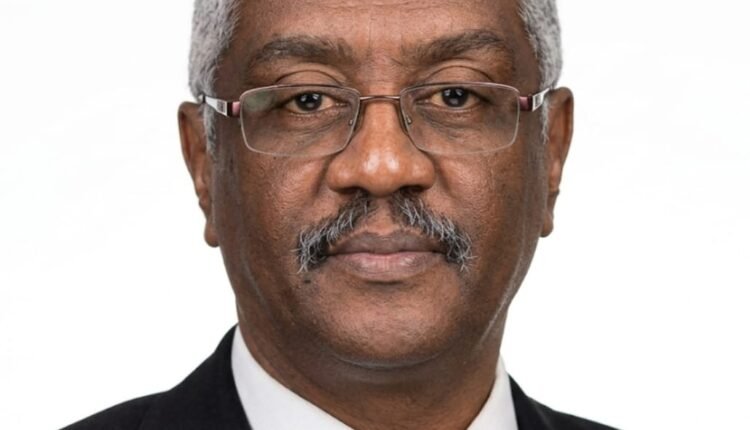
By Nu’man Yousif Mohammed
Former banker and institutional development consultant
When discussing Sudan’s reconstruction, one question inevitably arises: Where will the funding come from? Although this is a legitimate concern, it is not the true starting point.
International experience demonstrates that countries emerging from conflict do not falter simply because they lack money, nor do they succeed merely because large sums of money become available. Many nations have received billions of dollars yet failed to build productive economies because they lacked effective institutions, sound policies, and the capacity to direct resources towards investment and development.
The more important question, therefore, is not how much money do we have? but how do we build a financial system capable of transforming capital into production, production into value added, and value added into sustainable development?
Money alone does not create development; it finances it. Genuine development is built on strong institutions, stable policies, capable professionals, fair markets, and mutual trust among the state, the private sector, and society. When these elements work together, finance becomes an engine of growth rather than simply liquidity moving between bank accounts.
This is why the financial sector is so important. It is not merely an intermediary between savers and borrowers, but the mechanism through which savings are channelled into investment and capital is directed towards the sectors best able to generate production and employment. When this system becomes inefficient or weakened, investment slows, production declines, and the cost of economic growth increases.
The war exposed the fragility of large parts of Sudan’s financial system. Institutions ceased to function, public confidence declined, and economic actors encountered serious difficulties accessing financial services. Reconstruction must therefore begin not simply by reopening bank branches, but by rebuilding a financial sector that is stronger, more resilient and better equipped to serve the real economy.
Sudan does not need a larger financial sector; it needs one that is more efficient, inclusive and innovative—a sector that channels savings into productive investment and finances agriculture, industry, value chains and technology, rather than concentrating resources in short-term activities that add little real value to the economy.
The country also needs a monetary authority with a clear developmental vision. Its role should extend beyond preserving monetary stability to leading financial sector development, promoting financial inclusion, encouraging innovation, and creating a regulatory environment that directs finance towards national development priorities. In a developmental state, the central bank is not merely the guardian of price stability but a key partner in economic transformation.
However, this transformation cannot be achieved through slogans. It requires building a modern financial system founded on five principal pillars that should underpin financial sector reform during the reconstruction period.
Trust: The First Form of Capital
No financial system can function without trust. Depositors will not place their savings in banks they do not trust. Investors will not risk their capital in an unstable economy. Banks will not finance projects whose risks they cannot properly assess.
Restoring trust is therefore not a public relations exercise or a political slogan; it is the first and most important investment in reconstruction. It begins with stable monetary policies, the protection of customers’ rights, sound governance, transparency, and effective supervision of financial institutions.
The greater the level of trust, the higher the level of savings, the lower the cost of finance, and the stronger the economy’s ability to attract investment. When financial institutions regain credibility, they also regain their capacity to lead economic recovery.
Productive Finance, Not Easy Finance
In many developing economies, a large share of financing has traditionally flowed into short-term commercial activities, while productive sectors have suffered chronic shortages of capital. Such an approach cannot build a new economy.
Sudan requires financing to expand agricultural production, develop industry, increase the value added of livestock resources, and invest in energy, logistics, and the digital economy. These are the sectors that generate wealth, create employment and strengthen exports.
Finance that fails to increase productive capacity is merely money changing hands. Finance directed towards production, by contrast, generates genuine economic growth and transforms resources into sustainable added value.
A Financial System, Not a Single Source of Finance
Commercial banks alone cannot finance Sudan’s reconstruction, nor can the state bear the entire burden.
A modern economy depends upon an integrated financial ecosystem comprising commercial banks, microfinance institutions, finance companies, capital markets, investment funds, development finance institutions, and public-private partnerships.
The strength of such a system lies in the diversity of its financial instruments, enabling every enterprise to access financing suited to its size, business activity and stage of development. The more diverse the sources of finance, the more efficiently resources are allocated, risks are distributed, and investment opportunities expanded.
Financial Inclusion: The Gateway to Production
Financial inclusion is sometimes reduced to opening bank accounts or extending financial services to lower-income groups. Its significance, however, goes far beyond that.
When farmers, artisans, small business owners, rural women and young entrepreneurs gain access to finance, savings, insurance and digital financial services, they become more than simply banking customers—they become productive economic actors who contribute value to the national economy.
Financial inclusion is therefore not merely a social policy but an economic strategy that broadens the productive base, raises productivity, creates employment and integrates the informal economy into the formal sector.
Finance Measured by Its Impact
The success of a financial system should not be measured by the number of loans issued or the volume of liquidity injected into the economy. Its impact should judge it:
How many productive enterprises have been established?
How many jobs have been created?
How much added value has been generated?
How many families have moved from dependence on assistance to productive livelihoods?
These are the indicators that should define Sudan’s philosophy of finance during reconstruction.
Within this context, microfinance emerges as one of the most important instruments of development—not merely because it reduces poverty, but because it unlocks the productive potential of millions of people, stimulates local economies, connects small businesses to value chains, and formalises previously informal economic activity.
Financial technology also offers a historic opportunity to accelerate this transformation through digital payments, mobile financial services, data analytics and more effective risk-management tools. These innovations reduce the cost of finance while expanding access, particularly in rural and underserved areas.
Yet these reforms will not succeed simply by updating legislation, reopening financial institutions or increasing the volume of available finance. The financial sector does not operate in isolation. Its strength depends upon the strength of the real economy, the investment climate, institutional effectiveness and policy stability.
Accordingly, financial sector reform should not be measured by the number of operating banks, the volume of circulating liquidity or the value of banking assets. Rather, it should be judged by its ability to finance production, broaden the economic base, stimulate investment and generate employment.
Sudan does not need to spend its time searching for financiers as much as it needs to build a national financing system with a clear strategic vision—one that knows where every Sudanese pound should be invested, and how every resource can be transformed into added value and every project into an opportunity for growth.
The financial sector is not merely a repository for money. It is a driver of investment, a partner in development and one of the most important instruments for building a modern state. When capital flows into agriculture, industry, technology and value chains, it finances not only individual projects but also a more productive economy, one that is more competitive and better prepared for the future.
Successful nations have not achieved prosperity because they possessed abundant wealth, but because they managed their resources wisely. Money spent on consumption quickly disappears, whereas money invested in production generates new income, creates employment, increases exports and strengthens economic stability.
This is Sudan’s real challenge in the post-war period. The issue is not the quantity of resources that can be mobilised, but the country’s ability to direct those resources towards the priorities that generate sustainable development.
Accordingly, the guiding question for reconstruction should not be, How much can we borrow? Rather, it should be, How can we ensure that every pound entering the economy creates value, generates employment, increases productivity and enhances Sudan’s competitiveness?
When finance becomes a tool for developing people, strengthening institutions, encouraging innovation and connecting producers with markets, it ceases to be merely a mechanism for moving money. It becomes a force that drives the economy forward.
Only then will Sudan have done more than rebuild its financial sector. It will have laid the foundations for a productive economy and a developmental state capable of transforming its resources into prosperity, its challenges into opportunities, and the hopes of its people into reality.
When we speak of a “New Sudan”, we are not searching for temporary solutions. We are seeking ideas that build a state capable of production, institutions worthy of public trust, and an economy that shapes the future.
“The future is not inherited—it is built.”
Shortlink: https://sudanhorizon.com/?p=16039