

Towards a New Sudan: Visions for Building a Developmental State and a Productive Economy (3)
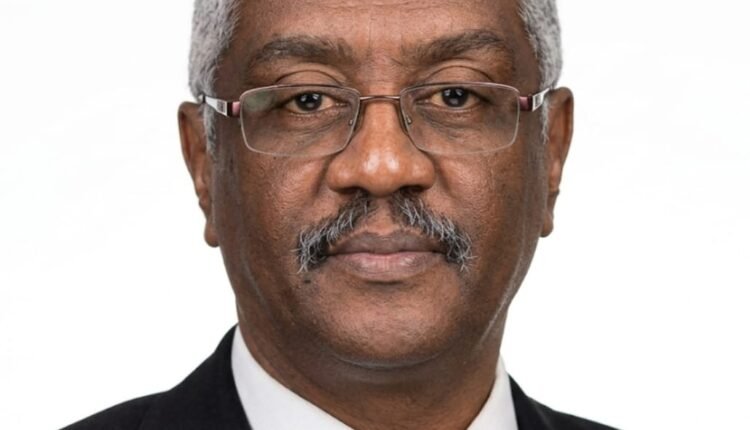
Nu’man Yousif Mohamed
For many years, Sudanese people have confidently repeated that Sudan is a country rich in resources, as though an abundance of resources alone were sufficient to create prosperity. Economic history, however, tells a different story: wealth does not emerge from beneath the ground; it is created in factories, research centres, markets and value chains.
Perhaps the greatest paradox is that countries lacking natural resources have become some of the wealthiest nations in the world. In contrast, others, despite their abundant natural wealth, have remained trapped in poverty and economic underdevelopment. The difference lies not in the quantity of resources available, but in the ability to transform them into added value.
True wealth is not measured by what lies beneath the ground, but by what people can create from it. Resources, however abundant, are merely raw potential. They become wealth only when they pass through an integrated system of knowledge, technology, finance, manufacturing, logistics and markets.
Sudan today stands before a historic opportunity to redefine its economy after the war. What is required is not simply an increase in production, but a fundamental change in the philosophy underpinning the economy: a transition from an economy dependent on exporting raw materials to one that creates value at every stage of production.
The difference between a resource-based economy and a value-based economy is fundamentally a difference in vision. The former measures wealth by the resources a country possesses, while the latter measures it by the knowledge, manufacturing and innovation added to those resources. It is this added value that distinguishes advanced economies from countries that remain rich in resources yet poor in development.
Agriculture provides a clear example. The problem is not the production of cotton, sesame, gum arabic, livestock or other commodities. Rather, it is that the greater part of their economic value leaves Sudan when they are exported in their primary form.
This is the heart of the issue. The question that should guide economic policy is not: How much do we produce? Rather, it should be: How much of the value do we retain within the national economy?
Successful economies have recognised that global competition is no longer centred on the ownership of raw materials, but on controlling the higher-value stages of production chains, where the greatest profits are generated through manufacturing, innovation, services, marketing and branding.
Sudan therefore does not need simply to export more raw resources. It needs to redesign its economy so that every production chain becomes an integrated national economic project.
Gum arabic, gold, livestock, sesame, groundnuts, cotton, minerals and even digital services should be managed as integrated value chains rather than as isolated production activities.
Building value chains, however, does not happen automatically. It requires a developmental state capable of providing the institutional, legislative and financial environment, as well as the infrastructure, necessary to make value creation possible and sustainable.
The success of economic policy should no longer be measured by the number of projects implemented or the volume of raw exports. Instead, it should be measured by increases in domestic value added, greater national content and the expanding contribution of knowledge and technology to the economy.
The state does not create value itself. Rather, it builds roads, ports and digital infrastructure; develops education and scientific research; reforms the financial system; and establishes the regulatory environment that enables the private sector to invest, produce and innovate.
The private sector, meanwhile, must move beyond its traditional role as a trader in raw materials and assume a leading role in manufacturing, product development, exports, brand building and integration into regional and global value chains.
This transformation would affect far more than profits and export revenues. It would create new jobs, raise skill levels, expand the base of small and medium-sized enterprises, and strengthen middle-class growth. A value-based economy would therefore become a project for social development as much as one for economic growth.
Small and medium-sized enterprises remain the backbone of value chains because they drive primary processing, supporting services, packaging, transport and innovation. Financing them therefore represents a direct investment in building a productive economy.
Finance and digital transformation are among the most important requirements for achieving this transition. Industry cannot expand without a financial system capable of financing the different stages of value chains. At the same time, data, digital payments, electronic tracking systems and artificial intelligence have become factors of production no less important than land and capital.
The post-war economy must answer one fundamental question: How can we transform our resources into added value?
That is the true measure of economic success and the path towards building a more competitive economy capable of creating employment opportunities and achieving sustainable development.
To translate this vision into practical reality, the post-war period should be guided by a clear roadmap based on six strategic priorities:
Rebuild the productive environment by restoring security and stability, rehabilitating infrastructure and reviving production areas.
Develop priority value chains by shifting from exporting raw materials to processing, manufacturing, and producing higher-value goods.
Reform the financing and investment system to provide funding for every stage of value chains, while empowering small and medium-sized enterprises as the principal drivers of the productive economy.
Invest in knowledge and digital transformation by developing technical education, scientific research, innovation and digital technologies to increase productivity and strengthen competitiveness.
Improve the business environment and governance by simplifying procedures, strengthening transparency and establishing an effective partnership between the state and the private sector.
Adopt added value as the principal measure of economic success by increasing local content, diversifying exports and creating employment opportunities, rather than merely measuring the volume of production or raw-material exports.
If Sudan succeeds in implementing these priorities, it will not merely restart its economy after the war. It will lay the foundations for a structural transformation from an economy dependent on resource extraction to one that creates value and achieves sustainable and inclusive growth.
Building a new Sudan will not be achieved simply by increasing production. It requires changing the very nature of the economy: from an economy that extracts wealth to one that creates it, and from an economy that sells its resources to one that builds knowledge, industries and opportunities around them.
Despite its enormous cost, the war has created an opportunity to rewrite the story of Sudan’s economy on new foundations. If a resource-extraction economy characterised the previous era, the next must become the era of the value economy—an economy in which resources are transformed into products, products into industries, and industries into employment opportunities and sustainable wealth.
Sudan’s future will not be measured by the number of acres under cultivation, the tonnes of gold extracted or the volume of raw exports. It will be measured by the country’s ability to transform every resource into knowledge, every form of knowledge into industry, every industry into added value, and every unit of value into prosperity for its citizens.
When value creation becomes the measure of economic success, Sudan’s resources will be transformed from dormant wealth into genuine economic power. The economy will become more diversified, more resilient, better able to create employment and more capable of improving living standards.
The abundance of their resources does not determine the difference between nations, but by the abundance of value they know how to create from those resources.
“The future is not inherited… it is built.”
I can also prepare a more concise, newspaper-ready British English version suitable for publication in an English-language newspaper or policy platform.
Shortlink: https://sudanhorizon.com/?p=15900