

The Game of Neutrality: Who Is Obscuring the Sudanese War?
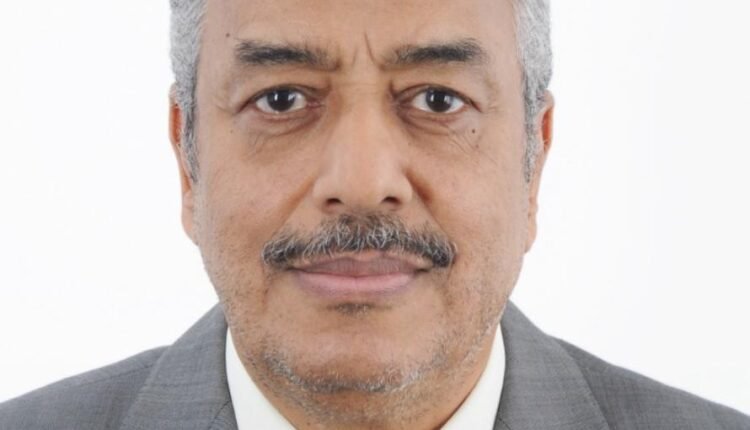
Dr. Ismail Sati
In wars, the most dangerous thing reported is not a lie… but half-truths.
This is precisely what some Arab channels are doing in their coverage of the war in the Sudan: a discourse that appears professional, but ends in a misleading equation between the state and those undermining its very foundation.
What is happening in the coverage of the war in Sudan by some Arab channels can no longer be described as professional neutrality. Rather, it has become closer to a form of subtle complicity that reshapes reality in a way that dilutes the truth and obscures the fundamental differences between the state and those who take up arms against it.
It is not surprising that media outlets from countries that politically disagree with the Sudanese government would take sides. This is understandable. But what is incomprehensible is that channels affiliated with countries that declare their support for state institutions practice this kind of cold neutrality, which practically ends in an artificial equation between the Sudanese army and the Rapid Support Forces militia.
In the coverage of channels like Al Arabiya and Al Hadath, since the outbreak of the war in April 2023, one formula has been repeated almost consistently: clashes between the Sudanese army and the Rapid Support Forces.
This statement, while seemingly professional, actually erases the distinction between a state institution and an armed militia, placing them on the same level in the eyes of the viewer.
On Al-Jazeera, the language of the humanitarian crisis and the exchange of accusations prevailed, while the assignment of responsibility on the ground remained postponed or vague, despite the fact that the realities on the ground and numerous reports clearly indicated the nature of the violations and those behind them.
As for Nile News, the discourse is extremely cautious, closer to official statements, using expressions like “events in Sudan” or “the ongoing crisis,” without accurately naming what is happening or clearly assigning responsibility.
The problem here is not only what is said, but also what is ignored.
Since the outbreak of war in 2023, and with the expansion of displacement, a recurring and unmistakable image has emerged: civilians fleeing areas controlled by the Rapid Support Forces and heading towards areas controlled by the army.
This is not political rhetoric, but a documented reality on the ground.
But how often has this reality become the focus of clear analysis on these channels? And how often has this been linked to the question of security and territorial control?
The answer: Rarely.
Instead, the situation is reduced to the convenient phrase: displacement due to clashes.
Once again, the perpetrator disappears, and responsibility is lost.
In contrast, Sky News Arabia cannot be placed in the same category, because it never hid behind a facade of neutrality.
From the beginning of the war, this channel adopted an approach consistent with the position of the state that sponsors it—a position hostile to the Sudanese government and state institutions, and supportive of the Rapid Support Forces militias.
Since the outbreak of war in 2023, this platform has consistently presented a discourse based on leveling and diversifying accusations against the Sudanese state:
Sometimes by promoting the idea that the army fired the first shot, sometimes by describing it as an Islamist army, sometimes by accusing it of being affiliated with ISIS,
Sometimes by accusing it of being affiliated with the Muslim Brotherhood,
And finally, by accusing it of being affiliated with Iran. This is neither neutrality nor even ambiguity; it is a clear stance, though at least its bias remains evident, unlike the obfuscation practiced by other channels.
The irony becomes even more apparent when we compare this performance to the coverage of other conflicts by these same channels, such as the war in Yemen.
In that case, there was no hesitation in naming the parties involved or assigning responsibility; the discourse was decisive and unambiguous.
So why is clarity possible there, while it becomes hesitation and ambiguity here?
The answer is political before it is professional.
There is declared support for Sudanese state institutions, met with a reluctance to go all the way in this position, which is reflected in the media as a false neutrality.
But this neutrality is not innocent.
When you equate an army with a militia, you are not standing in the middle; you are reshaping reality.
And when you ignore the direction of displacement, you are not practicing professionalism; you are turning a blind eye to clear field evidence. In the Sudanese case, neutrality is no longer a middle ground; rather, it has often become a disguised bias that harms the truth more than it serves it.
The most important question that awaits an answer is: Why?
Shortlink: https://sudanhorizon.com/?p=13371