

The Future of Sudan’s Relationship with the World Bank: From Technical Assessment to Economic Reconstruction
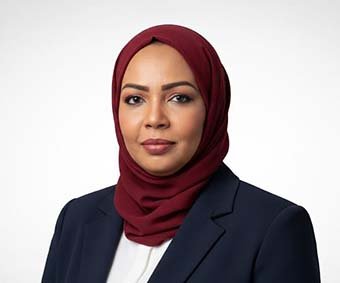
Dr Marwa Fouad Qabbani
The decision by the World Bank to link the resumption of its suspended programmes in Sudan to an assessment of the private sector and the Sudanese banking system sends a clear message: the post-war phase will begin with rebuilding economic institutions capable of managing finance and translating it into real development.
International institutions do not inject resources into unstable environments or into financial structures that lack the capacity to absorb them. Instead, they first look for a minimum level of institutional and economic readiness.
The war in Sudan has caused a sharp contraction in economic activity, disrupted supply chains, and forced many businesses out of production. It has also inflicted extensive damage on the banking infrastructure, including branches, operational systems, and liquidity. Therefore, the requirement for a technical assessment should not be seen as a political obstacle, but rather as a necessary step to ensure that any new funding reaches its intended beneficiaries and produces tangible results.
The World Bank focuses on the private sector as the primary engine of rapid economic recovery. It is the sector best positioned to create jobs, revitalise markets, and restore production across agriculture, industry, and services. In Sudan’s case, supporting this sector means restarting factories—of which up to 90% of industrial capacity was disrupted at the peak of the war. In Khartoum State alone, 1,877 factories were damaged, including 553 completely destroyed and 1,267 partially affected, according to a Sudanese Ministry of Industry report from November 2025. Reviving this sector is also essential for restoring trade, creating employment for youth and displaced populations, increasing state revenues, and reducing reliance on humanitarian aid.
However, the private sector requires a secure environment, access to bank financing, stable legislation, and infrastructure capable of supporting economic activity.
The banking sector, meanwhile, represents the true starting point for any development plan. Banks are not merely repositories of funds; they are institutions responsible for channelling finance, funding projects, facilitating payments, and maintaining trust in the economy. If the banking system is weak, external support risks being delayed or dissipated.
The sector currently faces significant challenges, including liquidity shortages, disrupted payment and transfer systems, declining public confidence, elevated financing risks, and direct damage to infrastructure. Out of 833 bank branches nationwide, 100 have been completely destroyed (12% of the total), according to a Central Bank report from early 2026. In Khartoum, the impact has been even more severe, with 121 bank branches and exchange companies destroyed or looted—highlighting the capital’s disproportionate share of the sector’s losses.
From both a political and economic perspective, the World Bank is sending a dual message: Sudanese authorities must first reform their institutions, and any future international support will be conditional on transparency, efficiency, and sound governance. This places Sudan before a genuine opportunity—but one that requires demonstrating serious commitment to reform.
The proposed strategic plan begins with a rapid assessment phase during the first three months, aimed at evaluating damage to banks and the private sector, identifying institutions capable of immediate operation, and building an updated economic database. This would involve forming a joint national committee comprising the Ministry of Finance, the Central Bank, and private-sector representatives, supported by international experts and an urgent economic survey in secure areas.
The second phase, spanning three to six months, focuses on financial stabilisation—restoring confidence in the banking system and reactivating essential banking services. Measures include restarting electronic payment systems, providing liquidity to operational banks, guaranteeing small and medium deposits, and rehabilitating damaged branches.
The third phase, from six to twelve months, centres on revitalising the private sector by stimulating production, employment, and investment. This would involve establishing a financing fund for small and medium enterprises, offering temporary tax exemptions for productive sectors, simplifying business registration and licensing, and providing targeted financing programmes for agriculture and industry.
The fourth phase, extending from one to two years, aims to build a renewed international partnership—resuming full World Bank programmes and attracting long-term development financing. This would require submitting a comprehensive reform report to the World Bank, signing reconstruction and development agreements, and linking funding to key sectors such as infrastructure, education, and health.
The success of this plan depends on several critical factors: a minimum level of security stability, full financial transparency, strengthened public–private partnerships, effective anti-corruption mechanisms, and a professional economic management capable of making and implementing decisions.
Ultimately, the resumption of World Bank programmes will not be a purely political decision—it will be a direct reflection of Sudan’s ability to rebuild its institutional economy. If the government succeeds in reforming the banking sector, empowering the private sector, and presenting a clear vision for the future, international support may evolve from temporary aid into a long-term development partnership.
Sudan today does not need money alone—it needs trust. And trust is not granted; it is built through reform and sustained, credible action.
Shortlink: https://sudanhorizon.com/?p=13206