

The End of Journalism
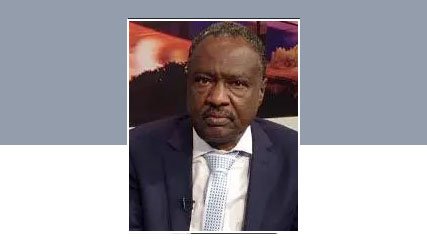
Rashid Abdel Rahim
Journalism in our country has become a tool for settling disputes, financial extortion, and managing political battles aimed at power and positions.
This is happening while the war itself remains unresolved—something the enemy exploits, using the media as a channel to achieve its objectives and enabling its affiliated media rooms to operate effectively.
Naturally, this environment suits international intelligence agencies, allowing them to accomplish their aims with ease, perhaps even without effort. Information comes to them readily, and whatever proves difficult to obtain can be secured with a small amount of money. Everything has become “cheap”. We have even witnessed a foreign ambassador shape governance charters and agreements.
In such circumstances, genuine journalists have become uncertain of their place, almost strangers within their own profession, while outsiders are the loudest and most dominant voices.
The country lacks institutions capable of managing the media sector, so it has become an open arena open to journalists and non-journalists alike. There are no standards, no registry through which the qualified may find recognition. We now see individuals writing their first article, publishing it, and calling themselves journalists—writing in poor language, with immature ideas and simplistic analysis.
The field is now entered by journalists, traders, civil servants, and others.
Print journalism has effectively come to an end, yet some publications still claim to be newspapers—though they are merely websites mimicking print, with a front page of headlines and reports and a final page of columns.
Logically, both the public and the government must acknowledge this transformation and address it accordingly. The remedy should begin with the state imposing proper regulation of the profession. In my view, this responsibility should fall to the communications authority—whether a ministry or another body—as it is best positioned to organise a profession that can no longer be described as traditional journalism, but rather as a form of “communication”.
Placing the media sector under the supervision of the communications authority would help restore order, ensuring that media outlets and channels are properly registered and subject to the law and to clear, approved conditions. This would establish accountability for what is published and broadcast, curbing violations, extortion, falsehoods, and conflict.
Only then can the profession regain its proper standing—assuming responsibility, guiding public discourse, disseminating information freely, and countering both internal and external threats. In doing so, the media can reclaim its credibility and once again be trusted by society as a platform that serves the public interest and keeps watch over governance and all potential risks.
Shortlink: https://sudanhorizon.com/?p=13450