

Sudaniya: Ten Years of Inspiring Presence
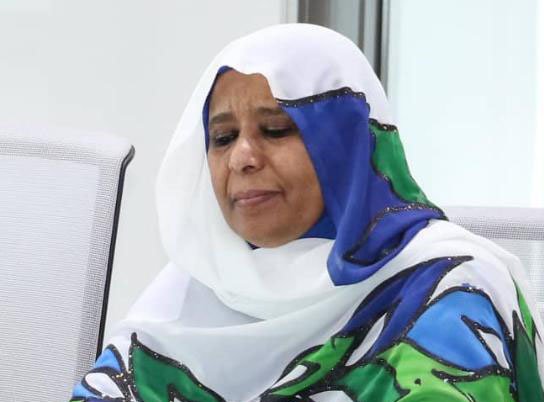
Dr Salwa Hassan Siddig
Who would believe that ten years have already passed?
That was the thought that crossed the mind of the gifted artist Hajar Mohamed Hassan Ahmed Al-Bashir as she celebrated this milestone in her own distinctive way, revisiting every one of the stars who together created the colourful tapestry of Sudaniya when it first appeared in June 2016.
Where are those stars today? What has time, war and displacement done to them? And how distant those days now seem—days of psychological stability, optimism and peace that nurtured such creativity and sustained the beautiful professions that Sudanese women pursued with confidence, dignity and rights that were respected without favour or condescension.
Hajar Mohamed Hassan is a gifted artist by inheritance as much as by talent. Her father was both a writer and a poet, renowned for composing children’s verses from his student days. At the same time, her Alexandrian mother carried within her the rich cultural heritage of Egypt’s northern Nile Valley. That heritage is reflected in Hajar’s seriousness of purpose and her unwavering commitment to nurturing her own talent until it matured into a flourishing artistic gift that now bears abundant fruit without rival.
This is a quality that many talented individuals, unfortunately, lack, as their gifts gradually fade with time. Hajar, however, followed the example of the great artists and intellectuals of Sudan’s golden generation of the 1960s, who carefully cultivated and protected their talents, constantly enriching them through knowledge—whether in poetry, music or song.
Perhaps the vibrant cultural atmosphere of that era also played a role in shaping their excellence and inspiring healthy artistic competition. It was, after all, the period immortalised by the famous saying:
“Cairo writes, Beirut publishes, and Khartoum reads.”
It is therefore no surprise that during those years, Abdel Karim Al Kabli sang:
“The fragrance of flowers, yet no flowers…
Where now are the shade and the river?
The springtime of our gardens has departed—
Or does its perfume still linger upon your shoulders?”
May God have mercy on both Al-Aqqad and Al Kabli.
Hajar writes her own verses, composes their melodies and performs them herself. Without fanfare or self-promotion, she has managed to fulfil the longings of Sudanese families through the simplicity of her lyrics, the tenderness of her melodies and the distinctive quality of her productions.
I witnessed first-hand how children enthusiastically sang her famous rhyme:
“Sudaniya—how beautiful she is…
Her traditional tobe suits her perfectly.”
during a school celebration in our place of forced exile after the war.
By one of life’s remarkable coincidences, it was Hajar herself—the creator of Sudaniya—who presented the performance that day, prompting the entire hall to erupt in applause as children and adults alike gathered around her.
Hajar’s body of work is more than sufficient to establish her as a star among stars.
Her most recent production, released during last Ramadan, fills one with renewed confidence that Sudan will recover and flourish once this cruel war has ended.
Yet our unjust official media offers little recognition of artists like her or appreciation for their remarkable contributions. Some within those institutions may never even have heard of her, even though, through her exceptional work, she shouldered the emotional burden of Sudan’s difficult wartime years.
Her songs became constant companions in schools, modest homes and cramped flats, appearing on television screens to comfort families, soothe their loneliness and ease their longing for the homeland. They rekindled cherished memories of Sudan for both parents and children alike.
Sudaniya remained present throughout those difficult years in the most beautiful way imaginable—a truly authentic expression of Sudanese creativity, untouched by artificial embellishment.
While other media platforms and broadcasters—such as Sabah Al-Khair Ya Arab—have celebrated Hajar and her beloved Sudaniya, we too often remain hidden behind our own veil of neglect.
Yet our consolation is that genuine recognition ultimately comes from ordinary people. It requires neither official endorsement nor password approval. It asks only for sincere belonging and a heartfelt love for the Nile and the land itself.
That, surely, is enough to encourage Hajar to continue her inspiring journey—a journey that remains fresh, full of promise, rooted in the values of her homeland, and animated by an enduring love for Sudan and its people.
This article is dedicated to my granddaughter Mariel and her young friends.
Shortlink: https://sudanhorizon.com/?p=15278