

Microfinance in Sudan After the War: From the Traditional Model to Flexible Digital Islamic Development Finance (Part 1 of 4)
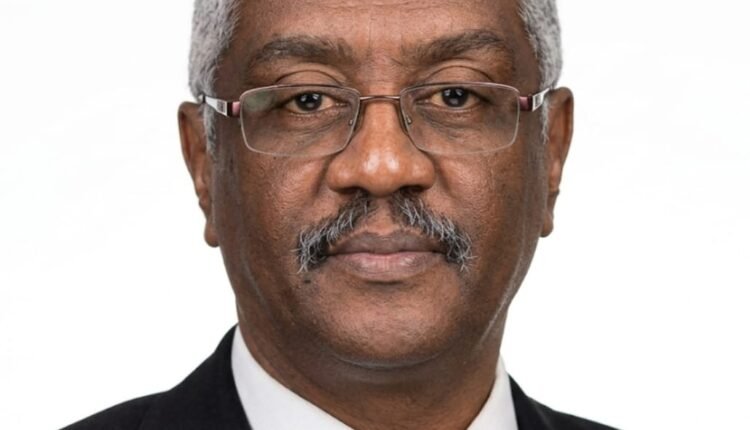
Nu’man Yousif Mohammed
Former Banker – Institutional Development Consultant
Why Is Traditional Microfinance No Longer Sufficient?
In post-war Sudan, the question is no longer: How do we restart microfinance institutions? The more pressing question has become: How do we build an economy capable of recovery and sustainable growth? Nations do not rebuild their economies using the same tools that failed to protect them before crises. Instead, they reassess their models, refine their policies, and develop solutions suited to their new realities.
From this perspective, this series is not an attempt to diminish the achievements of Sudan’s microfinance experience, nor to dismantle what has already been accomplished. Rather, it is an invitation to undertake an objective and courageous review—one necessitated by the profound economic and social transformations brought about by the war, and grounded in the conviction that the strongest systems are those capable of self-evaluation and adaptation as circumstances evolve.
Sudan was among the first countries in the region to adopt microfinance as an instrument for promoting financial inclusion and reducing poverty. Over more than a quarter of a century, the sector has helped extend financial services to nearly four million beneficiaries, while enabling women, young people, small-scale producers and entrepreneurs to access finance for the first time. These are significant achievements that deserve recognition and provide a solid foundation upon which to build in the years ahead.
However, acknowledging these accomplishments should not prevent us from asking a more important question: Has microfinance delivered the developmental impact that was originally envisaged? Has its widespread expansion translated into tangible improvements in employment, poverty reduction, productivity, and the contribution of small and medium-sized enterprises to the national economy?
These questions are not intended to put the experience itself on trial. Rather, they seek to evaluate it against a more meaningful benchmark than simply the number of clients served or the size of loan portfolios: namely, developmental impact—the extent to which finance contributes to wealth creation, productive capacity and improvements in people’s quality of life.
The war exposed the underlying weaknesses of the existing model. According to the 2023 Microfinance Sector Performance Report, published by the Microfinance Unit within the General Directorate of Financial Inclusion at the Central Bank of Sudan, only seven out of fifty-one licensed institutions and companies were able to submit their financial statements to the Central Bank. Only 47 of the sector’s 97 branches resumed operations. Outstanding financing declined by approximately 65 per cent compared with 2022, while the default rate surged to around 70 per cent, up from about 3 per cent. At the same time, the debt-to-equity ratio rose to 1:32.
These indicators illustrate the severity of the shock experienced by the sector and demonstrate that recovery requires far more than simply resuming operations—it demands a fundamental redesign of the financing model itself.
The consequences of the war extended well beyond financial indicators. Supply chains were disrupted, thousands of economic activities came to a standstill, millions of people were displaced, liquidity contracted, and access to finance became increasingly difficult. Microfinance institutions themselves lost significant portions of their operational infrastructure and customer bases. Consequently, reintegrating displaced persons and returning populations into productive economic activity has become a developmental challenge every bit as important as restoring the financial institutions themselves.
These developments demonstrate that the problem was never merely a shortage of finance. Rather, it lay in the limitations of a model that focused primarily on financing isolated micro-enterprises and individual businesses, while paying insufficient attention to integrated production systems and value chains linking production, processing, services and marketing.
There is a substantial difference between financing a small trader to purchase inventory and financing an agricultural value chain that begins with production inputs, continues through cultivation, harvesting, storage, transportation and processing, and ultimately delivers products to consumers. The former may improve the income of a single household; the latter creates employment, stimulates investment, generates value added, and revitalises the wider local economy.
Meanwhile, the global development finance industry is undergoing profound transformation. Digital identity, electronic wallets, digital signatures, financial technology (FinTech), artificial intelligence and data analytics have become fundamental components of modern financial services rather than optional technological enhancements or future aspirations.
Sudan is not isolated from this trend. The country is implementing a national digital transformation programme led by the Central Bank of Sudan through the development of an enabling regulatory framework for digital financial services, in coordination with the Ministry of Digital Transformation and Communications. This initiative is laying the foundations for a more efficient and inclusive national digital infrastructure.
This transformation is not uniquely Sudanese; it reflects broader global developments in development finance. International financial institutions are increasingly integrating financial technology, value-chain finance, green finance and developmental impact measurement into their financing models, recognising these as more effective tools for achieving sustainable development and strengthening communities’ resilience to crises and disasters.
Nevertheless, digital transformation should not be viewed as an end in itself. Delivering finance through mobile phones or electronic applications does not fundamentally change the philosophy of finance if institutions continue to perform the same traditional functions. Technology should serve as a means of improving efficiency, strengthening risk management and expanding access to financial services—not as a substitute for a genuine development vision.
Accordingly, the real challenge is not merely the digitalisation of procedures, but the redefinition of the role of microfinance itself. Today, Sudan needs not simply more borrowers, but more producers. It needs institutions that do more than manage credit portfolios. It needs development institutions that finance value chains, support productive sectors, integrate finance with savings, insurance, training, extension services and marketing, and evaluate their success according to their economic and social impact rather than the number of financing contracts they sign.
Based on this conviction, this series proposes a new framework entitled “Flexible Digital Islamic Development Finance” as a comprehensive vision for redefining the role of microfinance during Sudan’s national recovery. The proposed model shifts the focus from financing individuals to developing integrated production systems, and from measuring success by the volume of lending to measuring it by developmental impact. This framework will be presented in detail in the next article.
A Message to Policymakers
If Sudan is serious about rebuilding its economy during the 2026–2030 period, reforming the microfinance sector must extend beyond increasing capital or expanding financing portfolios. Reform should begin by redefining the sector’s mission, integrating finance with value chains, accelerating digital transformation, adopting appropriate Islamic financing instruments, and establishing a system that measures developmental impact as the principal indicator of success.
The future of microfinance in Sudan will not be determined by the amount of money injected into the sector, but by the model the country chooses to adopt. Microfinance can either remain a mechanism for recycling loans, or it can become a catalyst for rebuilding the national economy and a driving force behind economic and social recovery. That is the central question this series seeks to address.
In the next article
If the traditional model is no longer sufficient, what should replace it? Is improving existing instruments enough, or does Sudan require an entirely new philosophy of finance to lead the recovery process? Part Two will present the proposed Flexible Digital Islamic Development Finance framework, examining its components, guiding principles, and its potential to serve as the foundation for rebuilding Sudan’s microfinance sector.
Shortlink: https://sudanhorizon.com/?p=16637