

Microfinance in Sudan After the War (2–4): From Lending to Development… Why Does Sudan Need a New Philosophy of Microfinance?
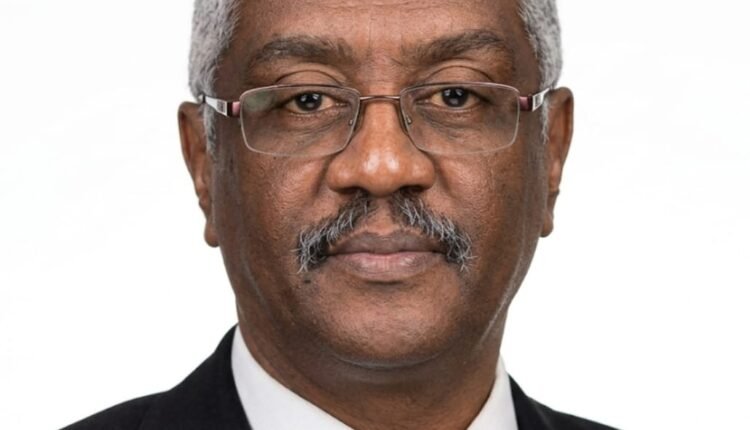
Nouman Yousif Mohamed
In the previous article, we concluded that the real challenge facing Sudan’s microfinance sector after the war does not lie merely in restarting institutions, restoring financing portfolios, or addressing the consequences of default. Rather, it lies in answering a deeper and more fundamental question: is the traditional microfinance model still capable of leading the recovery phase and helping to rebuild the economy?
Historically, the model focused on expanding access to financial services, financing small individual activities, and measuring success by the number of clients served and the volume of finance provided. It played an important role in promoting financial inclusion. Today, however, it faces a new economic reality created by the war, one in which both needs and priorities have fundamentally changed.
An economy emerging from a devastating war does not simply need more loans. It needs a financing system capable of mobilising resources, stimulating production, financing value chains, creating jobs, and strengthening community resilience. This raises the central question: is it enough to improve existing microfinance instruments, or does the current stage require us to redefine the very philosophy of finance itself?
In my view, partial reform is no longer sufficient. The issue is not merely about amending regulations, adding new financing products, or expanding portfolios. It requires a reassessment of the role that microfinance institutions should play within the national economy.
During the recovery phase, finance should not be limited to acting as an intermediary that provides funds and waits for repayment. It should become a development partner that contributes to building productive capacity, linking finance to the real economy, and transforming financial resources into sustainable economic and social value.
From Measuring the Volume of Finance to Measuring Development Impact
For decades, the success of microfinance institutions has been associated with a set of traditional indicators, such as the number of clients, the size of the financing portfolio, repayment rates, and branch coverage.
These indicators are undoubtedly important in assessing operational performance, but they are no longer sufficient for judging the sector’s success during the reconstruction phase.
The question we should be asking today is not: How many loans have we provided?
Rather:
How many businesses have become better able to grow?
How many jobs have been created?
How many value chains have been developed?
How many local communities have become more resilient in the face of crises?
And to what extent has financing contributed to increasing production, improving incomes, and strengthening food security?
This shift in thinking represents the transition from a philosophy of lending to a philosophy of development.
Development finance does not regard the client merely as a borrower. It sees the client as a producer, an entrepreneur, or a component within a wider economic ecosystem that requires support, connectivity, and development.
Why a New Model—and Why Now?
The call for a new microfinance model is not an abstract intellectual exercise divorced from reality. It is a response to profound transformations imposed by the present circumstances.
The war has reshaped Sudan’s economy and changed the nature of financing needs. The priority is no longer to restore economic activity, but to rebuild the productive capacity of affected communities.
At the same time, digital transformation has become a strategic reality, led by the state through the efforts of the Central Bank of Sudan to develop digital financial services and create a regulatory environment more conducive to financial innovation, in coordination with the Ministry of Digital Transformation and Telecommunications.
Experience has also demonstrated that individual financing, despite its importance, cannot by itself deliver the economic transformation required. Reconstruction requires the mobilisation of resources from society as a whole, including household savings, the savings of Sudanese abroad, waqf assets, impact investment, and modern digital platforms.
Above all, Sudan possesses an important advantage in the form of an Islamic financing framework which, if redeployed developmentally and digitally, can provide solutions more closely linked to the real economy through risk-sharing, the connection of finance to production, and a balance between economic returns and social impact.
This points to the need for an integrated model built around five interrelated strategic drivers: community resource mobilisation, Islamic finance, digital transformation, crisis resilience, and the measurement of development impact.
Together, these drivers can move finance beyond the mere provision of credit and towards a system capable of leading economic recovery and building sustainable development.
Towards a New Definition of Microfinance
Based on these considerations, the proposed model—Resilient Digital Islamic Development Finance—may be defined as follows:
“An integrated model of financial intermediation based on mobilising community resources, deploying Islamic financing instruments, harnessing digital-economy technologies, and building institutional and community resilience, to finance productive activities and value chains, strengthening financial inclusion, improving the efficiency of resource allocation, and enabling individuals and institutions to withstand and recover from shocks, thereby achieving sustainable economic and social development.”
This definition does not merely introduce a new term. It reformulates the relationship between finance and development.
Under this model, finance is not an end in itself. It is a means of converting capital into production, transforming financial resources into employment opportunities, and turning technology into an instrument of economic empowerment.
The Strategic Drivers of the Model
First: Mobilising Community Resources — Turning Society into a Development Partner
Economic recovery cannot depend solely on the capital of microfinance institutions or on bank credit lines.
The scale of the challenge requires broader mobilisation of resources available both within Sudanese society and beyond it. These include local savings, the savings of Sudanese abroad, waqf funds, development sukuk, impact investment, corporate social responsibility programmes, and Islamic crowdfunding through digital platforms.
This highlights the importance of developing trusted digital platforms that enable citizens and Sudanese expatriates to contribute to the financing of productive and development projects within clear frameworks of transparency, governance, and Shariah supervision.
Impact investment also offers an important opportunity to combine capital with social impact by directing resources towards sectors most in need of recovery, including agriculture, livestock, small-scale industries, and essential services.
The core idea is to move society from being merely a recipient of finance to becoming a partner in creating development.
Second: Islamic Finance — Linking Money to the Real Economy
Islamic finance represents one of the fundamental pillars of this model, not as a cosmetic alternative to conventional finance, but as a financial philosophy rooted in real economic activity, risk-sharing, and the fulfilment of development objectives.
The various Islamic financing instruments allow a transition away from financing based solely on indebtedness towards financing more closely connected with production, investment, and partnership.
Redeploying these instruments in a manner suited to the needs of the Sudanese economy will be one of the central themes explored in the next article.
Third: Digital Transformation — More Than Just Technology
Digitalisation should not be viewed merely as a means of accelerating procedures or reducing operating costs. It should be understood as a complete redesign of the business model.
Digital identity, electronic wallets, electronic signatures, smart contracts, artificial intelligence, and data analytics can all become instruments for expanding access to financial services, improving risk assessment, reducing the cost of providing finance, and reaching rural and remote areas.
Yet the real value of digital transformation does not lie in technology itself. It lies in its ability to serve a new financing philosophy that makes finance more inclusive, more efficient, and more closely aligned with development needs.
Fourth: Resilience and Risk Management — A Condition for Survival in a Crisis Economy
The war has demonstrated that financial institutions without the capacity to adapt are more vulnerable to disruption and failure.
Resilience is no longer an additional advantage; it has become a fundamental condition for the continuity of economic activity.
Within the proposed model, resilience does not simply mean an institution’s ability to overcome operational crises. It means building a financial, institutional, and community system capable of adapting to change, absorbing shocks, and restoring activity more rapidly.
This includes developing more flexible business models, diversifying sources of finance, strengthening risk management, using data and modern technologies to anticipate risks, and designing financing products that reflect the nature and economic cycles of productive activities.
The transition therefore requires moving away from a conventional financing model that assumes economic stability towards a resilient financing model in which the possibility of crisis is embedded in the design itself.
Finance in a post-war environment must be capable of responding to:
– Market volatility.
– Disruptions to supply chains.
– Price fluctuations.
– Climate risks.
– Weak infrastructure in certain areas.
Here, the role of the financial institution becomes greater than merely providing finance. It becomes an institution that supports recovery capacity and helps clients build businesses that are more capable of surviving and continuing.
Fifth: Development and Impact Measurement — The Ultimate Purpose of Finance
The most important driver in this model remains development itself, as the ultimate objective of all the preceding components.
The success of finance should not be measured solely by the amount of money disbursed or the number of financing contracts signed, but by the real changes it produces in the economy and society.
True success is reflected in:
Increased production.
Job creation.
Higher household incomes.
More developed value chains.
Stronger food security.
The empowerment of women and young people.
Communities that are more capable of withstanding crises.
This requires moving beyond traditional performance indicators towards a new framework for measuring development impact.
Financial institutions should therefore be accountable not only for the quality and soundness of their financing portfolios, but also for the value they help create within the wider economy.
The successful institution of the next phase will not be the one with the largest financing portfolio, but the one able to demonstrate that its financing has produced measurable economic and social impact.
Redeploying Islamic Financing Instruments in the Service of Development
Sudan does not need to invent entirely new Islamic financing instruments as much as it needs to redeploy existing instruments in ways that better serve development goals and the needs of the real economy.
The problem has not been the limited availability of Shariah-compliant instruments, but rather the way some of them have been used, often confined to short-term consumer or commercial financing rather than the development of productive capacity.
Resilient Digital Islamic Development Finance could therefore provide the basis for redesigning these instruments as tools for building the economy.
1. Murabaha — From Purchase Financing to Value-Chain Financing
Murabaha can be developed beyond its conventional role in financing the purchase of an asset or commodity and transformed into a tool for financing integrated stages within a value chain.
In the agricultural sector, for example, it could be used to finance inputs, equipment, or marketing within an interconnected framework that ensures finance reaches genuine productive activity.
2. Salam — Financing Production Before It Takes Place
Agricultural and commercial Salam represents an important financing instrument that could play a central role during the recovery phase.
It enables producers to receive financing in advance in return for delivering agricultural produce or commodities at a future date.
This makes it particularly suitable for financing agriculture, livestock, and certain commercial activities, while linking producers to markets before the production process even begins.
3. Istisna’a and Contracting — Financing Industry and Small Enterprises
Istisna’a and contracting arrangements can provide an important entry point for financing small industries, crafts, production complexes, and reconstruction-related projects.
Both instruments are linked to the manufacture of a product, the construction of an asset, or the provision of a service according to defined specifications.
4. Musharaka — From Financing Individuals to Building Partnerships
Musharaka makes it possible to move beyond the conventional relationship between financier and borrower towards a partnership based on shared risk and returns.
It can be developed to finance cooperatives, producer groups, joint ventures, and value chains, thereby strengthening the ability of small-scale producers to grow and expand.
5. Restricted Mudaraba — A Gateway to Development-Oriented Islamic Crowdfunding
Mudaraba opens wide opportunities for financing entrepreneurship, start-ups, and impact investment, particularly when developed through trusted digital platforms.
In this context, restricted Mudaraba represents one of the most promising instruments for development-oriented Islamic crowdfunding because it allows investors to specify the sector, project, or investment portfolio they wish to finance, while requiring the managing entity to comply with agreed investment restrictions.
This offers several important advantages:
– Greater transparency.
– Stronger Shariah discipline.
– Better targeting of resources.
– More efficient management of funds.
6. Agency for a Fee or Commission — Building Broad Digital Financial Networks
Agency arrangements based on a fee or commission can also create significant opportunities for developing more flexible operating models.
They can support networks of agents and digital platforms for delivering financial services, managing portfolios, serving clients, and reaching areas that traditional bank branches struggle to access.
Here, Islamic financing instruments and digital technology complement one another to create a model that is both broader in reach and more efficient.
From Concept to Implementation — How Does the System Work?
The proposed model is not based on a single component. It operates through an integrated cycle that begins with the mobilisation of community resources, directs them through appropriate Islamic financing instruments, manages them through advanced digital infrastructure, strengthens risk-management capacity, and ultimately produces measurable economic and social impact.
Finance is therefore transformed from an isolated financial transaction into an interconnected development ecosystem in which resources, finance, technology, production, and society interact within a single cycle whose ultimate objective is to build an economy that is more productive, more inclusive, and more resilient.
A Message to Decision-Makers
If Sudan aspires to build a more productive, inclusive, and crisis-resilient economy during the period 2026–2030, reform of the microfinance sector must begin by redefining its mission and role.
Finance is no longer merely a mechanism for extending credit. It has become an instrument for mobilising national resources, stimulating investment, financing value chains, supporting digital transformation, and achieving sustainable development.
The next phase requires microfinance institutions that do not merely manage portfolios, but actively lead economic and social development, moving from the logic of “financing individuals” to the logic of “building productive ecosystems”.
In the Next Article
If the model of Resilient Digital Islamic Development Finance represents an economically and technologically viable vision, is Sudan’s Shariah and regulatory environment prepared to accommodate it?
Is it sufficient to develop financing contracts and instruments, or does the present stage require a broader reassessment of the digital, legal, and institutional environment within which these contracts are concluded and implemented?
This is the challenge that will be examined in the third article, where the discussion moves from the philosophy of the model to the Shariah, regulatory, and practical framework required to build a modern development-finance ecosystem in Sudan.
Shortlink: https://sudanhorizon.com/?p=16786