

Government Warns of Collapse of Khartoum’s Poultry Sector
Khartoum – Sudan Horizon
A joint meeting between the Federal Ministry of Animal Resources and Fisheries and the Khartoum State Ministry of Agriculture and Animal Resources warned on Sunday that the poultry sector was deteriorating due to some states’ restrictions on maize shipments, alongside rising prices for diesel, electricity, and animal feed.
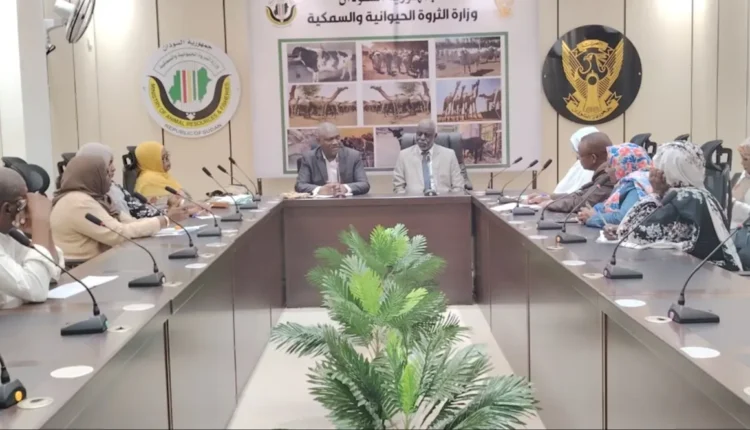
The warning came during a meeting between Undersecretary of the Ministry of Animal Resources and Fisheries Ammar Al-Sheikh Idris and a Khartoum State delegation led by Sir Al-Khatim Fadl Al-Mawla, Director-General of Agriculture and Animal Resources in Khartoum State and acting minister.
The meeting noted that the Poultry Chamber had met with the Ministry of Finance, which had authorized the import of poultry feed as an emergency measure. It stressed the need for federal government intervention to regulate imports, given that Khartoum serves as a gateway for imported goods.
Khartoum State revealed that between 69% and 80% of its poultry stock had been lost in the recent period, underscoring the urgent need for intervention to compensate breeders and rebuild the livestock sector.
The meeting discussed the challenges facing the state’s livestock sector, including rehabilitating slaughterhouses and veterinary services, improving goat breeds to increase milk production, securing improved fodder seeds, strengthening animal health services, and combating epidemics.
Participants also reviewed the sector’s current situation, the challenges it faces, and ways to rebuild it. They stressed that merging three ministries into one had affected coordination, making it necessary to restore coordination and strengthen links between the federal ministry and state-level ministries.
The meeting outlined several challenges, including the loss of veterinary hospitals, laboratories, and clinics; shortages of vaccines; a lack of personnel in the General Directorate of Animal Health and the Khartoum State laboratory; the need for logistical support; and the need to restart feed factories and establish a specialized feed factory.
The state emphasized its need for support and assistance, particularly from international organizations that fund food security programmes at the federal level.
For his part, the ministry’s undersecretary said the immediate objective was to win the battle to preserve Sudan’s survival. He noted that Khartoum State, as the national capital, had significant capabilities. He added that Sudanese society was suffering from poverty and needed small-scale technologies for fish farming, as well as fisheries extension services.
He announced a strategic plan to address the fodder shortage and develop pastures, noting that Khartoum has a pastoral community. He also outlined a plan to improve goat breeds, particularly the Saanen breed, to address the state’s milk shortage and help alleviate poverty.
The undersecretary proposed establishing a permanent committee chaired by Nadia Al-Dardairi, Director-General of Epidemics and Animal Health, to coordinate between the federal government and the state. The committee would include department directors, representatives of standards and customs authorities, and other relevant bodies.
Its responsibilities would include regulating imports, licensing vessels, increasing fish production, and focusing on small-scale producers by helping them cultivate alfalfa, securing farms, and working to implement the Animal Production City project.
Shortlink: https://sudanhorizon.com/?p=19151