

How Can the Central Bank’s Vision for the Banking Sector Become a Reality That People Can See and Feel?
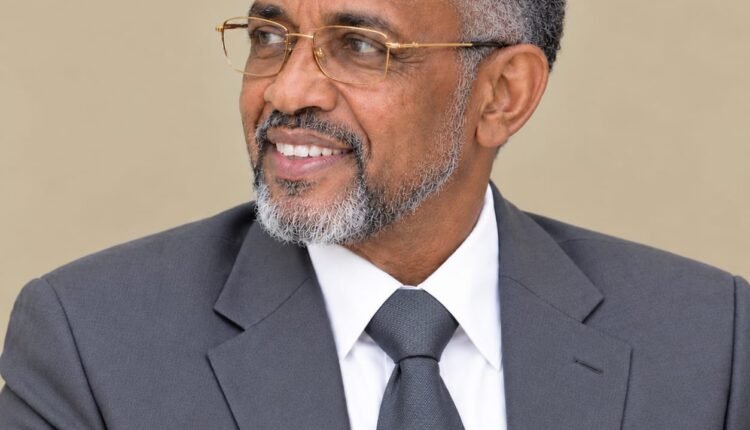
Eng. M.M. Mohamed Al-Shater Al-Amin Al-Hassan
The proposals put forward by the Governor of the Central Bank of Sudan, Ms Amna Mirghani, to bank owners and management teams were not passing aspirations. Rather, they represented a comprehensive project to move Sudan from a wartime economy to an economy of renewal, and from resilience to recovery and reconstruction. The question now is not what the Governor wants to achieve, but how her proposals can be translated into a reality that ordinary citizens can experience in the marketplace, at the bank and through the exchange rate. Countries are not built on aspirations alone, but through policies with clear timelines, measurable indicators and people accountable for their implementation.
The Governor therefore believes that the real financier of reconstruction will be neither the overstretched national budget nor sporadic grants, but the banking system itself. Yet banks whose capital has been eroded by the war are in no position to finance a factory or a farm. This explains the sequence of priorities: putting the banking sector’s own house in order first, before financing others. This is to be achieved by strengthening capital bases before the end of 2026 and complying with anti-money laundering standards and Basel requirements.
Alongside this, the economy must transition from cash to digital through the National Switch, electronic clearing, point-of-sale terminals, mobile payments, and system integration with the Baladna platform. Monetary policy, however, has its limits. The Central Bank can set regulations, direct financing, and develop platforms, but it cannot, on its own, build roads, restore electricity, or secure convoys transporting goods. Those who overlook this reality will do monetary policy a double injustice: first, by demanding that it deliver what falls outside its remit, and second, by holding it accountable for things it has not done.
At the heart of the Governor’s vision lies a fundamental philosophy: the dollar is a mirror reflecting the condition of the state. When we neither produce nor manufacture, and remain merely consumers, the dollar inevitably reaches the levels we have witnessed. For this reason, her proposed remedy for the exchange rate is not to sell dollars in the market, but to generate them through factories, farms and mines.
Accordingly, financing has been directed towards productive sectors, exports, pharmaceuticals and reconstruction, with 12 per cent allocated to microfinance. This declares that the era of easy profits from speculation is over, and that future profits must come from financing genuine reconstruction. This is the challenge facing bank owners: will they embrace a long-term financing approach that supports production, or remain captive to the pursuit of quick returns?
Closely linked to this is the issue of export proceeds, which represents the decisive battle. Markets cannot be stabilised without strategic commodities; such commodities cannot be secured without foreign currency; and foreign currency cannot be generated without productive exports. This is where the importance of the Higher Council for Exports and the Strategic Commodities Financing Fund becomes clear, together with the need to integrate every stage of the export process into a single system. Every dollar that leaks out of the formal system represents a factory that will not be built, medicine that will not reach those who need it, and a Sudanese pound that loses its value.
Critics, however, believe that these policies face a difficult test. Tightening capital requirements could force smaller banks out of the market and concentrate the sector in the hands of larger institutions. An excessive focus on regulatory controls could also slow the pace of lending, while digital transformation will remain dependent on the availability of electricity and telecommunications infrastructure. These reservations are far from insignificant. Any reform that succeeds on paper but fails to reach the smallholder farmer will remain incomplete, however impressive its figures may appear.
To get a complete picture, we must confront the hardest reality: all these policies are being implemented in a wartime environment that has depleted infrastructure, disrupted roads and ports, displaced skilled professionals, and broken supply chains. Monetary policy alone, however well designed, cannot withstand these pressures if it remains detached from efforts to restore security and basic services. A bank cannot finance a farm that cannot obtain its agricultural inputs, a factory without access to electricity, or a trader who cannot be assured that their goods will be safe in transit.
This is precisely what integration means: monetary policy must move hand in hand with government policies on security, public services and production, so that banking decisions do not become isolated islands surrounded by devastation.
So far, the Governor has kept the banking system standing at the heart of the war. This is a considerable achievement, and the Central Bank deserves credit. The next challenge, however, is to enable the banking system to operate in an environment that allows it to produce, rather than merely endure.
What distinguishes the current vision is that it does not treat these issues as separate and unrelated concerns. Instead, it brings monetary policy, food financing, export proceeds, digital transformation and banking sector reform together as parts of a single agenda. This gives the vision internal coherence at the level of conception, although the transition still needs validation through tangible results.
These proposals will become a reality that people can see and feel when we measure them against one decisive set of questions: Has financing reached those who produce? Have banks increased their capital? Have banks resumed operations in Khartoum? Is the National Switch operational? Are export proceeds flowing through official channels? Can ordinary citizens feel that their currency has become more stable?
Fairness requires us to acknowledge that an economy cannot be rebuilt by a Central Bank Governor alone, no matter how capable she may be. It requires an entire system: a firm and decisive central bank, compliant banks, confident producers, and citizens who believe that their money is better kept in the banking system than in the parallel market.
The ball is now not only in the Governor’s court, but also in the courts of the banks, producers and the state as a whole. If the consensus that emerged from the recent meetings is translated into a day-to-day commitment, we will be witnessing more than simply a Governor’s initiative. We will be witnessing the beginning of a new founding moment, in which a vision becomes an institution, and that institution, in turn, becomes a lived reality.
Only then, if the coming months provide affirmative answers to these measurable questions, will Dr Mirghani’s proposals cease to be mere proposals and become the reality experienced by every Sudanese citizen. But if the answers are negative, the vision, however coherent it may be, will remain just another beautifully presented document in the Central Bank’s archives.
Shortlink: https://sudanhorizon.com/?p=19976