

Pilot Survey Launched to Assess War Damage in Khartoum
Khartoum – Sudanhorizon
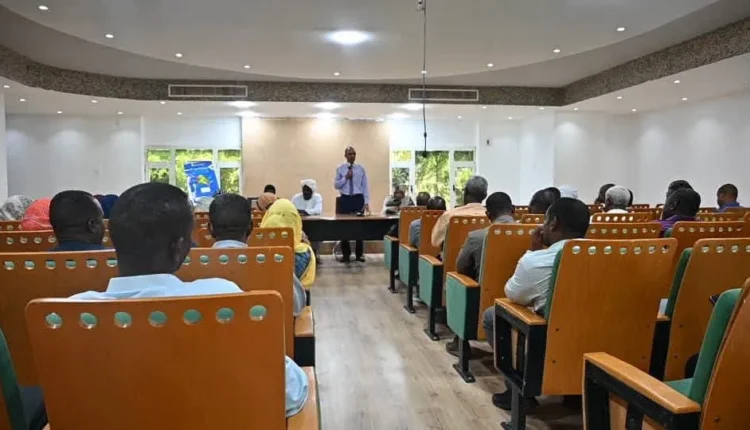
A training workshop for field survey teams—tasked with conducting a pilot assessment of war-related damage in Khartoum State—began on Saturday morning at the Ministry of Finance headquarters in Khartoum. This initiative serves as a precursor to a comprehensive survey across the state, with plans to subsequently extend the process to other states in the country.
The survey is organized through a partnership between the Ministry of Finance’s General Directorate for Planning, Policies, and Studies, the General Directorate for External Finance, and the Information and Communication Technology Department, in collaboration with the Central Bureau of Statistics.
The two-day workshop includes representatives from the Ministry of Finance, the Central Bureau of Statistics, and the Khartoum State Government Secretariat. It aims to train and qualify survey teams in the scientific principles of fieldwork, sampling techniques, and accurate data collection. The ultimate goal is to establish a national database documenting the damage and losses sustained by infrastructure and government institutions as a result of the war.
The survey seeks to generate national estimates of economic losses and identify reconstruction and recovery needs, broken down by sector and region. Furthermore, it aims to produce a reference document to support the financing and management of reconstruction and development programs, while ensuring that the survey findings inform future planning, studies, policy-making, and long-term strategic forecasting.
During the first day, several working papers were presented, covering key definitions, concepts, and the objectives of the field survey. Discussions also addressed data collection methodologies, fieldwork guidelines, the specific duties of researchers and supervisors, as well as detailed explanations regarding sampling, sectoral categorization, and the structure of the survey questionnaires. Lamia Mohamed El Nour, Director General of the General Administration for Information and Communication Technology at the Ministry, stated that the survey will be conducted electronically using a form designed by the Ministry’s technical team. She explained that this initiative is a collaborative effort between the Ministry of Finance, the Ministry of Digital Transformation and Telecommunications, and the Central Bureau of Statistics.
She added that the reconstruction process requires a comprehensive inventory and survey. The electronic form was developed to meet the requirements of both the Ministry of Finance and the Central Bureau of Statistics, as well as the needs for real-time analysis. She described the survey as a foundational step for statistical work that will benefit all government institutions.
Makki Mohamed Abdelrahim, Director General of the General Administration for Policies, Planning, and Studies at the Ministry of Finance, explained that the general survey for Khartoum State includes training 200 researchers, trainees, and technical staff in the upcoming phase, following the completion of a pilot survey.
He noted that the survey is being carried out with technical assistance and support from the Arab Planning Institute in Kuwait. The objective is to obtain accurate data and estimates of damages and losses, and to develop an economic vision for reconstruction. He emphasized that the survey results will serve as a primary reference for the state, international partners, and various organizations involved in reconstruction efforts.
In the same context, Ali Mohamed Abbas, Director General of the Central Bureau of Statistics, stated that the workshop marks the launch of fieldwork for the pilot survey aimed at assessing war-related damages in Khartoum State. He stressed the importance of adhering to rigorous scientific standards when collecting information and data, which is essential for achieving the survey’s objectives. He affirmed the Central Bureau of Statistics’ readiness to provide technical and statistical support, ensuring both accuracy of the results and timely completion of the work.
The workshop will continue with a combination of theoretical lectures and practical exercises covering field survey methodology, the completion of survey forms, the use of tablets for data collection, interacting with respondents in the field, and ensuring data quality.
Shortlink: https://sudanhorizon.com/?p=20843