

In My Dispute with Dr Al-Wathiq Kameir (4): What Is the ‘3+1’ Group Within the Sudanese Dialogue Preparatory Committee?
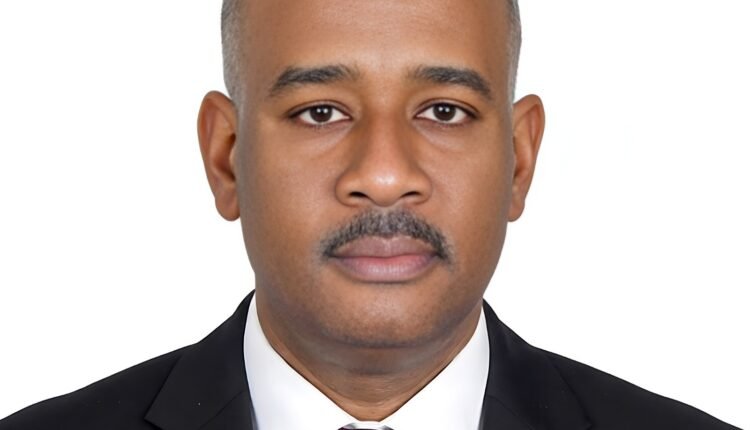
Muhannad Awad Mahmoud
When the committee adopted its executive structure, Ms Aisha Al-Burair was elected rapporteur, Mr Nabil Adeeb was appointed head of the Political Outreach Office, Dr Mohamed Al-Munir Safi Al-Din was appointed head of the Outreach Office for Countries and Organisations, Dr Mohamed Jalal Hashim was appointed head of the Community Outreach Office. Engineer Osman Mirghani (Al-Tayyar) was appointed head of the Media Office and official spokesperson. The chairmanship of the committee, meanwhile, had already been settled in favour of Professor Qasim Badri.
Each of the remaining members was entitled to choose membership of no more than two offices, and could chair only one office. I chose to serve exclusively on the Outreach Office for Countries and Organisations. External engagement is the field in which I have more than two decades of experience, and my frequent travels enable me to serve the committee outside Sudan, while my freedom of movement and the fact that I do not require entry visas for most countries in the world make this easier.
Aisha initially proposed that the heads of the offices rotate every month. I objected, on the grounds that external outreach required continuity. Following the committee’s announcement at a press conference on 31 August 2026, Sudanese people flocked to the Community Outreach Office, eager to engage in dialogue. The Outreach Office for Countries and Organisations, meanwhile, undertook substantial work, which was clearly reflected in the media. Requests for meetings began reaching us in greater numbers than we were seeking to arrange ourselves.
Disagreements emerged early between Dr Munir and Aisha over the nature of the work and the distribution of responsibilities. Munir asked her, in her capacity as rapporteur, to arrange meetings, prepare agendas, and draft minutes, while she considered these the secretariat’s responsibilities. I intervened to defuse the discussion and proposed appointing a secretariat to work under her supervision, which was subsequently done. Munir was also subjected to direct criticism from Mr Nabil Adeeb during formal meetings. Munir, who had worked for the United Nations for more than forty years and was not affiliated with any political party, believed that Sumoud, like all other political forces, should be invited to the dialogue and its positions assessed based on what it said and did.
Following these disagreements, Munir resigned and left the committee’s WhatsApp groups. After mediation, however, he agreed to withdraw his resignation and participated in a meeting with EU ambassadors in Cairo on 1 October 2026. Afterwards, we met in my office in Cairo to clear the air, with Engineer Osman Mirghani (Al-Tayyar) facilitating the discussion. We agreed that Munir should be readmitted to the committee’s WhatsApp groups, but this has still not been implemented, despite Dr Mohamed Jalal’s insistence. Mr Osman (Al-Tayyar) and Ms Aisha were administering the groups, and whenever Osman was asked to add Munir again, he said he would do so, leaving the matter unresolved. Over the past two days, it has become clear that Munir’s resignation is now final.
Following his resignation, it would have been natural to nominate a new head of the Outreach Office for Countries and Organisations, but this did not happen. Why, then, was the office left without a head? Was this simply a procedural delay, or did the committee not want someone in the position whose political orientation or loyalties it could not be sure of?
As for Professor Qasim Badri, he did not attend the committee’s meetings, which were mostly held remotely, except for the meeting at which my membership was considered for termination, an item that was included on its agenda. The remarks he made appeared to me to have been prepared in advance. The Community Outreach Office, headed by Dr Mohamed Jalal, was concerned with engagement with community forces and therefore had no direct bearing on the committee’s approach to Sumoud, unlike the Political Outreach Office and the Outreach Office for Countries and Organisations.
These events led me to form my own reading of the balance of influence within the committee. The ‘3+1’ formula, which I explicitly mentioned to Dr Al-Wathiq in my letter to him, is not an official designation but my description of an undeclared bloc whose influence I believe can be seen in the management of files and decision-making. In my assessment, the three are Mr Osman Mirghani Al-Hussein (Al-Tayyar), Mr Osman Mirghani Abdullah (Al-Sharq Al-Awsat), and Aisha Al-Burair. The ‘one’ is Mr Nabil Adeeb, whose role, in my view, becomes apparent when implementing what the three have agreed upon.
My assessment was not based solely on the names involved. At times, messages expressing support would appear in the WhatsApp group in quick succession, within minutes of one another. One person would state a position, followed by messages of endorsement and praise. The sequence of messages sometimes gave the impression that they had been agreed upon at a preparatory meeting before being posted in the group.
I subsequently learned of a meeting held in Khartoum, which was not publicly announced, attended by Nabil Adeeb, Osman Mirghani Al-Hussein (Al-Tayyar), and Osman Mirghani Abdullah (Al-Sharq Al-Awsat), with Aisha Al-Burair participating online from Cairo. According to the information I received, it was decided to merge the Outreach Office for Countries and Organisations with the Political Outreach Office, creating a unified office headed by Nabil Adeeb. The change was neither presented to the office’s members nor communicated to them beforehand. We only became aware of it several days later, when it appeared in the committee’s organisational structure. I have also not seen minutes of the meeting or any evidence that the quorum was met. How, then, could such a decision be taken without being presented to the full committee, as it was called, or discussed with the office’s members?
Dr Al-Wathiq Kameir is outside the ‘3+1’ equation, but he cooperates with its members within the committee. From what I experienced, he too did not attend the meetings, but followed their outcomes. If a decision aligned with the group’s position, it went ahead; if it did not, he would write lengthy letters objecting to it or demanding that it be amended, even after it had been approved. In my assessment, he was among the committee’s most prominent obstructers.
When five new members were nominated to address criticism concerning the absence of young people and women, their membership was approved, and they were added to the committee. Nevertheless, Al-Wathiq was the only member who did not welcome them in the WhatsApp group. I therefore told him that his opposition to expanding the membership could alter the balance within the bloc and undermine the ‘3+1’ formula.
I stated explicitly in my letter to him that, in my view, he was cooperating with members of the ‘3+1’ group within the committee in order to harness it to facilitate a ‘soft landing’ for Sumoud. This came after he criticised my article on Sumoud’s position on dialogue and demanded that I be held accountable. From that confrontation onwards, I began to see indications that a scenario was being explored to remove me from the committee.
Shortlink: https://sudanhorizon.com/?p=20824