

Just Hold on for A Second
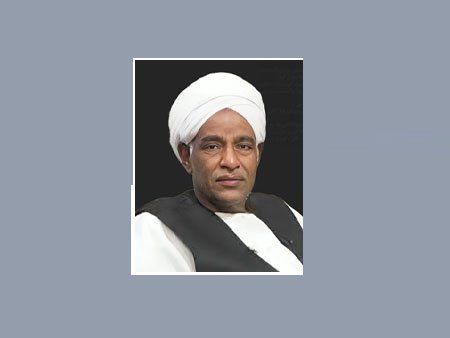
Mahjoub Fadl Badri
Everyone in Sudan occupies a position they are not suited for…
Money possessed by the miser, and the sword branded by the coward…
What an unjust generalization! The sweetest poetry is the most deceptive, or as Nabigha Bani Dhubyan said.
But while imagination may be allowed in creative imagery, it is not permissible in news reporting. News is sacred, and analysis is free, as the most important rules of journalism dictate in the era of print media. Now that print journalism is dead—at least clinically—and replaced by social media, anyone with a smartphone can create a website, or several websites, or fake accounts to publish whatever they want, however they want, and whenever they want!
Therefore, anyone harmed by such publications has the right to pursue legal action against the publisher under the cybercrime law to obtain justice. This is what brought journalist Rashan Oshi under the purview of the law. The law is above all, and the judiciary in our country is fair, capable, and willing.
On a general level, the majority sympathize with journalist Rashan Tawfiq Oshi for the court ruling that led to her imprisonment and a for serving her a fine. The ruling is, of course, subject to appeal, and we expect it to be reduced or overturned, given the proven charges based on the evidence and witnesses presented by the prosecution. Perhaps the prosecution’s arguments were so compelling that even the judge—a human being—was reassured of the soundness of his decision.
This is not the end of the political world, which politicians strive to cloak in the garb of justice. The political world, like the world of love, is a strange and unpredictable place; some people rejoice excessively, while others suffer greatly.
While Rashan spends her first night behind bars in the women’s prison, the notorious murderer, Abu Lulu, known as the “Butcher of El Fasher,” is released from his notorious prison, where he was held by the Dagalo militia. This release appears to improve the militia’s image in the eyes of the world, which witnessed the militia’s crimes documented with audio and video footage from the scene, even by the perpetrators themselves using the smartphones they looted from their victims, which they refer to as “Telephone Abu Shakhta” (a play on words, meaning “touchscreen phone”), a reference to their screens!
So, Abu Lulu is released, and Rashan is imprisoned—a strange irony indeed. This doesn’t diminish the rule of law in our country, nor does it diminish the Dagalo militia’s manipulation of the law. As the poet said: “Everyone in Sudan occupies a place that isn’t theirs.” And we echo the words of the great poet, Ustaz Muhammad Hamid Adam, as he addresses the director of Al-Ubyad prison in verse:
(Have patience for just one moment, prison officer!) The poem was sung by the late Abdul Rahman Abdullah Wad Bara, may God have mercy on him, after Music composer Muhammad Sulaiman Jarab Al-Hawi modified its opening lines, replacing “O prison officer” with “O most beautiful dream,” to secure the song’s approval and avoid the wrath of the people of the victorious May 25th Revolution, during whose era the poet was imprisoned—an era longed for by most Sudanese. Now?!
We will not call for Rashan Oshi’s freedom because she is not a political prisoner, but we demand justice. This is not simply because Rashan’s stance aligns with the people’s support for our army, nor out of fear of our enemies’ gloating, but because we seek refuge in Allah from the incurable disease of corruption, which Rashan boldly exposed—as she claims—with a courage unmatched by others, leading some to ask, “Where does this girl get this information?!” To substantiate her claims, she must be given the opportunity to present all her arguments. It is better for the ruler to err in pardoning than to err in punishing. Otherwise, she should serve her sentence according to the letter of the law, for she is not above the law.
Shortlink: https://sudanhorizon.com/?p=14102