

Juba Arabic
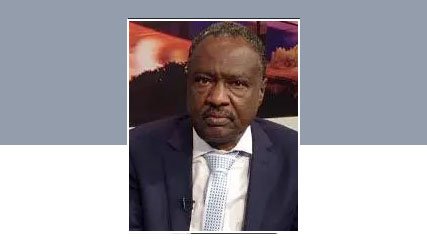
Rashid Abdel Rahim
“Mandikoro matu sambala aki sori ikwani”—
the voice of a simple southerner expressing his sorrow for northerners who died in the wars of the South. The meaning of what he sings is: “The northerners died simply, without guilt, and I grieve for them.”
This southerner, with his naturally tolerant spirit, overcame both colonial influence and the Church. Yet generations in the South had long worked vigorously to oppose the North and Arabic.
Because of people like this—who held affection for their fellow citizens in the North—those divisive plans ultimately failed. Today, Juba Arabic is evolving, giving way to a form of speech closer to standard Arabic. If one were to name it, it could perhaps be called “Northern Arabic”: the language or dialect dominant in the North, which is now spreading and gradually replacing Juba Arabic in South Sudan.
With this evolving form of Juba Arabic, southerners themselves may become the conduit through which Arabic replaces both English and Juba Arabic—whether in the streets of the South, among southern communities in the North, or even across the Arab world and in the West.
“Northern Arabic” is expanding, displacing the language of the former coloniser wherever it once took root.
Prayers in churches are increasingly delivered in this form of Arabic, and in schools, textbooks written in English are explained in it so that pupils and students can understand.
Social media—especially Facebook—has become the largest platform spreading this language, alongside southern singers who perform songs by figures such as Abdel Karim Al Kabli and Khalil Farah, as well as the national song “Ana Sudani”. Influencers on social media also speak this simple Arabic, and even southerners living in the West increasingly prefer it as a means of communication among themselves. Sudanese songs are now heard at weddings, social gatherings, and even while driving.
I came across an article by a southern writer named Dalinga Kong Dalinga, who discusses the ideas of Francis Deng in fluent Arabic and with thoughtful, balanced arguments—qualities not always matched by those who opposed his views in the North. With boldness and deep understanding, Dalinga points out that Professor Francis Deng speaks of Sudan and calls for its unity, despite having once been among the most prominent advocates for the South’s secession.
The barriers created by the “Closed Districts Ordinance” have crumbled at the hands of those whom the coloniser once sought to “protect” from an imagined enemy—Islam and the Arabic language. Today, it is the Southerner who is spreading Arabic in the South.
Recently, comedic videos about marriage and its challenges have circulated widely on Facebook, all in “Northern Arabic”, which has spread across the South as a replacement for Juba Arabic—the latter having filled a linguistic gap before separation.
The southern singer Fadwa Farid is a clear example illustrating this trend.
Even in sports, the situation is striking: commentary on football matches in southern channels has not ceased, and the strong support shown for northern teams reflects a lingering sense of loss for a unity that has slipped away—one that both peoples now seem to be informally, almost instinctively, trying to compensate for.
Shortlink: https://sudanhorizon.com/?p=13192