

From Mansour Khalid to Abdullahi Ali Ibrahim: When Sudan’s Elite Created the Crisis and Then Ended up Making Theories About It
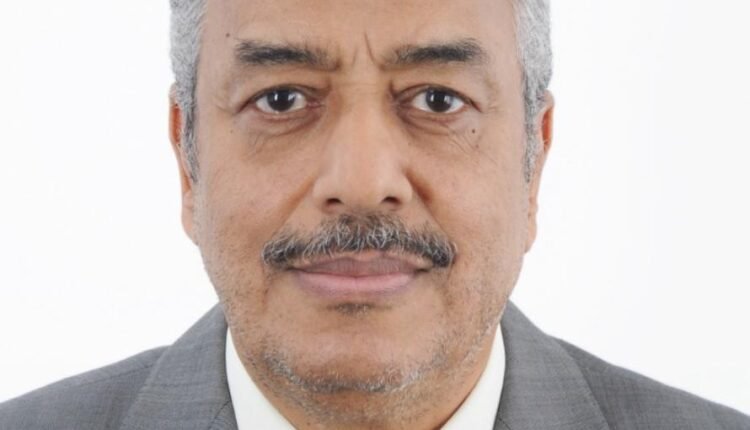
Dr Ismail Sati
In his recent article published on Facebook, entitled “Mansour Khalid: From the Crisis of the State to His Own Crisis”, Professor Abdullahi Ali Ibrahim reopened one of the most complex chapters in the history of Sudan’s political elite: the relationship between democracy, the state, the military, war, and the intellectual class that has spoken on behalf of Sudan for decades, only for much of its theorising to culminate in the very outcome we are living through today—a country whose limbs have been consumed by war and whose heart has been set ablaze.
While one must acknowledge the considerable intellectual effort made by Abdullahi Ali Ibrahim in tracing the evolution of Mansour Khalid’s ideas, the issue, in my view, extends far beyond reviewing the position of a single individual or highlighting contradictions between a book he wrote and a political stance he later adopted.
The larger question is this: how did the Sudanese elite produce a confused political discourse and then present it to the nation as a path to salvation, when, in many cases, it was part of the making of the crisis itself?
For decades, the Sudanese elite, across its various schools of thought, conflated concepts that ought to have been clear from the outset. They blurred the distinction between liberalism and secularism, leading many to believe that liberalism could exist only through the rejection of Islamic law, as though political freedom could not coexist with a constitutional Islamic framework, despite the experiences of many societies and nations demonstrating otherwise.
They also conflated civil government with Islamic governance to the extent that much political discourse implied that a civil state necessarily required the exclusion of religion from public life. Yet, at its core, the civil state concerns institutions, constitutionalism, the rule of law, accountability, and the peaceful transfer of power—not the confiscation of people’s beliefs or the removal of religion from public life.
For some, this confusion was deliberate, or at the very least was promoted with great persistence because it served a political and cultural struggle more than it served the construction of a stable state.
Then came the greater dilemma: the political parties.
How many parties raised the banner of democracy while believing in it only when it brought them to power? If elections produced the outcome they desired, they proclaimed it the voice of the people. If the results went against them, they began speaking of false consciousness, manipulated masses, and the need to “correct the course”.
When the ballot box disappointed them, they turned to the barracks.
And when the military was unavailable, they turned to rebellion and arms.
Yet afterwards, people were told that the problem lay solely in the absence of democracy.
What kind of democracy is this—accepted when it delivers one particular party to power, but rejected when the people choose otherwise?
Mansour Khalid’s own experience offers a case worth reflecting on. He wrote eloquently and clearly about the failure of the elite, the dangers of relying on the military, and the heavy price societies pay when they await salvation from military institutions or the barrel of a gun. Yet he ultimately joined an armed political project led by John Garang.
The point here is not to place the man on trial for revising his political views. Politicians change their assessments, and that is understandable. The problem is that many symbols of the Sudanese elite continued to urge the public to be patient with democracy while they themselves lacked patience with it whenever it failed to deliver them power.
They advocated a civil state, yet allied themselves with armed force when it served their political project.
They condemned the militarisation of the state, yet some did not hesitate to rely on weapons whenever politics faltered.
This is the root of the crisis.
Sudan’s crisis has never been merely a crisis of Islamists, nor solely a crisis of the military, nor even simply a crisis of liberal democracy. Before all of these, it is a crisis of a political and intellectual elite that, since independence, has failed to agree on stable national rules, failed to respect the will of the people when it contradicts its own vision, and failed to distinguish between political rivalry and the state itself.
Consequently, the Sudanese political scene has repeated itself in painful cycles:
One party quarrels with another and then summons the military.
One current fails to prevail politically and turns to rebellion.
An elite group falls into conflict with its opponents and begins treating the entire nation as a battleground for settling scores.
Then, after the flames spread, everyone emerges to write memoirs and analyses as though they had merely been observers of events rather than participants in creating them.
States are not built through intellectual condescension towards the people.
Nor are they governed by theories that change whenever the balance of power shifts.
Nor are they protected by resorting to the gun whenever politics fails.
States are built upon conceptual clarity, respect for the people’s will, and recognition that Sudanese society—with all its religious, cultural, and social diversity—cannot be governed through the mentality of a guardian who considers himself more enlightened than the people, more entitled to decide on their behalf, and more qualified to determine their future.
Perhaps the most dangerous legacy left by this elite is that it did not merely disagree politically; it transformed intellectual disagreements into zero-sum conflicts in which coexistence and mutual recognition became impossible.
For many among them, anyone who disagreed was not simply a political opponent within the nation. Rather, he became someone to be excluded, an obstacle to be overcome, or an adversary to be circumvented through tanks, rifles, or foreign alliances.
This is where the great destruction began.
Politics ceased to be a competition over how best to serve the nation and became a struggle over who possessed the exclusive right to define the nation itself.
Democracy ceased to be a means of appealing to the people and became, for some, acceptable only when it delivered them victory.
The military ceased to be a national institution governed by constitutional and legal constraints and became, for certain political forces, a reserve political instrument to be deployed whenever necessary.
Rebellion ceased to be a last resort when all avenues had been exhausted and became, for some elites, a pressure tactic, a bargaining chip, and a shortcut for imposing political projects through force.
And Sudan as a whole paid the price.
The cities that burn pay it.
The displaced villages pay it.
The families who lose their sons and daughters pay it.
And above all, the ordinary citizen pays it—the citizen who played no role in this theorising, yet has always been the first to bear the consequences of elite failure and the last to be consulted when the nation’s future is being shaped.
For this reason, intellectual honesty requires us not merely to review Mansour Khalid, nor to revisit the writings of Abdullahi Ali Ibrahim, despite the stature both men enjoy. Rather, we must open the larger and more urgent file: the file of the Sudanese elite itself.
How was its political consciousness formed?
How did it engage with Sudanese society?
How did it confuse religion and politics?
How did it persuade people that Islamic law was the antithesis of freedom, that civil governance was the antithesis of Islam, and that democracy was legitimate only when it validated its own vision?
How did it transform political disagreement into an existential struggle and then compel the entire nation to pay the price?
These are questions that cannot be avoided.
Sudan will not emerge from its crisis merely by replacing individuals, changing one authority for another, or reviving the same discourse under new names.
It will emerge only when we remove the aura of sanctity surrounding the elite, subject their ideas and experiences to honest scrutiny, and acknowledge that many of those who spoke in the name of the nation for so long were, intentionally or otherwise, part of the making of its crisis.
Once we reach that level of honesty, the correct path may finally begin:
A state founded upon citizenship, justice, and the rule of law.
A politics that appeals to the people rather than to weapons.
Institutions governed by constitutions rather than whims.
A religion preserved in its rightful place within society—neither exploited as a tool of exclusion nor falsely portrayed as an enemy of freedom.
Only then can Sudan emerge from this long and dark tunnel.
Not through a new Abboud, a new Nimeiri, a new Garang, or any new armed force presented as the nation’s final saviour, but through the will of a people exhausted by experience, weary of paying the price for elite failures, and finally determined to build a state that reflects who they are—a state that is not imposed upon them.
Shortlink: https://sudanhorizon.com/?p=14349