

When Prices Outpace Salaries and Hardship Grinds People Down: What Can Ordinary Citizens Do?
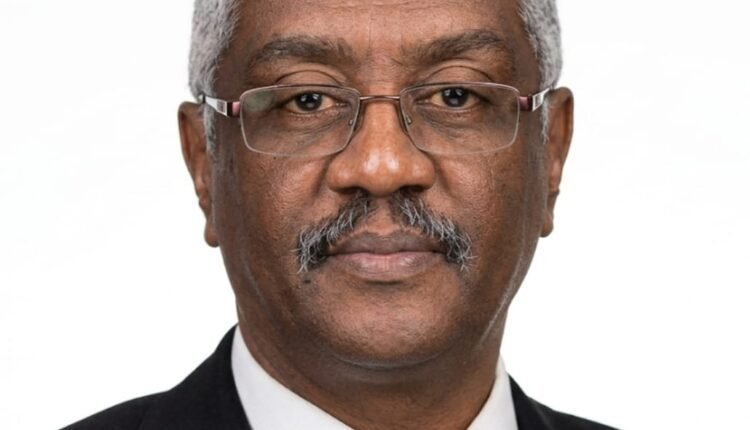
Noaman Yousif Mohamed
The rising cost of living in Sudan is no longer a passing economic crisis, nor is the increase in the prices of essential commodities and fuel simply another news item that people hear about and then forget. High prices have become a daily battle for survival, one that ordinary citizens are forced to fight against overwhelming odds: limited incomes on one side, and prices rising at an alarming rate on the other, while salaries remain stagnant and fail to keep pace with anything. Indeed, some salaries do not even reach their recipients regularly.
The question that inevitably arises today, without evasion or embellishment, is this: what can ordinary citizens do when the prices of their basic necessities are rising by the hour, while their salaries remain trapped at outdated figures, and payment may be delayed until what little purchasing power remains has been further eroded?
What is an employee to do when they have to wait until the end of the month to receive their salary, while traders do not even wait until the end of the day before changing their prices? What can a family do when it wakes up to one set of prices, only to return to the market in the evening and discover that the same amount of money can no longer buy what it needs? And what about pensioners who have devoted their lives to serving the state, only to find themselves, in their final years, unable to afford food and medicine, perhaps even being forced to choose between the two?
Sudanese citizens are not facing rising commodity prices alone. They face an interconnected chain of financial burdens, beginning with rising fuel and transport costs, extending to food, medicine, and services, and ultimately reaching the doors of schools, hospitals, and rented homes. When fuel prices rise, the cost of transporting goods and operating production facilities also increases, and these additional costs are reflected in the prices of goods and services. When the purchasing power of the Sudanese pound declines, cash income becomes less able to meet basic needs, even if the figure printed on the payslip remains unchanged. Citizens therefore pay twice for the crisis: first through rising prices, and secondly through the continuous erosion of the real value of their incomes.
Low-income employees, meanwhile, generally have no side business to supplement their earnings, no savings to protect them, and no way to pass their financial burdens on to someone else. They are the weakest link in an economic chain, bearing the heaviest burden despite not influencing the underlying causes of the crisis.
It is simply unfair for prices to move freely whenever circumstances change, while salaries remain frozen, as though the purchasing power of money were of no consequence. Nor is it acceptable for workers and employees to remain trapped on salaries determined under economic conditions entirely different from those in which they now find themselves.
Even more distressing is the fact that some employees do not know when they will receive their salaries. Delayed payment becomes more than an administrative problem; it becomes a full-blown livelihood crisis. Debts accumulate, financial commitments go unmet, and family breadwinners are forced to borrow money to meet basic needs. They then use their next salary to repay their debts, even though that salary is already insufficient to cover the month’s expenses. Citizens are consequently caught in a vicious cycle: they borrow to survive, receive their salaries to repay their debts, and then borrow again.
The plight of pensioners is even more painful. These are people who devoted years of their lives to serving state institutions and society. Their retirement years should be a time of relative stability and dignity. But how can that be possible when inflation steadily erodes the value of their pensions, payments are delayed, and the costs of healthcare and food continue to rise, even as their ability to work and earn a living diminishes?
Leaving pensioners to face rising living costs on incomes that bear no relation to the actual cost of life is not merely a financial failing; it is a failure to honour a social and moral obligation towards those who have served the state.
We recognise that Sudan is experiencing a profound economic crisis, that the war has inflicted severe damage on the economy, production and infrastructure, and that declining output, disrupted supply chains, exchange-rate instability and financing constraints are all putting pressure on prices. However, acknowledging the severity of the crisis does not absolve those in positions of responsibility of their duties. Equally, explaining the causes of rising prices is no substitute for taking measures to alleviate their impact.
Citizens are not waiting for speeches about how difficult the circumstances are, nor are they satisfied with statements promising that conditions will improve in the future. They want to know what the government will do today to protect their ability to buy bread, flour, cooking oil, medicine and fuel, and what it will do tomorrow to prevent them from facing yet another wave of price increases.
The state’s responsibility is not limited to managing revenues and expenditure. It also includes safeguarding the minimum requirements for a decent life, monitoring markets and preventing monopolies and price manipulation, providing reliable price information, ensuring that essential commodities reach citizens, and working to stabilise production and supply.
Nor should price liberalisation, wherever it is adopted, become a way to abandon citizens to their fate without any social protection. The circumstances created by war must not become an open-ended justification for shifting the entire burden of the crisis onto low-income groups.
What we need are not general promises, but urgent and clearly defined measures, including the following:
First: Regular payment of salaries and pensions.
Income that does not arrive on time loses part of its economic purpose and compounds the hardship recipients face. A clear priority must therefore be established to secure the financing needed for regular, timely payments.
Second: Reviewing wages and pensions based on purchasing power.
What is required is not simply a numerical increase that rising prices may wipe out within days, but a wage and pension policy based on the actual cost of living, with periodic reviews that take account of inflation rates and available financial resources.
Third: Protecting essential commodities.
This requires strengthening supply chains, encouraging domestic production, reducing bottlenecks in transport and distribution, combating monopolies and exploitative practices, and publishing clear indicative prices to help citizens identify fair market prices.
Fourth: Directing support to those who need it most.
The poorest households, low-income workers, pensioners, displaced people and those affected by the war need practical social protection that reaches them regularly, rather than announced programmes whose benefits are difficult to access.
Fifth: Openness and transparency.
People have the right to know the reasons behind price increases, the components that make up the costs of essential commodities, the measures the relevant authorities are taking, and the results actually achieved. Trust is not built through slogans, but through accurate information and tangible action.
Ordinary citizens are not asking for the impossible. They want an income that allows them to live with dignity. This market does not surprise them with another price increase every morning, medicine they can afford, enough food to meet their children’s basic nutritional needs, pensions paid on time, and a future in which they are not constantly haunted by the fear of being unable to meet even their most basic needs.
People cannot be expected to remain patient indefinitely, nor can they be asked to shoulder enormous national burdens while their ability to afford the necessities of life continues to diminish. Patience is no substitute for sound policies; endurance does not absolve those in authority of their responsibilities; and adapting to a crisis does not mean accepting poverty and deprivation as a permanent reality.
More alarming than rising prices themselves is the prospect that society may become accustomed to its inability to confront them. The question of how to put food on the table today may become more important than thinking about children’s education, medical treatment or the future. Family life may be reduced to daily calculations of survival, leaving no room for planning or hope.
The dignity of citizens is not a secondary item in the national budget, nor is it a privilege that good economic conditions grant and crises take away. It is the foundation of the relationship between the state and society, and one of the most important measures of public policy success.
The real question, therefore, is not simply: why have prices risen? It is also: why is protection for citizens against the consequences of these increases still absent or inadequate?
If the state faces exceptional circumstances, it has a duty to set exceptional priorities as well, beginning with those who have no means of protecting themselves: low-income earners, workers, employees, pensioners, and families whose resources have been exhausted by war, displacement, and poverty. Economic recovery has little meaning if citizens cannot afford basic necessities, and positive financial indicators matter little if they do not translate into improvements in people’s lives.
Ultimately, a state’s success is not measured by the revenue it collects or the decisions it issues, but by its ability to make life less harsh for its citizens, safeguard their dignity, and ensure they are not left alone to confront a merciless market with inadequate income.
One question must therefore remain firmly on the table before those in positions of responsibility: if citizens cannot survive on their salaries, cannot do without them, and cannot even be certain when they will be paid, what measure of economic and social security do they have left?
What can ordinary citizens do? And who will listen to their voices before the inability to make ends meet turns into an inability to hope?
Former Banker | Institutional Development Consultant
Shortlink: https://sudanhorizon.com/?p=19762