

Experts: War Behind Continued Decline of Sudanese Pound
Sudan Horizon – Hala Hamza
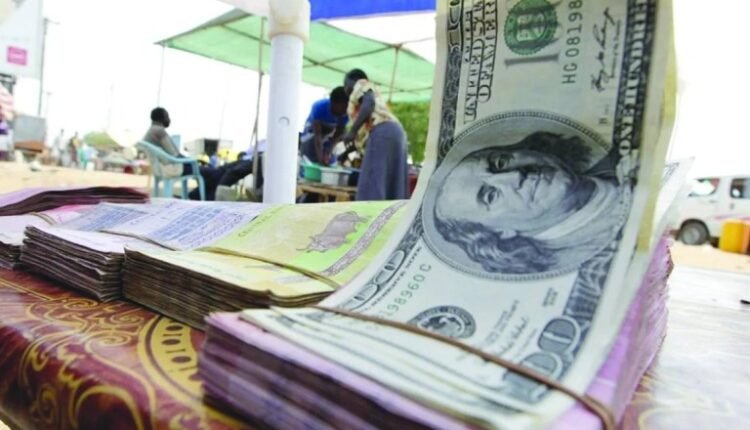
Various government measures have failed to halt the repeated decline in the value of the national currency against the US dollar. The latest of these measures involved security interventions aimed at curbing manipulation in the market.
Economic expert Dr. Al-Fateh Osman told Sudan Horizon that the continued depreciation of the Sudanese pound against the dollar was attributable to the ongoing war, which had caused the currency to fall to less than one-tenth of its pre-war value.
Osman cited the fact that wages and salaries had remained unchanged since before the war to illustrate the severe economic impact of the pound’s depreciation and how it had contributed to worsening poverty among citizens.
The Committee for Violations Harmful to the Economy, whose members include Finance Minister Dr. Jibril Ibrahim, the Minister of Justice, the Governor of the Central Bank of Sudan, the Director-General of Customs Forces, and the Director-General of the Economic Security Authority, identified several violations. These included foreign currency and national currency trading, irregularities in imports and exports and export proceeds, as well as gold smuggling by some companies and organizations.
The committee submitted its recommendations on these violations and activities harmful to the economy to the relevant senior authorities, calling for decisive measures and directives to protect the national economy and strengthen its capacity in the coming period.
Dr. Mahjoub said the government had previously formed several committees to address the collapse of the Sudanese pound. Some were chaired by Sovereignty Council member Lieutenant General Ibrahim Jaber, while others were led by Prime Minister Dr. Kamil Idris.
He said the announcement of the new committee represented another attempt to introduce temporary measures to slow the pound’s decline. Such measures often succeed in containing the depreciation for only a short period, typically one or two months, before the currency resumes its downward trend as long as the underlying causes remain in place.
Chief among these causes, he said, is the war, which has reduced exports and remittances from Sudanese expatriates while increasing government spending on wartime needs.
The National Committee for Economic Management, chaired by Prime Minister Kamil Idris, recently announced the formation of a task force to manage exchange-rate issues, halt the pound’s erosion, and address its impact on people’s livelihoods. The task force is headed by Finance Minister Dr. Jibril Ibrahim and includes representatives of several relevant bodies. It is tasked with proposing urgent and effective solutions.
For his part, a banking expert told Sudan Horizon that the continuation of the war had created virtually unlimited demand for foreign currency.
He argued that the committees and mechanisms established by the government to curb exchange-rate volatility, prevent further depreciation, and combat currency trading, including full currency flotation, would not be effective in reversing the pound’s decline unless the war was stopped, the parallel market was eliminated, and strict laws were enforced to prevent illicit currency trading and curb gold smuggling.
He described the current conditions in Sudan as unfavorable to exchange-rate stability.
Shortlink: https://sudanhorizon.com/?p=19169