

Will Higher Capital Requirements Redraw the Map of Sudan’s Banking Sector?
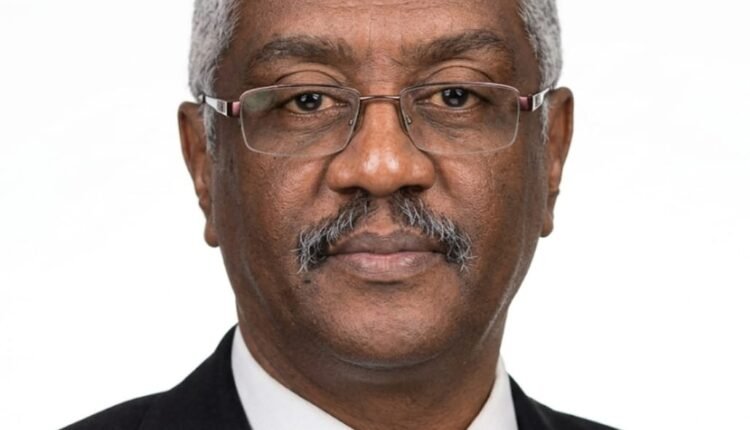
Noaman Yousif Mohammed
The key question facing Sudan’s banking sector is no longer how many banks the country has, but how many can be strong, stable, and capable of financing the economy.
This question has taken on renewed significance after the Central Bank of Sudan issued, on 17 February 2026, Circular No. 4/2026 on the regulatory requirements for banks’ paid-up capital. The circular classifies banks according to the nature of their activities. It sets the required capital at SDG 140 billion for commercial banks and digital banks, SDG 230 billion for agricultural and industrial development banks, SDG 55 billion for investment banks, and between SDG 35 billion and SDG 55 billion for microfinance institutions and banks serving micro, small and medium-sized enterprises.
The circular doesn’t leave existing banks with only one option to comply. They may either increase their capital or merge with another bank to strengthen their financial position and improve operational stability.
This is where the real story begins.
The problem is not the figure itself, but the ability to build capital. Raising the minimum capital requirement does not automatically strengthen a bank. A bank’s strength is measured not simply by the size of its capital, but by its ability to preserve and grow that capital through sound banking operations, effective risk management, a healthy financing portfolio, adequate liquidity, robust governance and the capacity to generate sustainable returns.
The question now is not whether banks can raise SDG 140 billion, but where the money will come from and what it will add to their ability to conduct business. An increase financed by shareholders capable of injecting fresh funds has very different implications from a merely cosmetic increase that does little to improve a bank’s underlying financial position.
Mergers move to the centre of the picture
One of the most important aspects of the capital circular is that it does not limit the solution to raising capital; it also opens the door to mergers. This could fundamentally reshape Sudan’s banking landscape.
A merger can bring together capital, human resources, branches, technology, customer bases, operating systems and management expertise within a single institution.
But a merger is not simply about combining two banks’ balance sheets. If one bank suffers from poor asset quality, accumulated losses, operational difficulties, or weak governance, merging the two institutions will not automatically eliminate those problems. It may simply transfer them to the newly formed entity.
Any potential wave of mergers must therefore be preceded by rigorous due diligence covering asset quality, liabilities, losses, human resources, technological systems, litigation and outstanding claims, as well as the quality of the loan and financing portfolio.
Without such scrutiny, consolidation could produce larger banks without necessarily producing healthier ones.
The war has changed the equation
The issue cannot be separated from the war’s impact on Sudan’s banking system. In February 2026, the Central Bank of Sudan issued directives on revaluing fixed assets held by banks and financial institutions, linking this process to banking sector reform and restructuring and to the need to address the war’s consequences.
This means the debate over capital requirements is happening as banks need to establish the true state of their financial positions, rather than rely on figures carried over from previous accounting records.
Bank buildings, branches, and equipment damaged during the conflict; assets whose values have changed; accumulated losses; and non-performing financing facilities all affect an institution’s actual financial position.
Therefore, cleaning up balance sheets, establishing the true value of assets, and assessing the quality of financing portfolios are no less important than increasing capital itself.
What about specialised banks?
The circular does not impose a single capital requirement on every type of bank. This is an important distinction.
An agricultural or industrial development bank has a different purpose from a commercial bank. Institutions providing microfinance and financing for micro, small, and medium-sized enterprises operate under different business models, as do investment banks.
Classifying capital requirements according to the nature of banking activities therefore raises a broader question: is it time to redefine the role of specialised banks in Sudan’s economy?
During the recovery phase, Sudan will need financing for agriculture, industry, livestock, small enterprises and value chains. What it does not need is merely a horizontal expansion of conventional banking services.
If the new capital requirements help build more specialised institutions with a greater capacity to serve productive sectors, banking reform could become an integral part of wider economic reform.
Digital banks: substantial capital for a different business model
Perhaps the most striking feature of the circular is that it sets the same capital requirement for digital banks as for commercial banks: SDG 140 billion.
This raises a question worth debating. A digital bank is expected to rely more heavily on technology and digital platforms and less on an extensive network of branches and conventional buildings.
Does this mean that the coming competition will be not merely between one bank and another, but between fundamentally different banking models?
Consider, for example, a bank with an extensive branch network. This bank operates primarily through a mobile application, while financial technology companies, payment service providers, and telecommunications networks increasingly enter the financial services market.
These institutions may serve overlapping customer needs, but their operating costs, technological requirements and approaches to customer acquisition can differ considerably.
The challenge is to determine whether the regulatory framework can accommodate these differences while maintaining appropriate standards of financial stability, security, and consumer protection.
What will this mean for customers?
This question must not be lost amid the figures.
If higher capital requirements lead to stronger financial positions, better systems, improved risk management, expanded financing and higher-quality services, customers will benefit.
If, however, the capital increase becomes little more than a regulatory box-ticking exercise, without any transformation in business models or service delivery, its impact on people’s daily lives may remain limited.
The success of banking reform should ultimately be measured against practical indicators, including:
Service quality.
The speed of transfers.
The availability of cash and liquidity.
The reliability and stability of banking applications.
Lower service charges.
Growth in productive financing.
Protection of customers’ deposits.
Greater financial inclusion.
Banks’ ability to finance small businesses and productive activities.
These are the outcomes by which customers will judge whether banking reform has made a meaningful difference.
Are we heading towards fewer banks?
It is too early to conclude that.
The circular allows mergers as one option for meeting the new requirements, but this does not automatically mean that every bank facing higher capital thresholds will merge. Some may choose to raise additional capital, others may pursue mergers, while some institutions may reconsider the nature and scope of their operations.
What is certain, however, is that the rules of the game have changed.
A bank that previously operated with relatively low capital must now assess its ability to remain viable under stricter requirements. Shareholders and management teams must look beyond the immediate task of meeting the minimum threshold and consider the institution’s long-term future.
The central issue is not simply whether a bank can comply, but whether it can remain competitive, financially sound and relevant to the economy.
The bigger question: more capital or a better bank?
This point must not be lost amid the celebration of larger figures: capital is a means, not an end in itself.
Ultimately, Sudan needs not merely banks with larger capital bases, but institutions better able to withstand risk, more disciplined in their governance, more efficient in their use of resources and more capable of financing the real economy.
The coming period may well see a reordering of Sudan’s banking landscape. But capital requirements alone will not shape that landscape. It will also depend on who can manage capital effectively, convert it into productive financing, protect depositors’ money, and earn customers’ trust.
That is where the real test of banking reform begins.
Beyond SDG 140 billion
The most important question for the next phase of reform is this: if capital is the starting point, what kind of Sudanese bank do we need in the post-war era?
A stronger bank, or simply a bigger one?
A bank with more branches, or one that is more fully digital?
A bank that finances trade, or one that helps drive production?
A bank that waits for customers to come to it, or one that reaches them where they live and work?
The answers will determine whether higher capital requirements amount to little more than another regulatory measure, or mark the beginning of a genuine transformation of Sudan’s banking system.
Former banker and institutional development consultant
Shortlink: https://sudanhorizon.com/?p=18807